Gardening Basics
How Deep to Plant Seeds
Planting depth decides more germination failures than seed quality does. The rule of thumb, and the seeds it does not apply to.
The Garden Magic Hub
- Level
- Beginner
On this page
The rule of thumb
Plant a seed at roughly two to three times its own diameter — or, put another way, about twice as deep as it is wide.
That gives a tiny lettuce seed a covering of a few millimetres and a bean an inch or so. It is one of the few gardening rules that scales sensibly across almost everything you will sow.
The packet overrides the rule. Where a packet gives a depth, use it.
Why depth decides so much
A seed germinates on stored energy alone. It has to reach light and start photosynthesising before that store runs out.
Too deep, and it exhausts itself before it surfaces. Small seeds have the least reserve and the least margin for error, which is why they are the ones most often lost to burial.
Too shallow, and the seed sits in the top layer of soil that dries fastest. Germination needs continuous moisture; a seed that imbibes water, starts to swell, then dries out will usually die.
The seeds that want light
Some seeds need light to germinate and must not be covered at all. Iowa State Extension names celery and lettuce specifically: their seed “should be left uncovered” because it germinates best in light.
Press these onto the surface of firmed, moist soil so they make good contact, and keep the surface damp — a light cover of vermiculite works because it holds moisture without blocking light.
Other light-requiring seeds you may meet include snapdragon, petunia, poppy and many small ornamental seeds. Packets usually say “do not cover” or “surface sow.”
Very large seeds
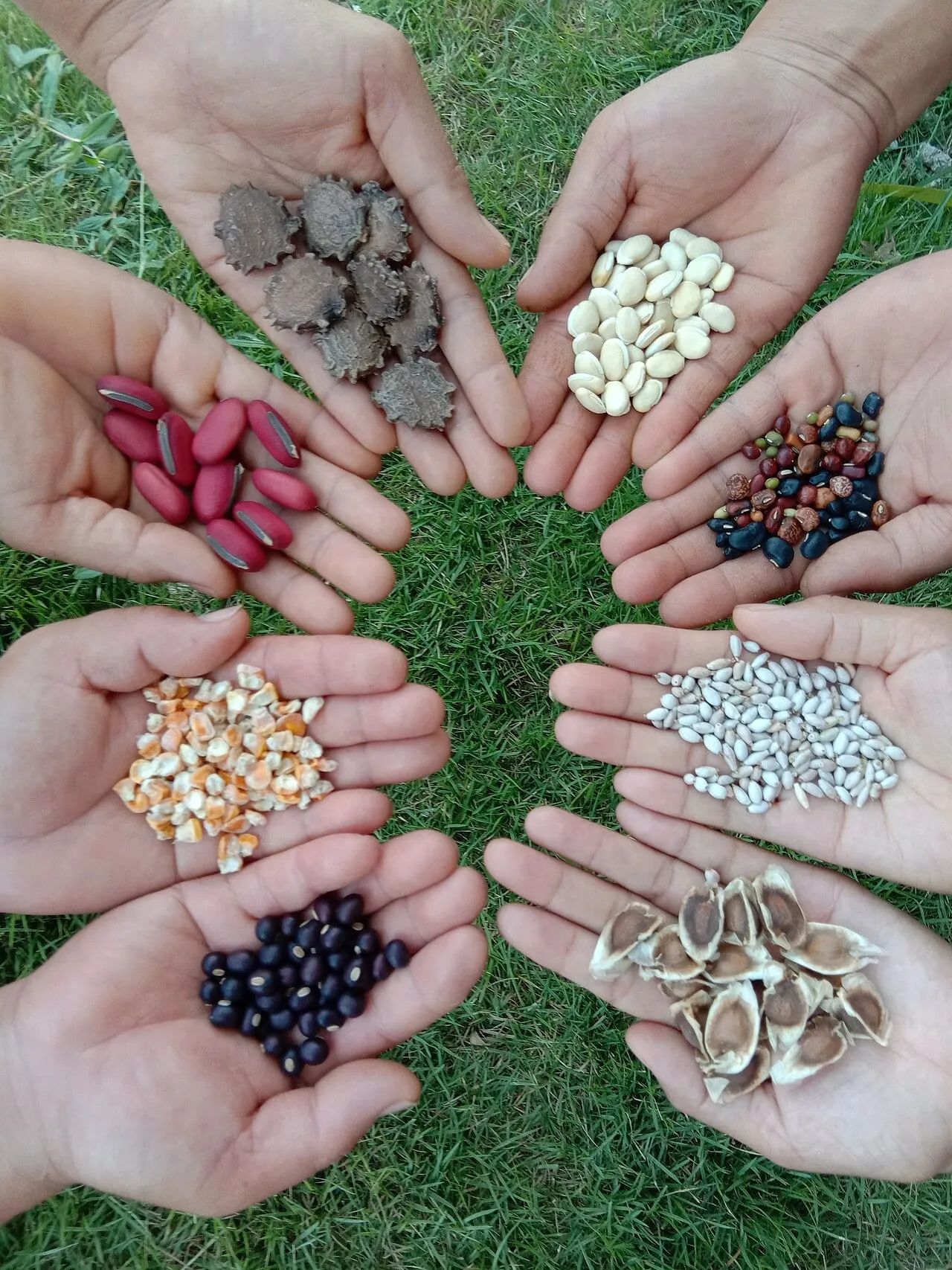
Beans, peas, squash and corn are the other end of the scale and are much more forgiving. Their reserves are large enough to push through an inch or two of soil comfortably, and they tolerate being planted a little deeper in dry conditions.
Contact matters as much as depth
A seed sitting in an air pocket will not germinate however correct the depth is. After sowing, firm the soil gently over the seed so it is in contact with damp soil on all sides.
This is the step most often skipped when sowing into a loose seedbed or a fluffy potting mix, and it accounts for a good share of patchy germination.
What to do if you are unsure
Sow shallower than you think. A seed that comes up too near the surface can be earthed up or grown on; a seed that never surfaces tells you nothing.
If you are sowing something valuable and the packet is silent, sow half at the rule-of-thumb depth and half slightly shallower. The comparison is more useful than any advice, and you only have to do it once for that species.
- seeds
- germination
- sowing
- depth