Soil, Tools & Gear
How to Tell If Your Soil Is Compacted
Compaction shows above ground before you dig. The signs, the screwdriver test, and what actually relieves it.
The Garden Magic Hub
- Level
- Intermediate
On this page
You can usually see it before you dig
Compacted soil shows above ground, and the signs are consistent enough to diagnose from the surface.
- Water sits on the surface after rain rather than soaking in, or runs off toward lower ground.
- Moss or algae appear in areas that are not especially shaded.
- Plants are stunted with pale foliage despite adequate feeding, and roots stay shallow.
- Shallow-rooted weeds dominate — plantain and annual meadow grass are classic on compacted lawns.
- The surface cracks in dry weather and crusts after rain.
- Bare patches persist where footfall concentrates: gates, paths, the shortcut across the corner.
Any two of those together are worth investigating.
The screwdriver test
The quick physical check is to push a long screwdriver or a stiff wire into the soil when it is moderately moist — not saturated, not bone dry.
In well-structured soil it slides in easily to a good depth. In compacted soil it stops abruptly, and the depth at which it stops tells you where the compacted layer sits.
Test in several places and compare. A path, a bed and an undisturbed corner will give three different answers, and the contrast is more informative than any single reading.
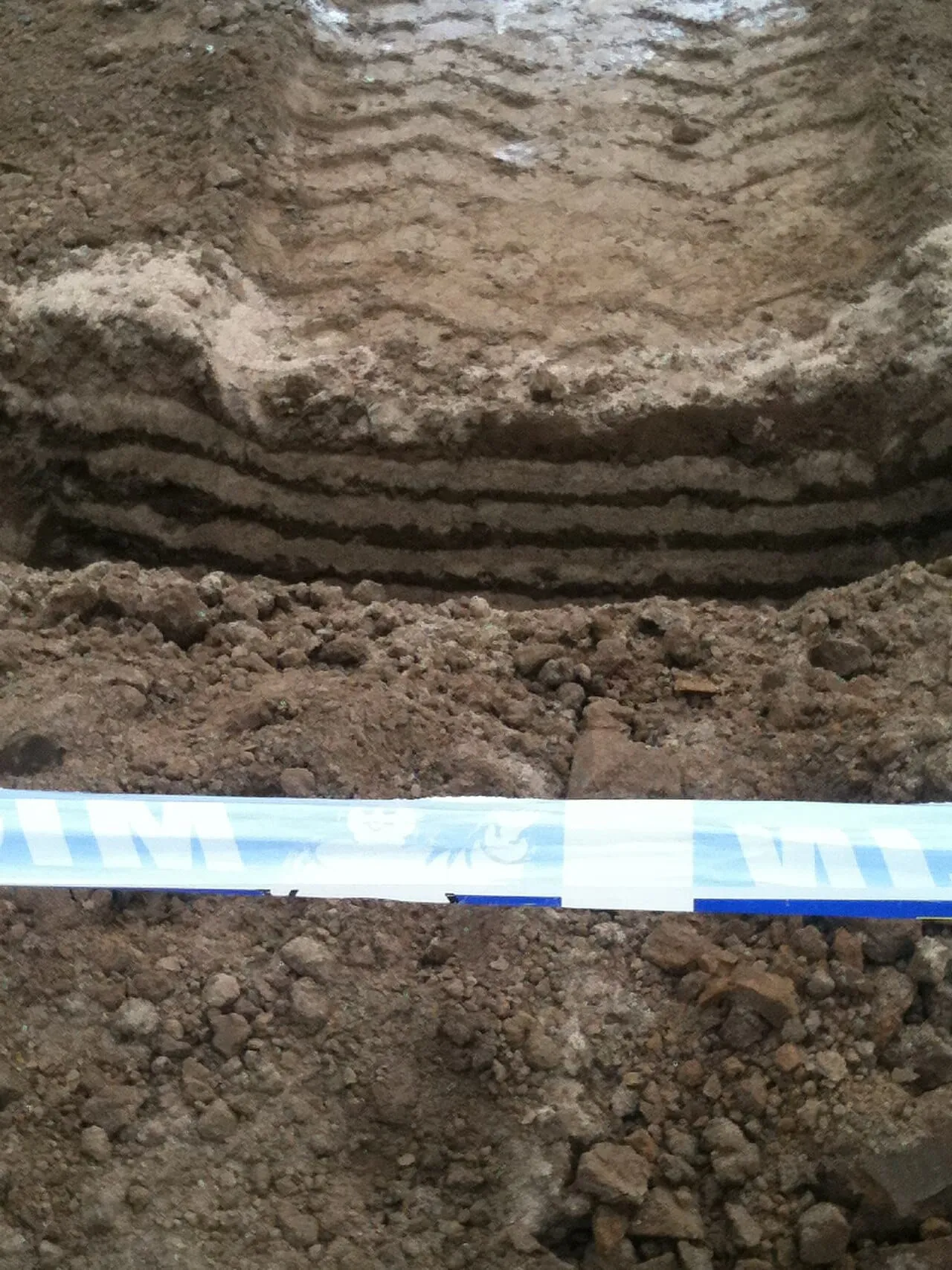
For a fuller picture, dig a small pit and look at the profile. Compacted layers appear as dense, often horizontally platy zones, and roots turn sideways when they hit one rather than growing through it.
What causes it
Pressure on wet soil, mostly.
Walking on beds, wheelbarrows over the same route, machinery, and construction traffic during building work all compress soil — and all do far more damage when the soil is wet, because water lubricates particles into a denser arrangement.
Clay soils compact most readily. Soils low in organic matter compact more than those with plenty.
Relieving it
Stop the cause first. Nothing you do to relieve compaction lasts if the traffic continues. Establish permanent paths, use boards to spread your weight when you must cross a bed, and stay off soil entirely when it is wet.
Add organic matter. This is the durable fix. University of Maryland Extension notes that soils high in organic matter have “a crumbly structure that resists soil compaction” — the structure is what prevents recompaction, and building it takes years of annual additions rather than one intervention.
Mechanical relief helps in the short term. Core aeration for lawns, a broadfork or garden fork for beds — inserted and levered to fracture the layer without turning the soil over. On a severely compacted bed, deep loosening once, followed by organic matter and no further traffic, is a reasonable approach.
Deep-rooted cover crops such as daikon radish penetrate compacted layers biologically and leave channels behind when they decay. Slower than a fork, and more durable.
What does not work
Rotavating annually. It loosens the top few inches while creating a smooth compacted pan immediately below the blade depth, and it destroys the soil structure that would otherwise resist compaction. It feels productive and makes the underlying problem worse.
- compaction
- soil structure
- drainage
- roots