Landscaping & Design
How Far Apart to Plant Shrubs
Spacing is set by mature width, which is why new planting looks sparse. How to space properly and live with the gap.
The Garden Magic Hub
- Level
- Beginner
On this page
Space for the size it will be, not the size it is
A shrub in a two-gallon pot is perhaps 18 inches across. The same shrub at maturity may be six feet across. Spacing is set by the second number, and almost nobody plants that way.
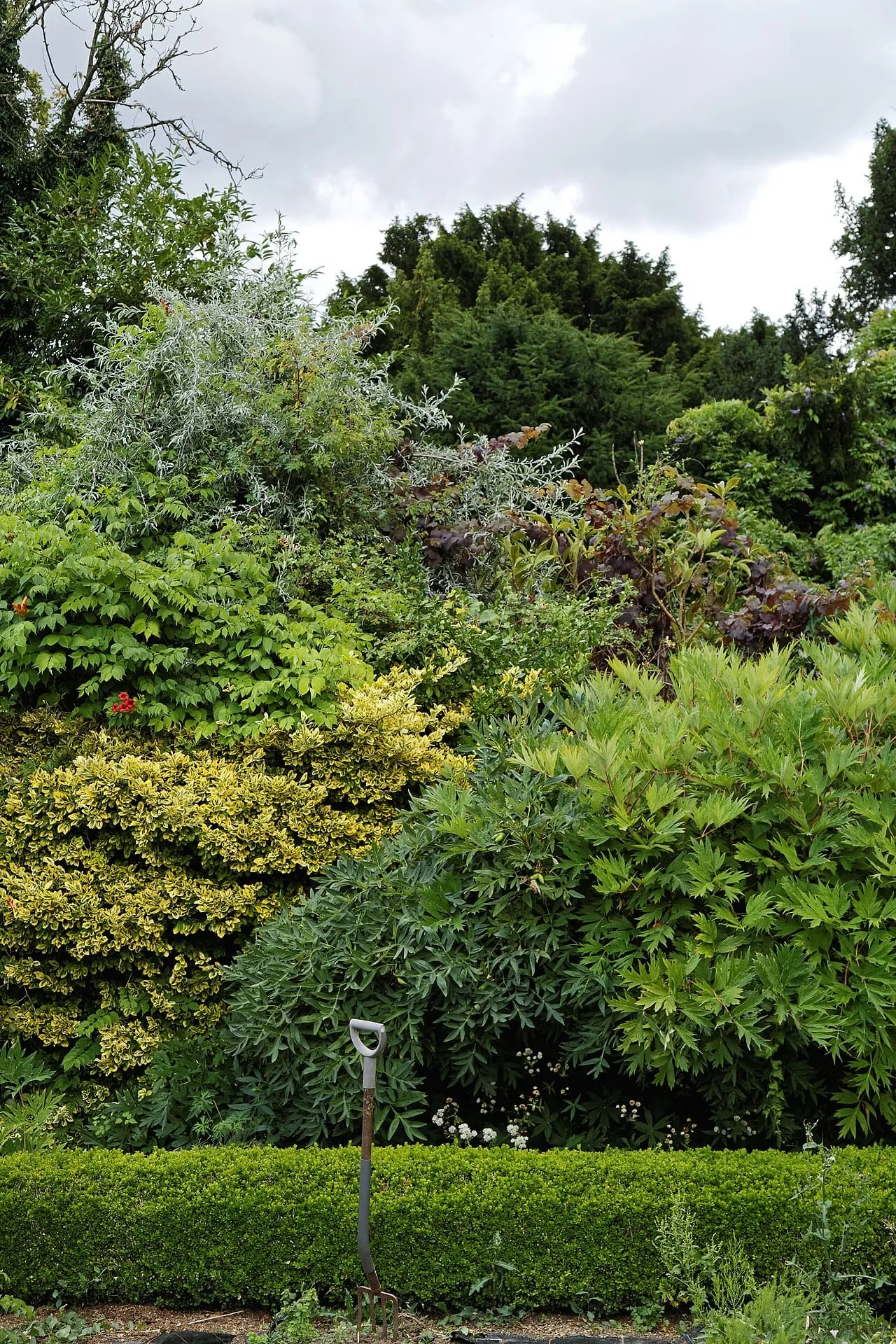
The result is the standard suburban outcome: a bed that looks beautifully full for three years and becomes an overcrowded thicket by year eight, at which point everything is pruned annually into shapes it does not want to be.
The working rule
Space shrubs so that their mature widths just touch.
For a shrub with a mature spread of 5 feet, that means centres 5 feet apart. For a mixed planting, add the two mature widths and halve the result: a 4-foot shrub next to a 6-foot shrub goes 5 feet apart.
Adjust from there:
- For a hedge or a solid mass, reduce by about a third so plants knit together.
- For specimens you want read as individuals, add space rather than removing it.
- Against a wall or fence, allow at least half the mature width from the structure — a 6-foot shrub needs 3 feet of clearance, or it grows lopsided and traps damp against the wall.
Where the mature width comes from
There is no universal formula, and no extension source will give you a spacing number for an unspecified shrub — because the answer is entirely species-dependent.
It comes from the plant tag, and from a second source if the tag looks optimistic. Nursery tags sometimes quote size at ten years rather than at maturity, which for a slow woody plant are very different numbers. Cross-check anything you are planting in quantity against an extension plant database.
Living with the gap
The honest problem with correct spacing is that a properly spaced new bed looks sparse, and it looks sparse for several years.
Three ways to handle it without compromising the permanent planting:
Interplant with annuals. Fill the gaps for the first two or three seasons with something you will remove.
Use perennials as temporary filler. Cheap, fast, and easy to lift out or divide when the shrubs need the room.
Mulch the gaps and accept them. A well-mulched bed with correctly spaced shrubs looks deliberate. It reads as a young planting rather than a failed one.
What not to do is plant the shrubs closer with the intention of thinning later. Almost nobody thins. It requires removing a healthy established plant, and by the time it is obviously necessary the roots are entangled and the survivors are already misshapen.
Get the planting right too
Spacing is wasted if the planting is wrong.
Clemson HGIC recommends digging the hole “two to five times wider than the root ball; the wider the hole is dug, the better” — wide, not deep. And never deeper than the height from the uppermost roots to the base of the root ball, with the root flare at or slightly above soil level.
Clemson also notes mulch should be kept 2 to 3 inches away from stems rather than piled against them.
- spacing
- shrubs
- planning
- mature size