Shrubs
How to Grow and Care for Burning Bush
Spectacular red autumn colour, and invasive from Connecticut to South Carolina and west to Wisconsin. Here is the problem, and NC State's list of native replacements.
The Garden Magic Hub
- Zone
- 4–8
- Light
- Full sun
- Water
- Moderate
- Level
- Beginner
- Season
- Fall
On this page
Burning bush earns its name — few shrubs turn a more intense red in autumn. It is also one of the most widely planted invasive shrubs in the eastern United States, and that is the first thing to deal with.
The invasive problem
NC State Extension states it directly: “This plant is an invasive species in North Carolina,” and it “is listed as invasive by the NC Invasive Plant Council.”
The USDA PLANTS Database independently flags it as carrying invasive status listings.
The affected range is not small. NC State gives it as “from Connecticut to South Carolina and west to Wisconsin” — essentially the entire region where the plant is popular, which is the whole eastern half of the country north of the Deep South.
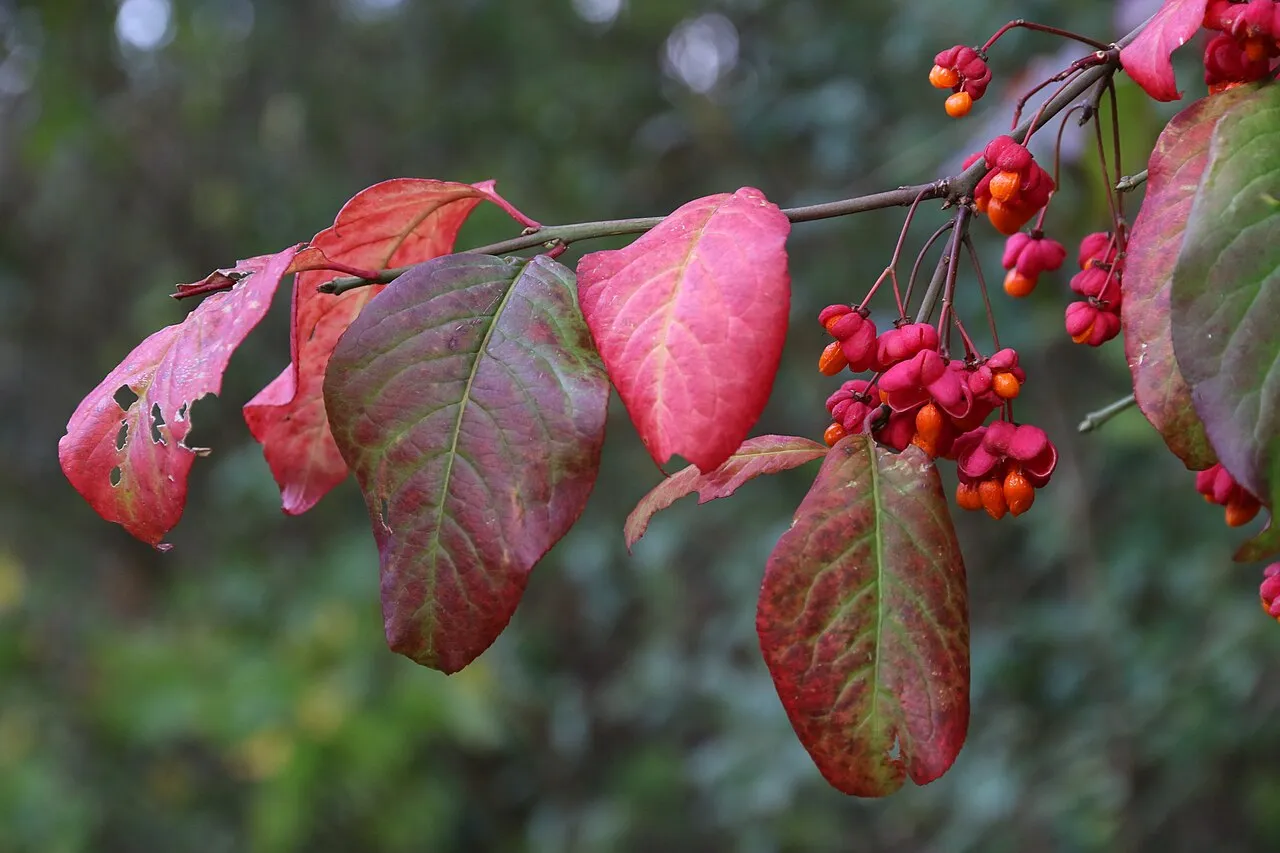
How it spreads is visible in the photograph above. The shrub seeds prolifically, and birds and deer eat the showy fall berries and disperse them well beyond the garden. It also reproduces from stems. Once established in woodland it forms dense thickets that shade out native understorey plants.
Several states now restrict or ban its sale. Check your own state’s regulated plant list before buying — these lists change, and a plant available at a garden centre is not necessarily legal or advisable to plant.
What to plant instead
This is where NC State is genuinely helpful: their page lists native alternatives outright. Several give comparable or better fall colour:
- Aronia arbutifolia — red chokeberry, brilliant red autumn colour plus fruit for birds
- Itea virginica — Virginia sweetspire, red to purple autumn colour, tolerant of wet soil
- Fothergilla gardenii — orange, red and yellow autumn colour, spring flowers
- Rhus aromatica — fragrant sumac, excellent red colour, very tough
- Vaccinium corymbosum — highbush blueberry, red autumn colour and fruit you can eat
- Viburnum dentatum — arrowwood viburnum, berries for birds
- Viburnum nudum — possumhaw, glossy foliage and colour-changing fruit
- Amsonia ciliata — bluestar, for golden autumn colour at perennial scale
Red chokeberry and fragrant sumac are the closest substitutes if intense red is what you are after.
If you already have one
You have not done something terrible — this shrub was recommended by nurseries for decades.
The proportionate response is to remove the berries before birds take them, which stops your plant seeding into surrounding land, and to consider replacing it when it comes to the end of its life. If you have woodland nearby, replacing it sooner is worth doing.
Growing it, if it is legal and appropriate where you are
Hardiness: zones 4a to 8b.
Size — and this is underestimated constantly: NC State gives 15 to 20 feet tall and wide.
The shrubs sold as compact foundation plants are usually the cultivar ‘Compactus’, which is smaller but still substantial. The species planted under a window becomes a serious problem within fifteen years, and burning bush responds badly to the hard annual shearing people then resort to.
Light: full sun or partial shade. Fall colour is significantly better in full sun — plants in shade turn a muddy pink rather than scarlet.
Soil: genuinely adaptable — clay, loam, sand or high organic matter, across acid, neutral or alkaline pH, preferring good drainage but tolerating moist or occasionally dry ground. Part of why it escapes so successfully.
The winged stems are the identification feature: green to reddish-brown stems carrying 2 to 4 corky wings, a quarter to half an inch wide, which give the plant its other common name, winged euonymus. They are most visible in winter.
The short version
Reliable, adaptable, and spectacular in autumn — and invasive across most of the eastern US, spread by birds eating the berries. Check your state’s regulations, and if you want intense red fall colour, plant red chokeberry or fragrant sumac instead. If you already have one, strip the berries each autumn.
- burning bush
- euonymus
- invasive plants
- fall colour
- native alternatives