Vines
How to Grow and Care for Boston Ivy
Boston ivy is not an ivy, and its adhesive pads should never touch wood or shingles. Here is where it belongs, and how to get it off a wall.
The Garden Magic Hub
- Zone
- 4–8
- Light
- Full sun
- Water
- Moderate
- Level
- Beginner
- Season
- Fall
On this page
Boston ivy is the vine on the old brick university buildings, and almost everything people assume about it from the name is wrong. It is not an ivy, it is not evergreen, and it is not from Boston.
What matters practically is the last one on that list of misconceptions: the surface you let it climb. That decision is close to irreversible, so it comes first.
It is a grape, not an ivy
NC State Extension files Parthenocissus tricuspidata in Vitaceae, the grape family. English ivy is Hedera, in a completely different family, and the two climb by different mechanisms.
The difference is not academic. English ivy climbs with aerial roots that work their way into mortar joints and cracks. Boston ivy climbs with tendrils tipped with adhesive discs — NC State describes “short tendrils branched with terminal sucker-like adhesive discs.” Those pads stick to a surface rather than growing into it.
Boston ivy is also deciduous. The famous ivy-covered wall is bare brown stems from November to April, which surprises people who were expecting the English ivy look.
The specific epithet tricuspidata means three-pointed, after the three-lobed leaves. Young plants often produce leaves split into three separate leaflets instead, which leads people to think they have been sold the wrong plant.
Never let it on wood or shingles
NC State is unambiguous: Boston ivy “should not be grown up wood or shingle walls.”
The adhesive pads are the reason. On sound masonry — brick, stone, concrete — they are mostly harmless, and the vine supports its own weight without any trellis. On anything else they cause real damage:
- Pads creep under shingles and clapboards and lift them.
- They pull paint off when the vine is removed, and sometimes while it is still attached.
- Stems work into gutters, shutters, vents and cable runs, and widen the gaps as they thicken.
- Wood stays damp under a mat of foliage that never dries out.
Even on masonry, think about where the growth ends up. A vine this vigorous reaches gutters and roof edges, and it needs cutting back from them every year whatever it is growing on.
If the wall is painted, shingled, clad or in any way not solid masonry, use a vine that climbs on a trellis you can lower, and keep Boston ivy for the brick.
Getting it off a wall
Pulling a Boston ivy off a surface tears the pads loose and takes paint and face material with them. The approach that limits damage is slower.
Sever the vine at the base and leave everything above it in place. The top dies, the foliage drops, and the adhesive discs deteriorate over the following months until the remaining stems come away with much less resistance. The dead pads that stay behind can be scrubbed off once they have dried out and lost their grip.
The roots will resprout, so expect to cut new shoots repeatedly through the next season.
Size — plan for the full extent
30 to 60 feet, and it gets there quickly.
This is a vine for a building face, a large retaining wall or a bank where you want ground covered. On a garden fence it is a permanent pruning commitment. Planting one against a small structure and expecting to keep it small is the usual mistake.
It is also effective as a bank cover, where it roots as it runs and holds soil on a slope nothing else will grow on.
Where it grows and what it needs
Zones 4a to 8b — properly cold-hardy, which is why it works across the Northeast and Midwest.
Everything else about its culture is undemanding. It takes full sun to shade, which is why it covers a north wall as happily as a south one, and ordinary soil across a wide pH range. Water it through the first season while it establishes; after that it largely looks after itself.
The vine is introduced in the lower 48 — it is native to eastern Asia. It does self-seed where birds drop the fruit, so it is worth knowing whether it is discouraged in your area before planting it near woodland.
Fall color is the reason to grow it
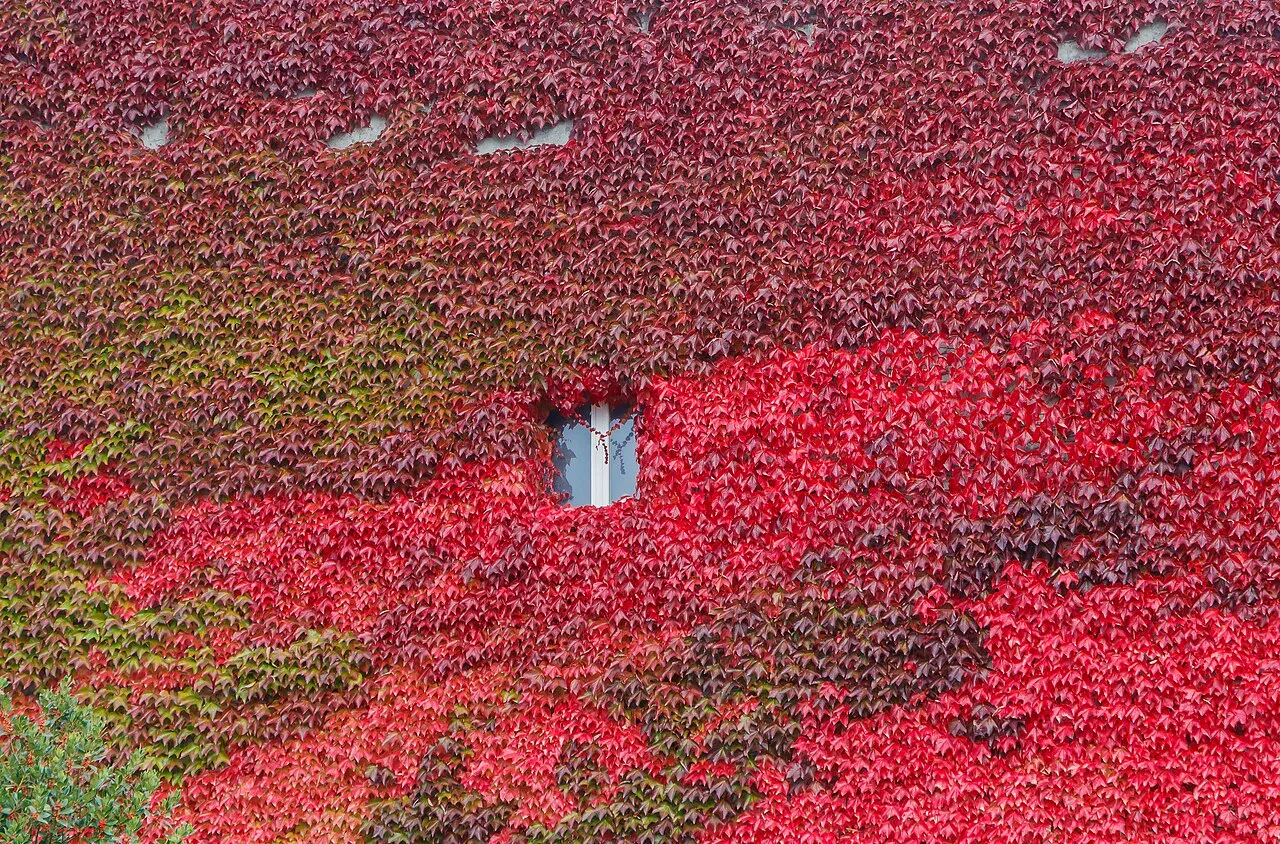
Summer foliage is plain glossy green. In autumn it turns through scarlet to deep burgundy, and because the plant covers a large unbroken area, the effect is a solid sheet of colour rather than a few branches.
Color is strongest in full sun. A vine on a shaded north wall turns later and duller — still worth having, but not the picture people have in mind.
Small blue-black berries follow the inconspicuous flowers. Birds eat them; people should not.
Problems
NC State lists no serious insect or disease problems, which is unusual and genuinely true of this plant. Japanese beetles will chew the foliage in regions where they are bad, and powdery mildew shows up in still, humid sites, but neither threatens the vine.
The maintenance burden is entirely about size and placement, not health. That is the thing to be honest with yourself about before planting.
The short version
A grape-family vine, not an ivy, and deciduous. It sticks to masonry with adhesive pads and will damage wood, shingles, paint, gutters and trim — so put it on sound brick or stone, or not at all. Expect 30 to 60 feet, full sun for the best burgundy autumn colour, and essentially no pest problems. To remove it, cut it at the root and wait for the pads to die rather than pulling it down.
- boston ivy
- parthenocissus
- climbing vines
- fall color
- wall damage