Screening Plants
How to Grow and Care for Black Bamboo
Black bamboo is a running bamboo that can spread 15 feet a year. Plant it only with a containment plan — here is what that actually requires, and the alternative.
The Garden Magic Hub
- Zone
- 7–10
- Light
- Full sun
- Water
- Moderate
- Level
- Advanced
On this page
Black bamboo is one of the most striking plants available to a home gardener. It is also a running bamboo in the genus Phyllostachys, and planting one without a containment plan is a decision you and your neighbours live with for a very long time.
Running, not clumping
Bamboos divide into two groups, and this is the distinction that matters more than any other.
Clumping bamboos expand slowly outward from a central crown, adding a few inches a year. They behave like ordinary large grasses.
Running bamboos spread by long underground rhizomes that travel horizontally and send up new culms wherever they surface. NC State Extension puts the rate at up to 15 feet a year.
Phyllostachys nigra is a runner. So is every other Phyllostachys. In Maryland, two members of the genus — golden bamboo (P. aurea) and golden groove bamboo (P. aureosulcata) — are regulated as invasive.
NC State’s warning is worth quoting directly
Extension services do not usually write like this:
“Your decision could impact not only you, but your neighbors and generations to come.”
And on removal:
“Unless you are ready to commit to at least three years of active management, there is little point in beginning.”
Rhizomes cross property lines. They come up through lawns, in flower beds, and occasionally through gaps in paving. The plant does not distinguish between your garden and the one next door, and in a number of jurisdictions the resulting disputes have ended up in court.
None of this means do not plant it. It means plant it deliberately.
Containment, done properly
Three approaches, and NC State suggests they work best together.
A physical barrier at least 28 inches deep. Use HDPE, concrete, metal or 60-mil polypropylene. Bamboo rhizomes run in the top foot or so of soil, which is why a barrier of this depth works — but the depth is not optional, and a shallow edging strip does nothing.
Leave about 2 inches of barrier above soil level. Rhizomes that hit the barrier travel upward along it, and a flush-buried barrier simply lets them cross over the top.
Understand what a barrier does. This is the part people miss: rhizomes are not stopped by barriers, they are deflected. A barrier redirects growth; it does not kill it. The area outside must be checked regularly for escapes, and any found must be cut.
A monitoring trench is the alternative or supplement: dig a 12 × 12 inch trench around the planting, and inspect it. Rhizomes crossing open air are visible and easy to sever. This is lower-tech than a barrier and, done consistently, more reliable.
A buffer zone works where there is space: NC State suggests 20 feet between the planting and anything you want to protect, mown regularly in spring as shoots emerge. Mowing kills new culms.
In practice, a container is the honest answer for most gardens. A large above-ground planter contains it absolutely, and black bamboo grows well in one.
The native alternative
If what you want is a bamboo look rather than this specific plant, NC State recommends considering Arundinaria gigantea — river cane, the bamboo native to the southeastern United States. It spreads too, but it belongs here, supports native wildlife, and comes without the regulatory and neighbourly complications.
Growing it, if you have decided
Light: full sun to part shade. Best culm colour comes with good light.
Soil: moist, well-drained and reasonably fertile. Bamboo is a grass and a hungry one — it responds strongly to feeding, which is worth remembering as a way to avoid encouraging it near a boundary.
Water: regularly while establishing. Established plants tolerate short dry spells but curl their leaves when thirsty.
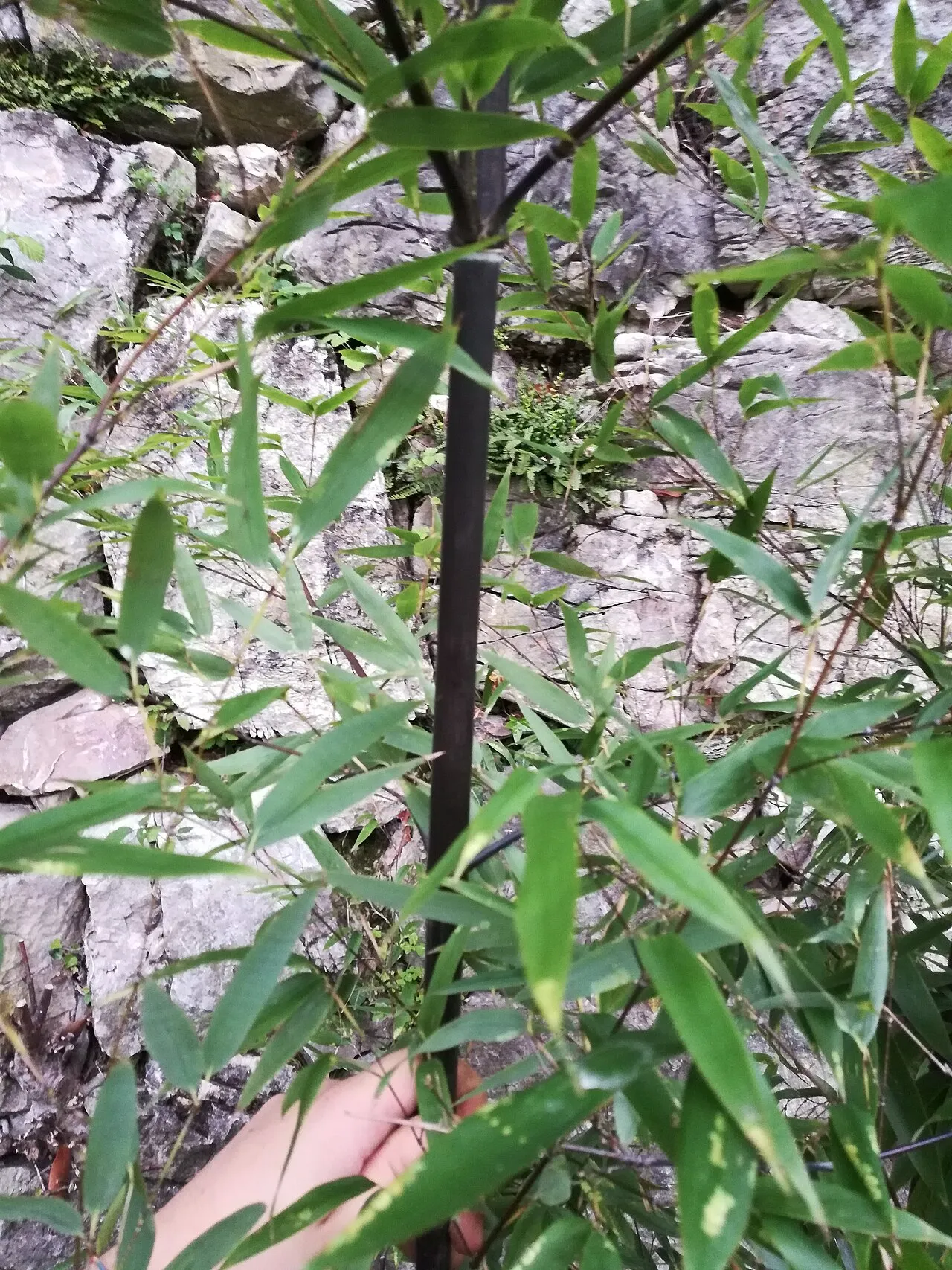
The colour: new culms emerge green and darken through brown to near-black over their first year or two. A newly planted black bamboo will not look black immediately, and this is normal rather than a mislabelled plant.
Thin out older culms at the base each year to show off the black ones — the display improves markedly when you can see the canes rather than a thicket.
If you inherit an established stand
Removal is a multi-year project. The physical route is cutting every cane, digging out as much rhizome mass as you can, and then mowing weekly to exhaust new shoots. Chemical control needs repeated high-concentration applications over several years and is complicated by the height of mature canes.
Either way, NC State’s three-year minimum is realistic. Partial effort achieves nothing — the stand regenerates from whatever rhizome is left.
The short version
A beautiful plant and a serious commitment. It runs up to 15 feet a year, so grow it in a large container, or behind a 28-inch barrier with 2 inches proud of the soil and a monitoring trench you actually inspect. Consider native river cane instead. And if you are thinking of removing an existing stand, budget three years.
- black bamboo
- running bamboo
- rhizome barrier
- invasive plants
- screening