Trees
How to Grow and Care for Bloodgood Japanese Maple
'Bloodgood' holds its red through summer better than most, but only with the right light. Here is where to plant it, and the two problems worth knowing.
The Garden Magic Hub
- Zone
- 5–8
- Light
- Partial sun
- Water
- Moderate
- Level
- Intermediate
- Season
- Fall
On this page
‘Bloodgood’ is the Japanese maple most people end up buying, and with good reason: it is the standard against which the other red-leaved cultivars are measured. It is also planted in the wrong spot more often than almost any other small tree.
Size, which is not small
NC State Extension gives 15 to 20 feet tall and 12 to 20 feet wide, with a slow to moderate growth rate.
Twenty feet each way is a proper tree, not a shrub. It gets planted three feet from a house wall constantly, because the plant in the pot is four feet tall and the label says “Japanese maple.” Give it the space it will eventually need — the slow growth means you will not notice the mistake for a decade, and by then moving it is a serious job.
The upside of that slow growth is that it never becomes a maintenance problem, and the eventual shape — broad, layered, horizontally branched — is worth waiting for.
Light: the single most important decision
This is where ‘Bloodgood’ succeeds or disappoints, and the answer depends entirely on where you garden.
NC State’s guidance: it tolerates full sun in northern regions, but “in southern areas, it prefers partial shade to avoid leaf sun scorch during the hot dry summers.”
Two consequences follow.
Leaf scorch — crisp brown leaf margins by midsummer — is the classic ‘Bloodgood’ complaint in hot climates, and it is a siting problem, not a disease. Once the leaf edges have burnt they stay burnt for the season.
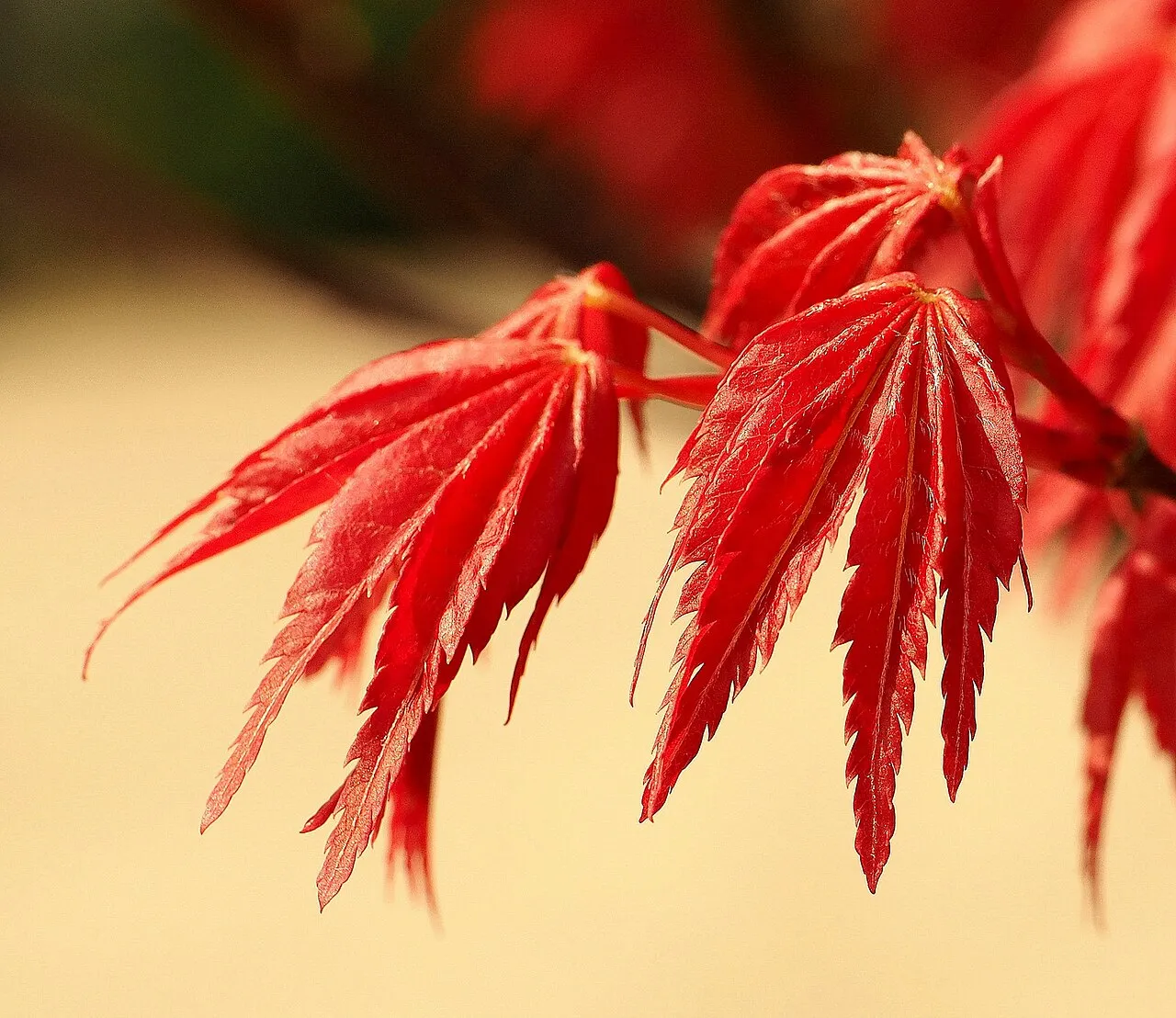
Colour is affected too. The red persists through summer, but NC State notes that in hot dry areas leaves “may be greenish red” or scorch without adequate shade and irrigation. So a plant in a punishing site loses both the foliage quality and the colour that made you buy it.
The practical rule: morning sun and afternoon shade almost everywhere south of the Mid-Atlantic. In cooler northern gardens, full sun gives the strongest colour.
Autumn is the reward regardless — NC State gives fall colour as crimson to reddish-orange.
Soil
Well-drained, acidic, organic soil.
Drainage matters more than fertility here, and for a specific reason covered below. NC State’s suggestion for difficult ground is direct: “you can plant higher or in a raised bed in heavy clay soil for better drainage.”
Planting slightly proud of the surrounding grade is cheap insurance on clay. Mulch a wide circle, keep the mulch off the trunk, and water well through the first few summers — established Japanese maples are reasonably tough, but young ones are not drought tolerant.
Verticillium wilt is the one that kills them
Of the problems NC State lists, this is the serious one: ‘Bloodgood’ is susceptible to verticillium wilt in poorly drained conditions.
Verticillium is a soil-borne fungus that blocks the tree’s water-conducting tissue. It typically appears as sudden wilting and dieback of one branch or one side of the tree while the rest looks fine, often in midsummer. Cut into an affected branch and you may find dark streaking in the wood.
There is no cure. Management is prevention and slow decline management: drainage, drainage, and not planting where a verticillium-susceptible plant has died before. The disease also affects tomatoes, potatoes, eggplant, cotton and many trees, so a spot where those have failed is a spot to avoid.
The other problems — aphids, scale and borers — NC State notes “rarely result in long-term health problems.”
Pruning
Minimal, and at the right time. NC State suggests February, while dormant, if you want to alter the shape.
Japanese maples bleed heavily if cut in late winter as sap rises, so the earlier part of dormancy is safer. More importantly, most ‘Bloodgood’ specimens need very little pruning — remove dead, crossing and rubbing branches, and otherwise let the layered natural shape develop. The most common pruning mistake is over-thinning a young tree into a sparse, artificial outline.
The short version
Allow 20 feet each way. Morning sun with afternoon shade in the South, full sun in the North. Acidic, well-drained, organic soil — planted high or in a raised bed on clay, because verticillium wilt follows poor drainage and has no cure. Prune lightly in February, if at all.
- japanese maple
- bloodgood
- leaf scorch
- verticillium wilt
- small trees