Groundcovers
How to Grow and Care for Blue Rug Juniper
Six inches tall and six feet wide, drought, salt and deer tolerant — and a cultivar of a North American native. The best groundcover for a hot dry slope.
The Garden Magic Hub
- Zone
- 4–9
- Light
- Full sun
- Water
- Low
- Level
- Beginner
On this page
Blue rug juniper is the plant landscapers reach for when a slope is too steep to mow, too dry to plant, and too visible to leave bare. It is also, unexpectedly, a native.
It is a selection of a North American species
‘Wiltonii’ is a cultivar of Juniperus horizontalis, creeping juniper — which the USDA PLANTS Database records as native to the lower 48, Canada and Alaska.
That surprises most people. Blue rug is so ubiquitous in commercial landscaping that it reads as a generic nursery plant, but the species behind it grows wild across northern North America, on rocky slopes, dunes and exposed ground — exactly the conditions it is used for in gardens.
The dimensions are extreme
NC State Extension gives 4 to 6 inches tall and 4 to 6 feet wide.
Read that again: half a foot high, six feet across. This is the flattest woody plant in common cultivation, and the ratio is the whole point — it covers ground without obstructing anything, holds soil on a bank, and never needs shearing to stay low.
Growth is rapid, so a planting closes up faster than most groundcovers. Space plants about 4 feet apart and expect them to meet within a few seasons.
Where it earns its place
NC State’s tolerance list is unusually broad: drought tolerant, salt tolerant, and deer resistant, performing well on slopes and in coastal settings.
That combination is rare and it defines the plant’s job:
- Steep or awkward banks where mowing is unsafe and erosion is a problem
- Hell strips between sidewalk and road, where salt spray and reflected heat kill most things
- Coastal gardens exposed to salt wind
- Rock walls and edges, where it spills over
- Anywhere deer browse everything else
Sun and drainage are the two requirements
Full sun — six or more hours, and NC State lists it as a requirement rather than a preference. Blue rug in shade thins out, loses colour and becomes prone to disease.
Good drainage. It takes clay, loam, sand or shallow rocky ground at almost any pH, but it will not tolerate wet feet. NC State notes it is susceptible to blights and fungal disease particularly in wet locations, where root rot may develop.
Give it sun and drainage and it is close to indestructible. Put it in damp shade and it will die slowly and unattractively.
What actually goes wrong
Fungal blight is the common failure, and it is usually a symptom rather than a cause. Dense mats in humid weather hold moisture; branches die back in patches and turn brown from the inside outward. The response is improving airflow — thinning crowded plantings, clearing debris — rather than spraying.
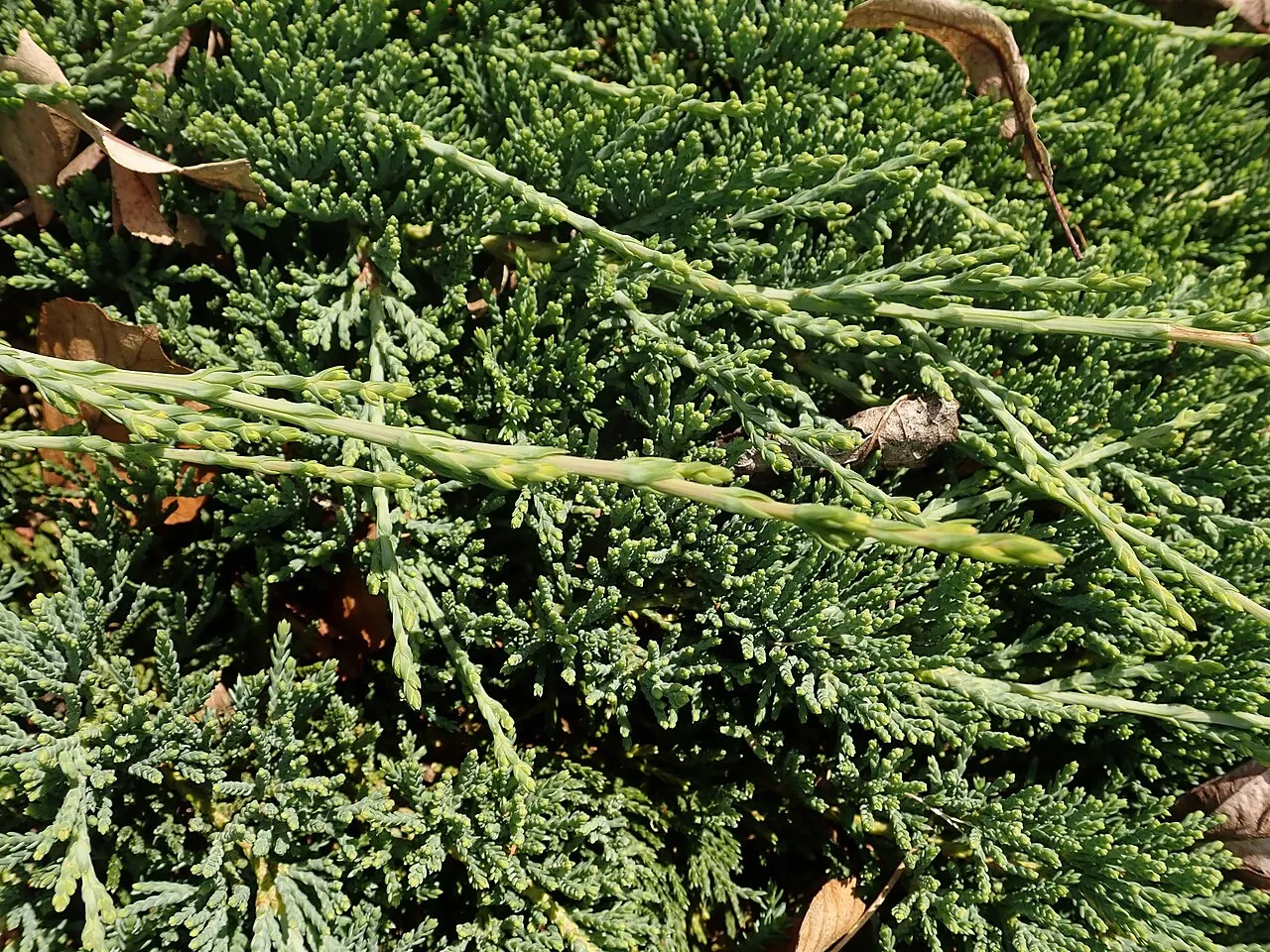
Which brings us to the maintenance issue visible in the photograph above.
Leaf litter collects in the mat. Prostrate junipers are extremely efficient at catching falling leaves, and the debris both looks untidy and traps moisture against the foliage, which is what invites the blight. A leaf blower on a low setting clears it; raking tears the growth.
This is the single ongoing job with the plant, and it is the reason blue rug looks superb under open sky and poor beneath deciduous trees.
Pests — aphids, bagworms, caterpillars, false spider mites and scales — are usually cosmetic on a healthy plant. Bagworms are worth watching for, since a heavy infestation can defoliate.
One warning about siting: juniper foliage is prickly and unpleasant to weed through, and once a mat has closed over, removing weeds from inside it is genuinely difficult. Clear the ground thoroughly and mulch between plants for the first couple of seasons, because you will not get another comfortable chance.
Pruning
Very little. Remove dead or diseased branches, and shorten runners that stray onto a path. Do not shear it — junipers do not reliably regrow from bare old wood, and a hard cut leaves a permanent brown gap.
The short version
A native creeping juniper, six inches high and six feet across, that shrugs off drought, salt and deer. It needs full sun and drainage and nothing else. Clear the ground of perennial weeds before planting, blow leaf litter off it each autumn, and never shear it.
- blue rug juniper
- groundcovers
- erosion control
- drought tolerant
- native plants