Groundcovers
How to Grow and Care for Blue Star Creeper
A two-inch walkable groundcover for between pavers, studded with pale blue stars from spring into summer. It needs moisture, and it needs edging.
The Garden Magic Hub
- Zone
- 6–8
- Light
- Partial sun
- Water
- Moderate
- Level
- Beginner
- Season
- Spring, Summer
On this page
Blue star creeper is one of a short list of plants you can genuinely walk on, and probably the prettiest of them.
What it does
NC State Extension gives the dimensions as 2 to 3 inches tall with a spread of 1 foot 2 inches to 2 feet — a dense, flat mat rather than a mounding plant.
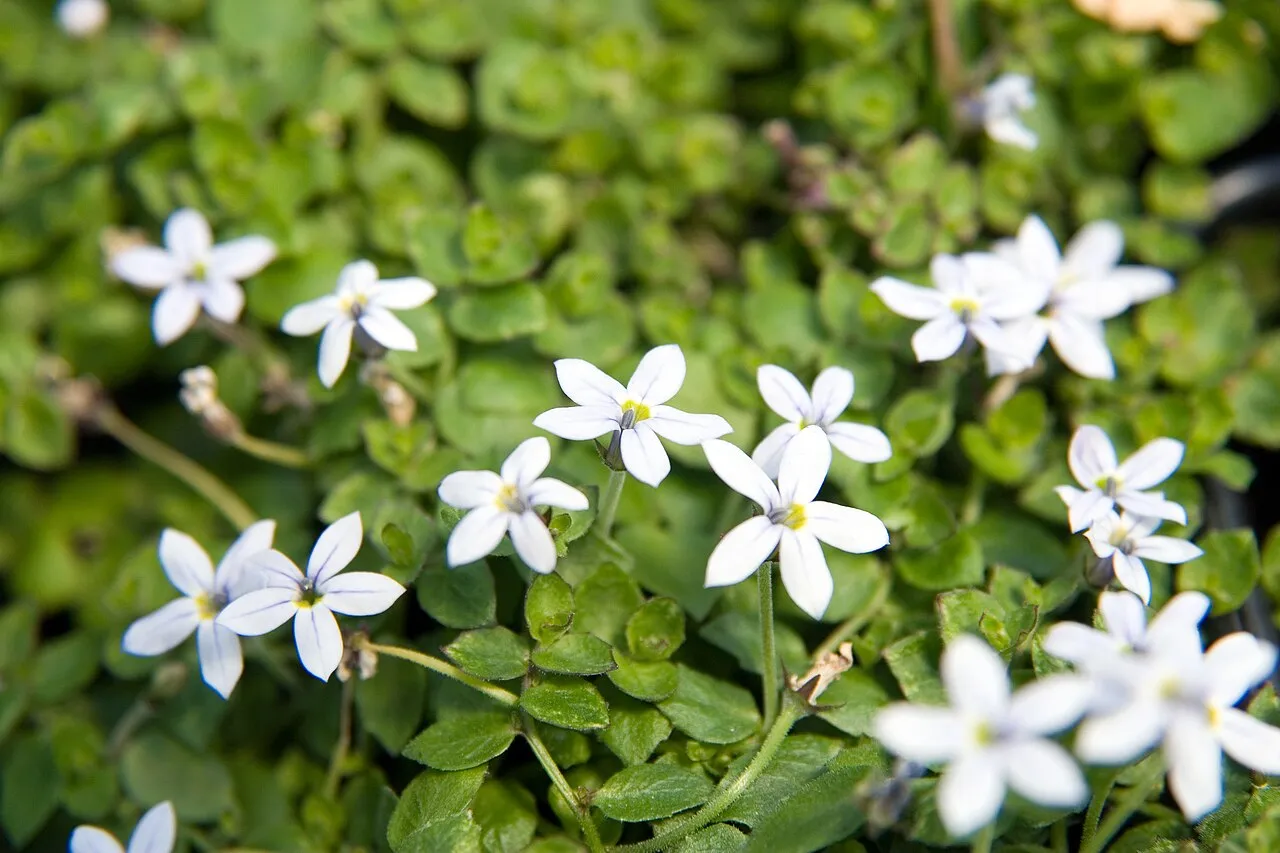
The flowers are light blue, about a quarter inch across, star-shaped with 4 to 5 petals, appearing in spring and continuing into summer. They are scattered across the mat rather than clustered, which gives the effect of a green carpet dusted with pale blue.
NC State lists it as resistant to foot traffic — which, combined with that height, is the whole reason to plant it.
Where it works
- Between stepping stones and pavers, which is the classic use
- Narrow paths and small awkward areas a mower cannot reach
- Around the edges of a patio
- As a small-scale lawn alternative in a low-traffic area
Like brass buttons, the other common walkable mat, “foot traffic tolerant” means occasional crossing rather than a play area. Neither will take the use a lawn does.
The two differ usefully, though. Brass buttons has ferny foliage and inconspicuous button flowers; blue star creeper has plain rounded leaves and a real flower display. Blue star creeper also takes more shade.
Conditions
Hardiness: zones 6a to 8b — a narrower range than many groundcovers, and the main limit on where it can be used.
Light: dappled sunlight or partial shade, with 2 to 6 hours of direct sun. This is a genuinely shade-tolerant walkable groundcover, which is unusual and makes it useful under high tree canopy where lawn struggles.
Soil: high organic matter, on loam, sand or shallow rocky ground.
Moisture is the requirement to plan around. NC State lists it as tolerating occasionally wet conditions, and in practice it wants consistent moisture. This is not a plant for a hot dry hell strip — a dry fortnight browns the mat, and a shallow-rooted two-inch plant has no reserve at all.
If your site bakes, choose something xeric instead. If it stays reasonably damp, this is close to ideal.
It runs — install edging
NC State describes a medium growth rate and a spreading habit, throwing off runners, and recommends managing it with deep landscaping edging material.
That recommendation is worth following at planting rather than later. The runners root as they travel, and a mat that has crossed into a lawn or a bed is tedious to pull out of. Deep edging set at installation contains it permanently and costs almost nothing at that stage.
NC State does not classify it as invasive, and the spread is steady rather than aggressive — but “put edging in first” is the difference between a tidy path and an annual chore.
Planting
Plant plugs 6 to 12 inches apart and let them knit together. Work organic matter into the top few inches first, because this is a surface-rooting plant and the top layer is all it will ever use.
Water regularly through the first season while it establishes. Once the mat has closed, it largely looks after itself in a suitable site.
Problems
NC State reports no significant problems with diseases, insect pests or other issues.
The failure modes are environmental rather than biological: drying out, too much sun in a hot climate, or being planted outside its zone range.
The short version
A two-inch walkable mat for dappled shade and part sun, flowering pale blue from spring into summer, hardy in zones 6 to 8. Give it organic soil that stays reasonably moist, install deep edging when you plant it, and keep it out of sites that bake dry.
- blue star creeper
- isotoma
- groundcovers
- stepping stones
- lawn alternatives