Groundcovers
How to Grow and Care for Brass Buttons
Brass buttons is a walkable, two-inch groundcover that works as a lawn alternative — provided your soil is neither compacted nor dry. Both limits are hard.
The Garden Magic Hub
- Zone
- 4–10
- Light
- Partial sun
- Water
- Moderate
- Level
- Beginner
On this page
Brass buttons is one of the few groundcovers you can genuinely walk on, and one of the more useful answers to the awkward strip of ground where grass will not do.
It also has two specific limitations that decide whether it will work for you, and they are worth checking before you buy a flat of plugs.
What it is
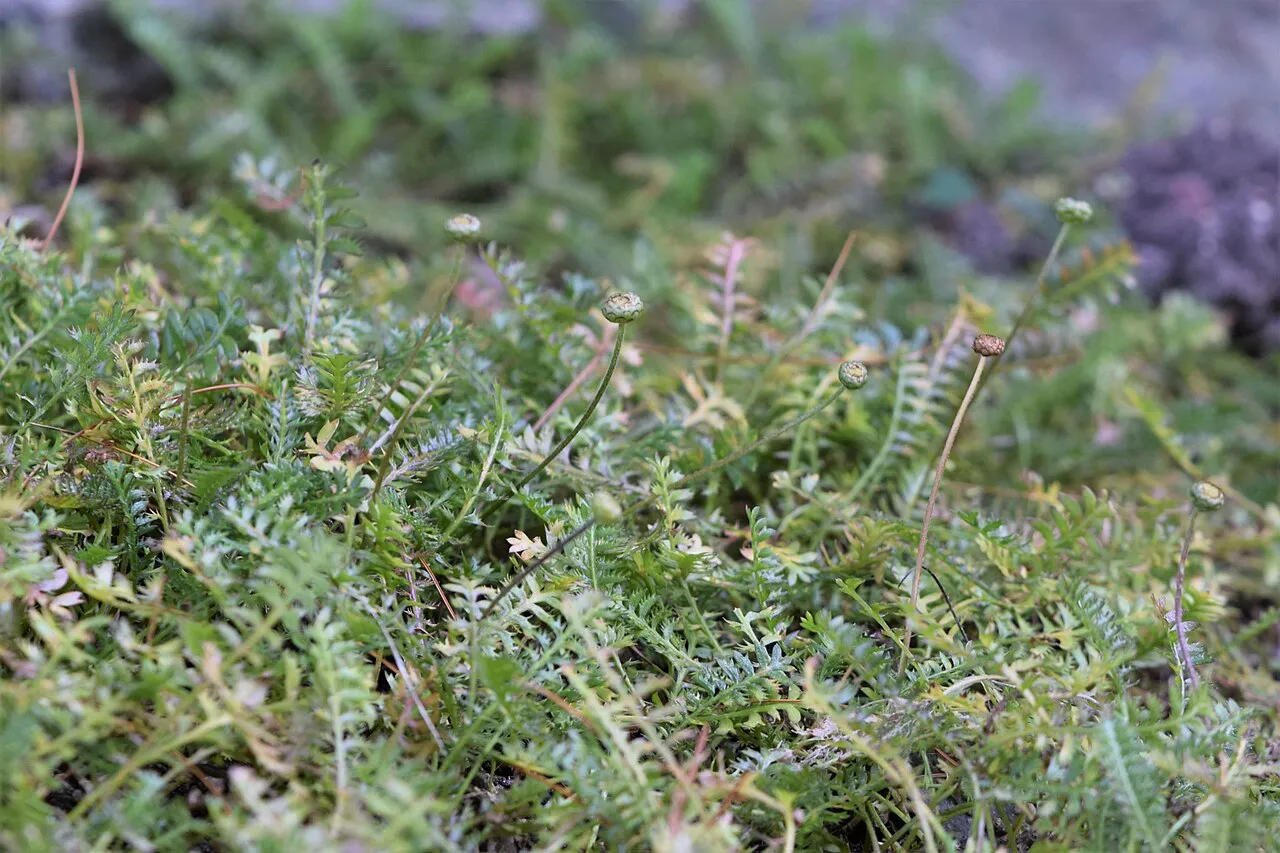
Leptinella squalida, formerly Cotula squalida, is a very low-growing member of the daisy family from New Zealand. It looks nothing like a daisy: the foliage is finely divided and fern-like, in green or bronze depending on cultivar, and the flowers are small flat button-heads on thin stalks — hence the name.
Wisconsin Horticulture gives it as hardy in zones 4 to 10, growing only half an inch to 2 inches high but spreading into dense mats. In zones 9 and 10 it stays evergreen; further north it dies back and returns.
You can walk on it
This is the point of the plant. Brass buttons tolerates light foot traffic well — gardeners describe it as walkable and hardy, and durable enough to take a dog running across it.
That makes it useful for the places lawn fails and ornamental groundcovers get trampled:
- Between stepping stones and pavers
- Narrow side paths and strips beside a drive
- Small awkward areas where a mower cannot go
- As a low green carpet under taller planting
It is not a substitute for a lawn that takes heavy use. “Light traffic” means occasional crossing, not a play area.
The two limits
It does not tolerate compacted soil. This is the one that catches people, because the places you most want a walkable groundcover — beside paths, along drives — are often exactly where the soil has been compacted. Wisconsin notes that a planting languishing after a few years may need to be lifted, the soil loosened and amended, and the plants replaced.
If you are planting into ground that has been driven on or walked over for years, fix the soil first. The plant will not fix it for you.
It is not drought tolerant. Brass buttons needs regular watering, especially on light sandy soils. A low mat of fine foliage has a shallow root system and very little reserve; a dry fortnight browns it off.
So this is not the plant for a hot dry hell strip. For that you want something genuinely xeric. Brass buttons is for places that stay reasonably moist.
Light
Full sun in cooler climates, part shade where summers are hot.
That is a useful rule for a lot of small groundcovers, and it follows from the drought sensitivity — full sun in a hot climate dries a shallow-rooted mat faster than you can water it.
Soil
It prefers acidic, loamy soil rich in organic matter, but adapts to a wide range of soil types provided the two limits above are respected: loose rather than compacted, and not chronically dry.
Work organic matter in before planting. This is a plant that spreads across the surface rather than digging deep, so what you do to the top few inches is what matters.
Planting and spread
Plant plugs 6 to 12 inches apart and let them knit together. Growth is steady rather than explosive, and in most of the US the top growth dies back over winter and regrows in spring, so give it a full season before judging coverage.
It spreads by creeping stems that root as they go, which also makes it easy to propagate — lift a rooted piece and replant it.
Because it spreads by runners it can move into adjacent beds. In practice it is easy to pull up, and the shallow rooting that makes it drought-sensitive also makes it simple to control at the edges.
Cultivars
‘Platt’s Black’ is the widely grown selection, with bronze-black foliage that contrasts strongly against pale stone. The plain green species reads more like a moss or a low fern.
The short version
A two-inch walkable mat for light traffic, hardy from zone 4, happiest in loose organic soil kept reasonably moist. Check two things before buying: that your soil is not compacted, and that the spot does not bake dry. If either is true, this is the wrong plant, and no amount of care will make it right.
- brass buttons
- leptinella
- groundcovers
- lawn alternatives
- stepping stones