Houseplants
Why Anthuriums Stop Flowering
An anthurium that has stopped producing spathes is usually short of light or overdue a repot. How to work out which, and what to change.
The Garden Magic Hub
- Light
- Partial sun
- Water
- Moderate
- Level
- Intermediate
On this page
Anthuriums should flower more or less continuously
This is worth knowing before you start troubleshooting, because it sets the expectation.
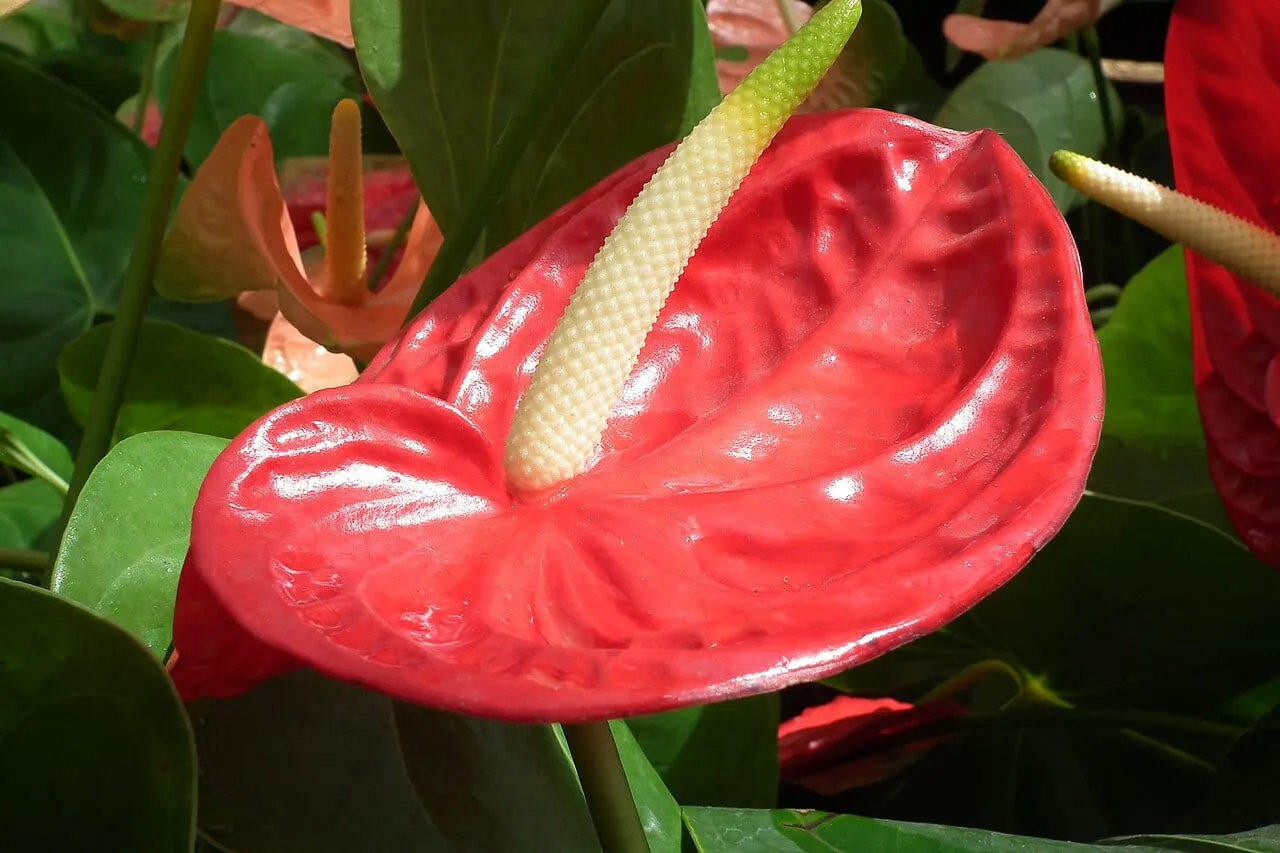
Clemson HGIC notes that anthurium plants produce flowers continuously, with each one lasting about six weeks. A healthy, well-sited plant is rarely without a spathe.
So a plant that has produced nothing for months is genuinely telling you something, unlike a seasonal bloomer having its off period.
Light is nearly always the answer
Clemson’s requirement is specific: anthuriums need bright but indirect light for maximum flower production.
The failure mode is a plant that looks perfectly healthy — large, glossy, dark green leaves — but never flowers. Anthuriums tolerate low light by putting their energy into foliage, so a plant in a dim corner rewards you with leaves and nothing else.
What to do: move it near an east or west window, or a few feet back from a south-facing one. Bright enough to read comfortably by daylight all day is the practical benchmark. Direct midday sun scorches the leaves, so filtered light is the target rather than raw exposure.
Give it a couple of months. Anthuriums respond, but not instantly.
Temperature
Clemson gives day temperatures above 68°F, up to about 85°F, and nights of 60–65°F.
Most homes satisfy this without effort, which is why temperature is rarely the culprit indoors. It matters if the plant sits by a cold window in winter, near an exterior door, or in an unheated room — all of which push nights below the range and stall the plant.
The potting mix people get wrong
Anthuriums are epiphytes. In the wild they grow on other plants rather than in soil, and Clemson notes they prefer a coarse, well-drained medium.
Standard potting compost is too dense and holds too much water around roots adapted to air. A plant in heavy wet mix will sulk, stop flowering, and eventually rot.
Repot into something chunky — an orchid-style bark mix, or potting compost cut heavily with bark and perlite. This is the single change most likely to help a plant that has been declining slowly for a year in ordinary compost.
Watering
Clemson’s guidance is to water thoroughly, then allow the mix to dry slightly between waterings.
Both extremes suppress flowering. Constantly saturated mix damages the roots; letting the plant dry to wilting repeatedly stresses it. Aim for evenly moist, never soggy, and empty the saucer.
Old flowers and feeding
Cut spent spathes off at the base once they fade or turn green — leaving them consumes energy that could go into the next one.
Feed during active growth with a balanced houseplant fertiliser at label strength or slightly below. As with orchids, feeding does not substitute for light: a dark-sited anthurium will not flower because you fed it.
- anthurium
- flowering
- light
- repotting