Cacti
How to Grow and Care for Bunny Ear Cactus
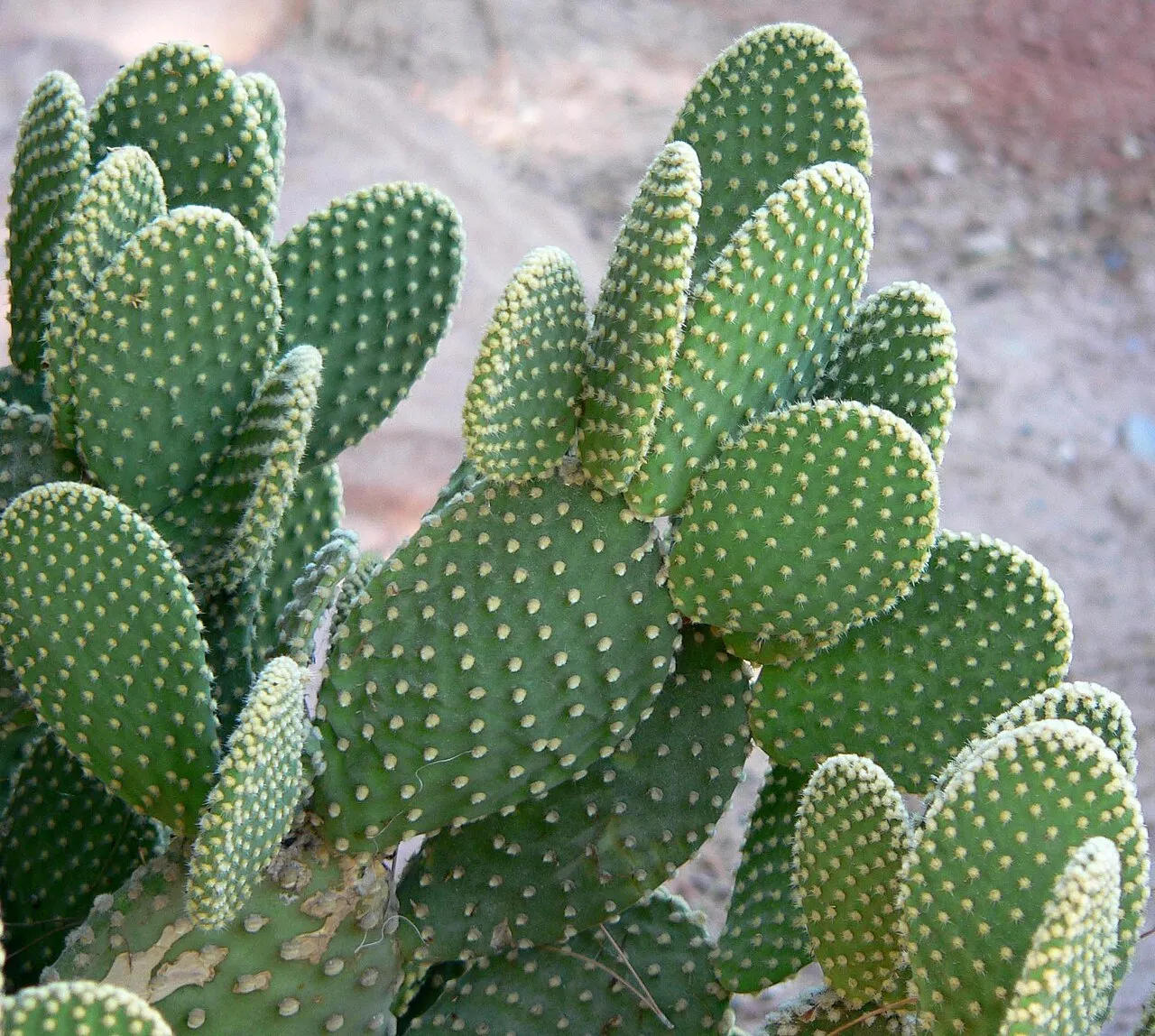
It looks soft and spineless, and that is the trap. Those fuzzy dots are glochids — barbed bristles that detach at the slightest touch and are miserable to remove.
The Garden Magic Hub
- Zone
- 9–11
- Light
- Full sun
- Water
- Low
- Level
- Beginner
On this page
Bunny ear cactus is the one that looks safe. No long spines, no obvious threat — just soft-looking pads dotted with what appear to be little tufts of fuzz.
Those tufts are the problem.
Glochids, not spines
NC State Extension describes them precisely: instead of true spines, the pads carry “white, yellow, or reddish-brown bristle (glochids)” — and:
“The bristles are very thin, barbed, and will detach with the slightest touch.”
Three properties make glochids worse than ordinary cactus spines:
They detach on contact. A spine stays on the plant unless you push into it. Glochids transfer to skin, clothing or fur at a brush.
They are barbed. They work inward rather than pulling straight out, and they break when gripped.
They are nearly invisible. A spine is easy to see and remove with tweezers. Glochids are hair-fine, often lodged below the skin surface, and produce contact dermatitis — persistent itching and irritation for days.
NC State’s instruction is short: “Wear protective gloves when handling this plant.”
Practical handling
Ordinary gardening gloves are not enough — glochids pass through cloth and then sit inside the glove. Use thick leather or nitrile-coated gloves, or handle pads with tongs or folded newspaper.
Where to put it: not on a windowsill people reach past, not at the edge of a desk, and not in a child’s bedroom. It is a beautiful plant and a bad choice at arm height in a busy room.
If you do get glochids in skin, they are notoriously difficult to remove — fine tweezers under magnification for what you can see, and there is a well-known trick of applying and peeling white glue to lift the rest. Persistent irritation, or anything near the eyes, is worth a doctor’s attention rather than improvisation.
NC State adds one more, for the adventurous: “Remove spines and glochids from pads and fruit before eating.” Opuntia pads and fruit are edible, but not straight off the plant.
Growing it
With handling understood, this is an easy plant.
Hardiness: zones 9a to 11b outdoors; a houseplant everywhere colder.
Size: 2 to 3 feet tall and 4 to 5 feet wide — wider than tall, and larger than the small pot it usually arrives in suggests. Outdoors it forms a sprawling colony.
The pads: NC State describes “fleshy, flat, segmented, oval to round (6 inches in diameter), light to medium green stem-like pads” studded with white areoles. New pads emerge in pairs from the top of older ones, which is what produces the rabbit-ear silhouette.
Light: full sun to partial shade. Good light keeps the pads compact; low light produces pale, stretched, floppy growth.
Soil and water: a fast-draining cactus mix, and let the soil dry out completely between waterings. It prefers dry, low-humidity conditions, so a bathroom is the wrong room.
Water very sparingly in winter. Overwatering a dormant opuntia is the standard way to lose it — pads go soft, yellow and translucent at the base.
Propagation
Very easy, and the one job where gloves matter most. Detach a pad at the joint, let the cut surface callus for several days to a week in a dry shaded spot, then set it upright in dry cactus mix. Water only lightly until it roots.
Do not bury the pad deeply, and do not water a fresh cut — that rots it.
The short version
Full sun, gritty cactus mix, dry between waterings, and almost no water in winter. Then treat it as the hazard it quietly is: gloves or tongs every time, and site it where nobody brushes past. The fuzzy dots are barbed bristles that come off at a touch and are far harder to remove than any spine.
- bunny ear cactus
- opuntia
- glochids
- cacti
- handling safely