Tropical Foliage
How to Grow and Care for Calathea Zebrina
Two completely different houseplants are sold as zebra plant. Here is how to tell which you have — and why tap water is browning the leaves of this one.
The Garden Magic Hub
- Zone
- 10–11
- Light
- Partial sun
- Water
- High
- Level
- Advanced
On this page
Before anything about care: make sure you have the plant you think you have.
Two plants are called “zebra plant”
This is a genuine and common confusion, and the two need quite different things.
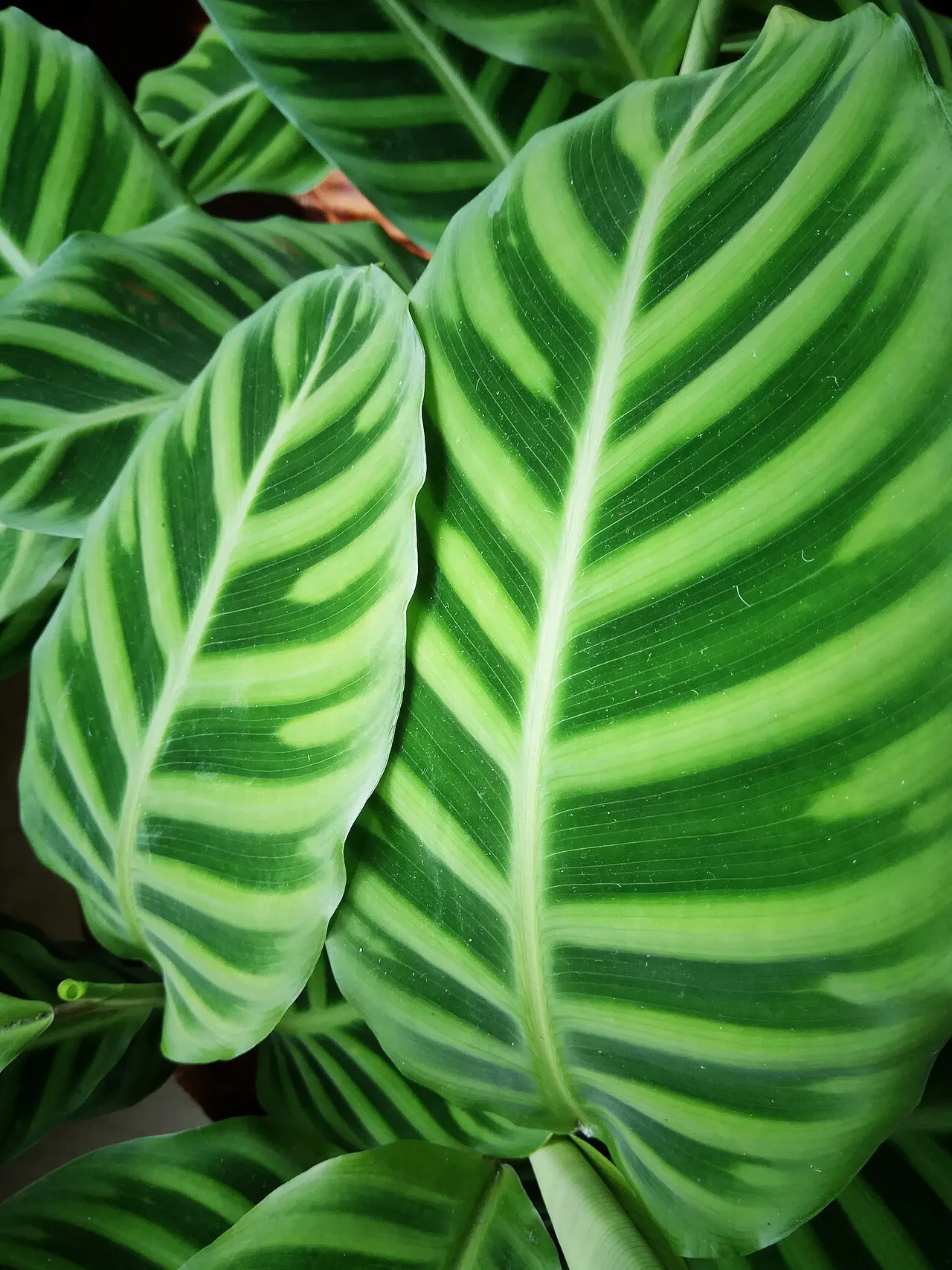
Goeppertia zebrina — the subject of this article — has large, velvety leaves, dark green with broad light-green bands radiating from the midrib, and reddish-purple undersides. Leaves rise on long stalks from a clump at soil level. It is a prayer plant relative.
Aphelandra squarrosa — also sold as zebra plant — has glossy, stiff leaves with sharp cream-white veins in a herringbone pattern, carried in opposite pairs on an upright stem, and it produces yellow flower bracts. It is in a completely different family.
The quick tests: velvety or glossy? Stripes or veins? Leaves from the base, or pairs up a stem?
This confusion is widespread enough that photo libraries get it wrong regularly — I rejected two images labelled Calathea zebrina while writing this that were actually Aphelandra.
The name has moved
NC State gives the accepted name as Goeppertia zebrina, with Calathea zebrina and Maranta zebrina as former names. The USDA PLANTS Database still files it as Calathea zebrina, and every nursery sells it as a calathea.
All three refer to the same plant. Nothing about growing it depends on which name is used.
Water quality is the thing people miss
Calatheas are notorious for brown, crisp leaf edges, and there is a cause here that does not apply to most houseplants.
NC State’s instruction is specific: use distilled or rainwater to prevent fluoride-related leaf browning.
Fluoridated tap water accumulates in the leaf margins of sensitive plants, and Goeppertia is among the most sensitive there is. If you have done everything else right and the edges still brown, the water is the likely culprit.
Use rainwater, distilled water, or filtered water. Letting tap water stand overnight is often recommended, and it does nothing for fluoride — that trick works for chlorine, not fluoride, and the two are not the same problem.
Salt build-up from fertiliser contributes as well, so flush the pot thoroughly with clean water a few times a year and feed lightly.
There is a separate article here on crispy edges on calatheas that goes through the full differential.
Humidity is not optional
NC State asks for humidity above 60% and consistent temperatures of 65 to 75°F, with protection from cold draughts and anything below 60°F.
Above 60% is higher than most heated homes manage in winter. A humidifier is the reliable answer; a pebble tray helps; misting does very little for very long. Grouping plants together raises local humidity usefully.
This is the main reason calatheas have a reputation for difficulty. They are not fussy about much else — they are simply asking for rainforest air in a centrally heated room.
Light
Bright, indirect light or partial shade. Direct sun scorches the leaves and fades the markings — the striping is at its best in good indirect light and washes out in both extremes.
Soil and watering
A moist, well-drained peat-based potting mix, or an African violet mix.
Keep the soil moist but not saturated: overwatering causes root rot, and this plant’s fine roots have little tolerance for standing water. The practical balance is a mix that holds moisture while draining freely, in a pot with a drainage hole, watered before the surface dries out rather than after.
The leaves move at night
Worth knowing, because new owners sometimes think the plant is wilting.
NC State describes it: “In the evening the leaves fold up just like praying hands and then reopen in the morning,” triggered by changes in light and temperature.
This is nyctinasty, and it is why the whole family are called prayer plants. A calathea folding upward at dusk is healthy. A calathea drooping downward and limply at midday is thirsty — different motion, different meaning.
Size and propagation
1 to 3 feet tall and 1 to 2 feet wide, with individual leaves reaching 15 to 20 inches long and 6 to 8 inches wide on a well-grown plant.
Propagate by division, roughly every two years when repotting. Separate the clump into sections each with roots and several leaves.
Problems
Spider mites, mealybugs and scale, plus browning from low humidity and leaf wetness. Spider mites in particular thrive in exactly the dry air that also browns the leaves, so the humidity fix is pest prevention too.
The short version
Check you have the velvety-striped calathea and not the glossy-veined Aphelandra. Then: bright indirect light, a peat-based mix kept evenly moist, humidity above 60%, 65 to 75°F, and rainwater or distilled water rather than tap. Divide every two years, and expect the leaves to fold up each night.
- calathea zebrina
- goeppertia
- prayer plant
- humidity
- leaf browning