Flowering Houseplants
How to Grow and Care for Blue Spur Flower
Spur flower blooms as the days shorten, not in summer — which is why people who buy it in spring think it has failed. Here is how to work with that.
The Garden Magic Hub
- Zone
- 10–11
- Light
- Partial sun
- Water
- Moderate
- Level
- Beginner
- Season
- Fall, Winter
On this page
Spur flower is a genuinely rewarding plant with one behaviour that catches almost everybody out: it flowers at the wrong time of year.
It is a short-day plant
This is the fact that explains the disappointment.
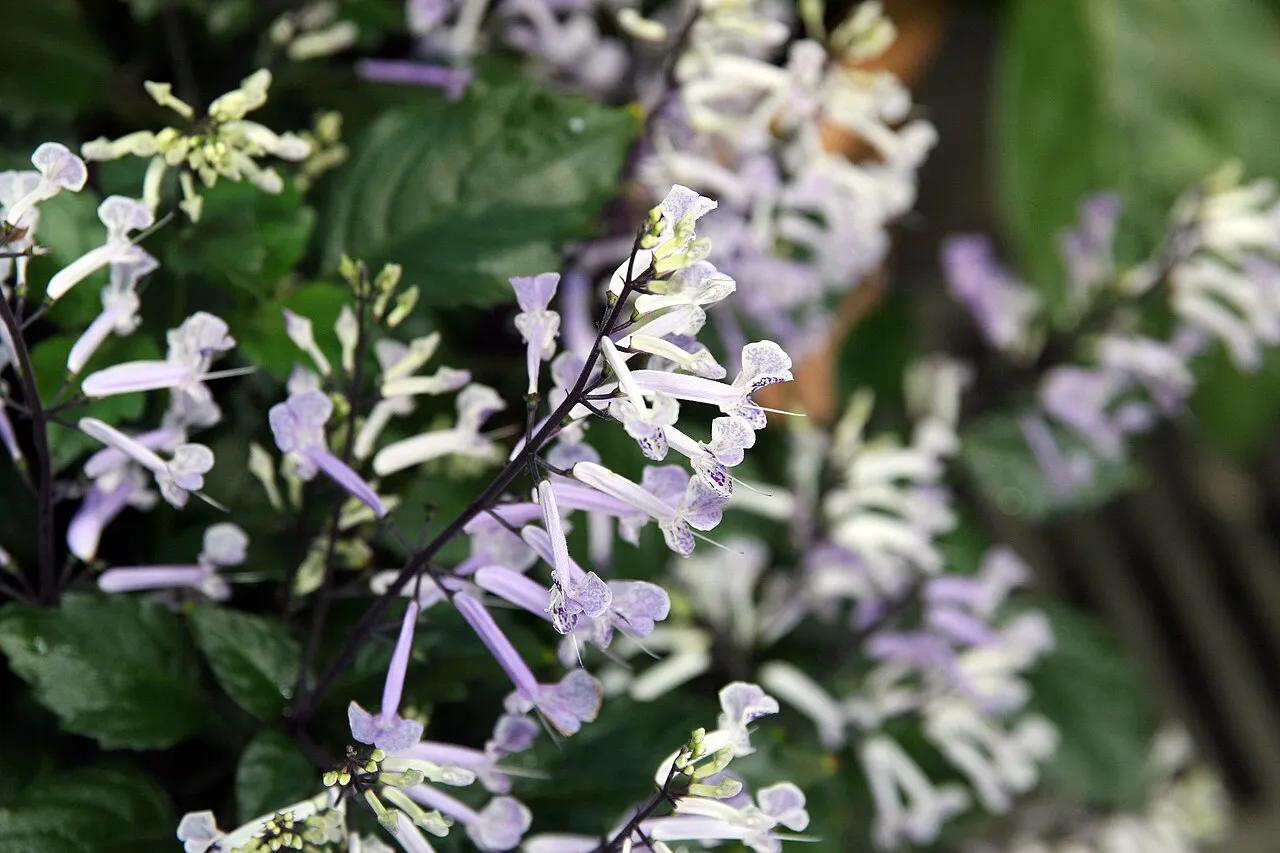
NC State Extension describes ‘Mona Lavender’ as a short-day plant that flowers when daylight decreases: “the lavender blooms begin to appear when the days get shorter in fall and will often bloom into spring.”
Most flowering plants respond to warmth and lengthening days. This one does the opposite — it senses shortening nights and initiates buds in autumn.
So the common experience is: buy a flowering plant in spring, watch it grow vigorously all summer without producing a single bloom, conclude something is wrong. Nothing is wrong. The nursery forced it into flower under controlled day length, and your plant is waiting for September.
What to do with that: treat it as an autumn and winter flowering plant. It is one of the few things that comes into bloom indoors as everything outdoors finishes, which is arguably more valuable than another summer flower.
Where the name comes from
The genus name Plectranthus is built from the Greek plectron, “spur”, and anthos, “flower” — after the spur-shaped flowers some members of the genus carry. Hence “spur flower.”
The genus is in flux, incidentally. NC State now files much of Plectranthus under Coleus, the same reshuffle noted in the coleus article. Nurseries continue to sell these plants as Plectranthus, and nothing about growing them changes.
Conditions
Hardiness: zones 10a to 11b outdoors. Everywhere colder, NC State’s advice is to keep it in a container indoors most of the year, moving it outside in warmer months to a spot with morning sun to full or partial shade.
Light: partial shade — 2 to 6 hours of direct sun. Deep shade produces leggy growth; full afternoon sun scorches the leaves.
Size: a compact 1 to 2 feet in both height and width, which suits a pot on a table or a shaded doorstep.
Soil: high organic matter with good drainage, kept consistently moist. This is a mint-family plant with soft growth and no drought tolerance — it wilts dramatically when dry, and recovers if you catch it, but repeated wilting costs leaves.
Pinching is what makes it look good
NC State’s instruction is direct: “pinch or prune the stems to maintain a bushy rounded form.”
Left alone, spur flower produces a few long stems that flop and flower only at the tips. Pinched regularly through spring and summer — which is exactly the period when it is not flowering anyway — it builds into a dense mound that carries far more flower spikes when autumn arrives.
So the summer job and the autumn reward are directly connected. Use the non-flowering months productively.
Deadheading spent spikes extends the blooming period once it starts.
Propagation
Stem cuttings root easily, as with most of the mint family. Take them in spring or summer from non-flowering shoots.
This is worth doing routinely. Spur flower is not long-lived and older plants get woody at the base; a rolling supply of young cuttings keeps the display fresh, and a cutting taken in spring will be a full plant by its first autumn flowering.
Problems
NC State records no significant problems for this cultivar — genuinely trouble-free, provided it is neither baked nor dried out.
The short version
A compact mint-family plant for partial shade and consistently moist, free-draining compost. It is a short-day plant: expect flowers from autumn into spring, not in summer, and use the summer to pinch it into a dense shape. Take cuttings each year, and deadhead once it starts.
- spur flower
- plectranthus
- mona lavender
- short day plants
- shade plants