Flowering Houseplants
How to Grow and Care for Abutilon
Flowering maple is not a maple. It is a fast, free-flowering mallow that blooms most of the year indoors — if you pinch it and keep it moist.
The Garden Magic Hub
- Zone
- 9–10
- Light
- Partial sun
- Water
- Moderate
- Level
- Intermediate
On this page
Abutilon is sold as “flowering maple,” which is misleading in the way that matters least. The leaves are lobed like a maple’s; the plant is not remotely related to one.
NC State Extension places it in the mallow family, Malvaceae — alongside hibiscus, hollyhock and okra. Once you know that, the pendulous crepe-textured flowers and the plant’s appetite for water and feeding both make more sense.
What you are actually growing
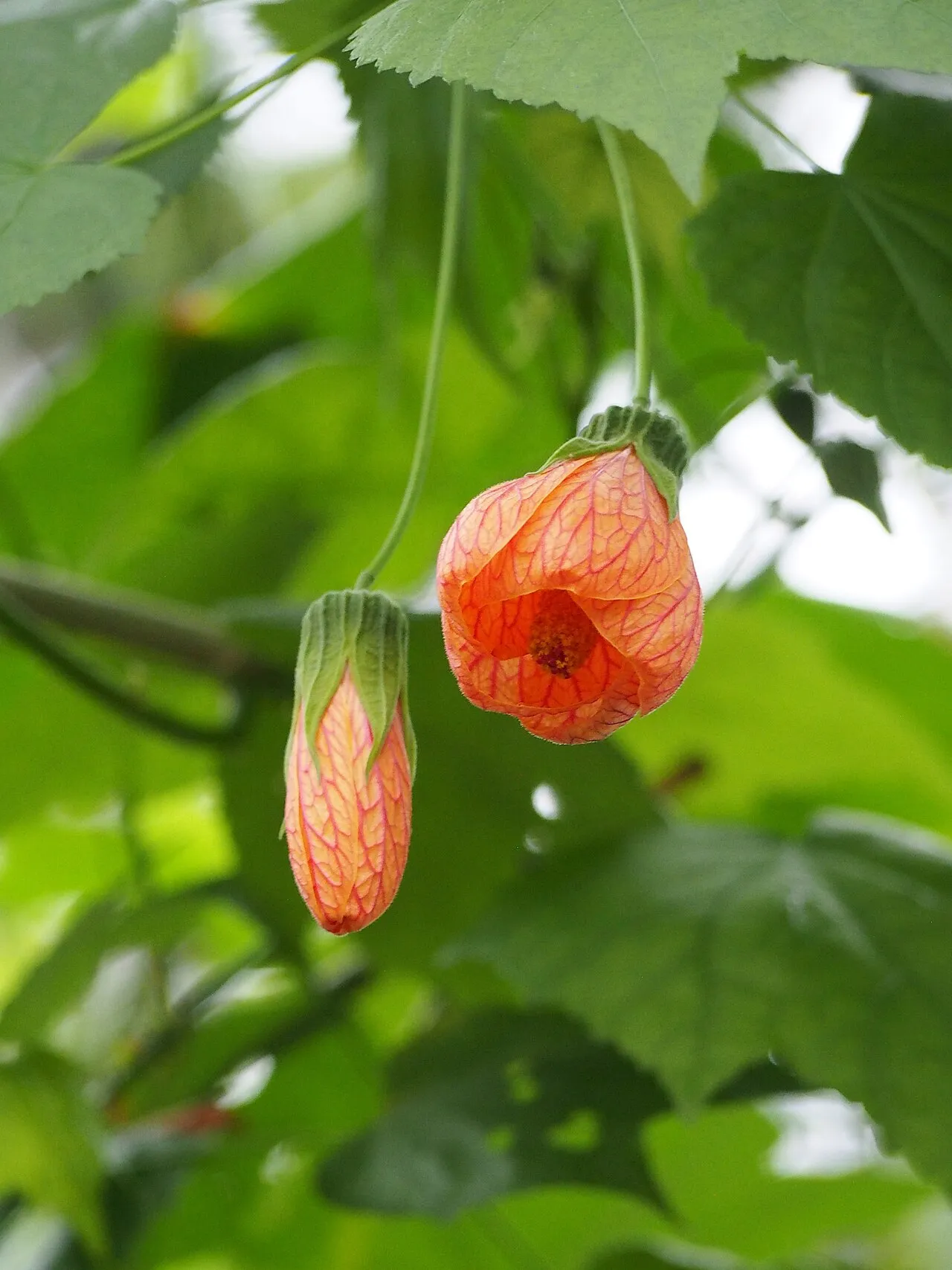
A fast, soft-wooded shrub with hanging bell- or cup-shaped flowers, 1 to 3 inches across with 4 to 5 petals, in orange, yellow, red, pink or white, often with contrasting veins.
Size depends entirely on climate. In frost-free conditions NC State gives 8 to 10 feet tall; in colder regions grown in pots and cut back each year, expect 2 to 4 feet, with a spread of 2 to 5 feet.
Growth is rapid, which is the key to managing it — an abutilon responds to pruning quickly rather than sulking.
Hardy only in zones 9–10
Outdoors year-round only in zones 9a to 10b. Everywhere colder it is a houseplant, a conservatory plant, or a summer container plant treated as an annual.
The usual pattern in cold regions is to grow it in a pot outdoors through summer, then bring it in before frost and keep it in the brightest room available over winter. It will often keep flowering indoors.
Light
Full sun or partial shade — it is genuinely flexible, which is unusual for something that flowers this freely.
Indoors, give it the brightest position you have. Abutilon tolerates lower light but stops flowering in it, and stretches. A few hours of direct sun through a window is close to ideal; unfiltered summer glass can scorch it.
Water and soil, which is where people fail
This is not a plant you can let dry out. NC State asks for “rich, constantly moist, well-drained soil” — and both halves of that matter.
Abutilon wilts fast and dramatically when dry. It usually recovers, but repeated wilting costs flower buds, and a plant in a small pot in summer can need daily water. At the same time it will rot in soil that stays saturated, and Pythium root rot is on its problem list.
Rich, moisture-retentive, freely draining potting mix, watered before it dries out. Feed regularly through the growing season — it flowers hard and is a heavy feeder.
Pinch it, or it goes lanky
NC State’s instruction is direct: “Pinch back the stems to encourage bushiness and stronger stems.”
Left alone, an abutilon puts out long thin shoots that flop and flower only at the tips. Pinch the growing tips out repeatedly through spring and early summer to force branching, and you get a dense plant covered in flowers instead.
For indoor plants, prune in spring for size control. Because growth is rapid you can cut hard — taking a leggy overwintered plant back by half in spring is normal and it will regrow within weeks.
Propagation
Seed and stem cuttings both work, and cuttings root readily. Since the plant is not hardy in most of the country, taking cuttings in late summer is a good insurance policy against losing an overwintering plant.
Problems
Aphids, thrips, spider mites and whitefly — the standard indoor sap-feeder set, and abutilon is more attractive to whitefly than most. Check leaf undersides regularly, especially on plants brought inside for winter, since that is when infestations get established unnoticed.
Pythium root rot in soil that stays wet.
NC State also notes abutilon causes contact dermatitis in some people. Worth knowing if you are pinching and pruning it as often as this article suggests.
A note on the name
Botanists have been reorganising this group, and a number of species formerly placed in Abutilon — including A. pictum, one of the common garden plants — have been moved to the genus Callianthe by some authorities. NC State and the nursery trade still use Abutilon.
As with several plants in this position, the disagreement is real but changes nothing about how you grow it.
The short version
Brightest spot you have, rich mix, and never let it dry out. Pinch the tips repeatedly for a bushy plant, cut it back hard in spring, feed it through summer, and bring it in before frost. Take cuttings as insurance.
- abutilon
- flowering maple
- pinching
- container plants
- overwintering