Succulents
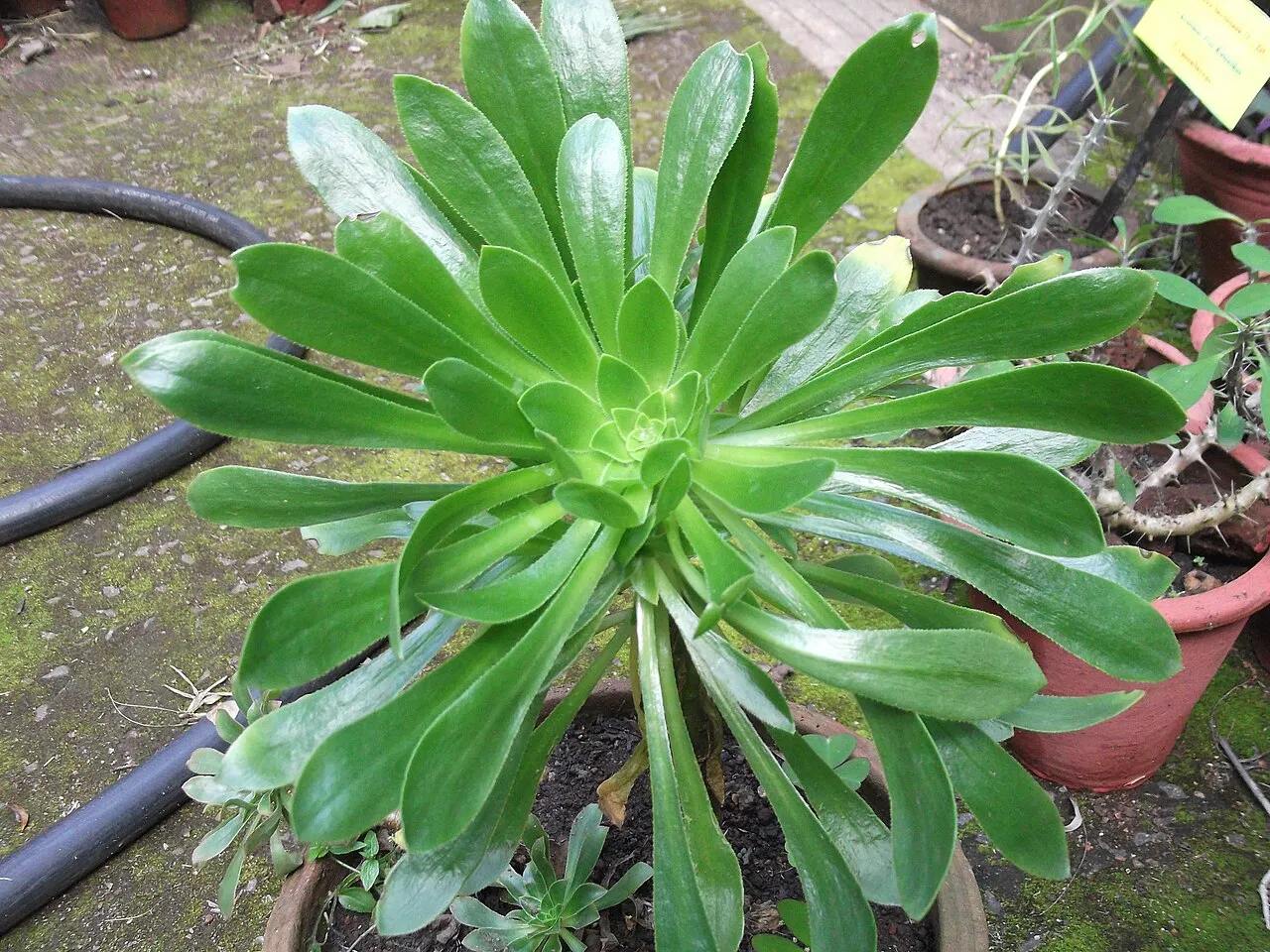
How to Grow and Care for Aeoniums
Aeoniums grow in winter and rest in summer, which reverses the usual succulent watering advice. Here is the schedule, and why rosettes die after flowering.
The Garden Magic Hub
- Zone
- 9–11
- Light
- Partial sun
- Water
- Low
- Level
- Intermediate
On this page
Aeoniums are the succulents most often killed by correct succulent advice. They come from the Canary Islands, where winters are mild and wet and summers are hot and dry — and they have organised their year around that, in the opposite direction to most of the succulents sold beside them.
The growing season runs backwards
Most succulents grow in summer and rest in winter. Aeoniums do not.
UC Master Gardeners describe aeonium as a cool-season grower that goes dormant in summer to conserve water, with dormancy running roughly May through August and active growth in autumn and spring.
That single fact reorganises the care calendar:
- Autumn and spring are the growing season. Water regularly, and this is when to propagate and repot.
- Summer is dormancy. Keep the soil dry with very little or no water. The rosettes will often close up and drop lower leaves — that is the plant conserving water, not dying.
A summer-dormant aeonium looking shrunken and shabby in July is behaving correctly. Watering it heavily to “fix” it is how it rots.
A conflict worth flagging: NC State Extension describes aeoniums as summer-active and winter-dormant — the reverse. That framing probably reflects growing them indoors over a US winter, where a plant kept warm and dim is not doing much. For plants grown outdoors in a Mediterranean-type climate, the UC description matches both the plants’ origin and what growers observe. Either way, the practical rule holds: water when the plant is actively growing, and back off hard when it is not.
Watering, and a detail specific to aeoniums
Aeoniums have shallow root systems, and UC’s guidance follows from that: they want more frequent, lighter watering rather than the infrequent deep soak recommended for deep-rooted desert succulents. Water when the top inch of soil is dry, during the growing season.
In summer dormancy, NC State’s phrasing is a good target — restrict water to just enough to stop the leaves fading.
Overwatering causes root rot, as with any succulent. The difference is the timing rather than the amount.
Light
Full sun to partial shade. UC’s refinement is geographic: direct sun in coastal areas, partial shade inland, which is a sensible way to think about it anywhere — the hotter and drier your summer, the more afternoon shade they want.
Too much intense sun causes leaf scorch. Too little produces stretched rosettes with widely spaced leaves.
Soil and containers
Well-drained sandy or loamy soil, or a cactus and succulent mix in pots, at an acid to neutral pH.
Aeoniums do well in containers, partly because the shallow roots do not need depth and partly because pots let you move them — which matters given the next point.
Cold
Hardy in zones 9a to 11b. NC State’s practical threshold for container plants is to bring them in before night temperatures drop below 40°F.
They are not frost-hardy, and a light frost damages the rosettes badly even when it does not kill the plant.
Rosettes die after flowering
Like agaves, most aeoniums are monocarpic — NC State puts it plainly: “the flowering rosette will set seed once and die after blooming.”
The consequence depends on the plant’s habit, and this is the part worth understanding before it happens:
- Branching species — the common ones such as Aeonium arboreum and its purple form ‘Zwartkop’ — lose only the rosette that flowered. The rest of the branched plant carries on.
- Unbranched, single-rosette species die outright when they flower, and can only be replaced from seed.
So a tall cone of yellow flowers rising from one head is not an emergency on a branching plant. Cut the spent rosette off afterwards and the plant continues.
Propagation
Spring or summer, by seed, division, or cuttings. Cuttings are the easy route: cut a rosette with a few inches of stem, let the cut surface callus over for a few days, then insert it in dry succulent mix and water sparingly until it roots.
This is also how you rescue a leggy plant. Aeoniums naturally shed lower leaves and go bare-stemmed with age; beheading the rosettes and re-rooting them restarts the plant.
Problems
Aphids, mealybugs, spider mites, scale and ants. Ants are worth treating as a warning sign rather than a pest in themselves — they farm aphids and mealybugs, so a trail of ants on an aeonium usually means something else is already there, often tucked into the tight centre of the rosette.
Root rot from overwatering, and leaf scorch from too much sun, complete the list.
The short version
Grow it in autumn and spring, rest it in summer, and keep it above 40°F. Water lightly and often while it is growing rather than deeply and rarely. Expect flowering rosettes to die, and behead leggy plants to start again.
- aeonium
- succulents
- dormancy
- monocarpic
- overwintering