Houseplants
Why Pothos Leaves Turn Yellow (and How to Fix It)
Yellow pothos leaves usually mean the roots are too wet, but four other causes look similar. How to tell them apart and fix each one.
The Garden Magic Hub
- Light
- Partial sun
- Water
- Moderate
- Level
- Beginner
On this page
First: is it actually yellowing?
Golden pothos, Marble Queen and several other common cultivars are cream-and-yellow by nature. Before diagnosing anything, compare a brand-new leaf with an old one.
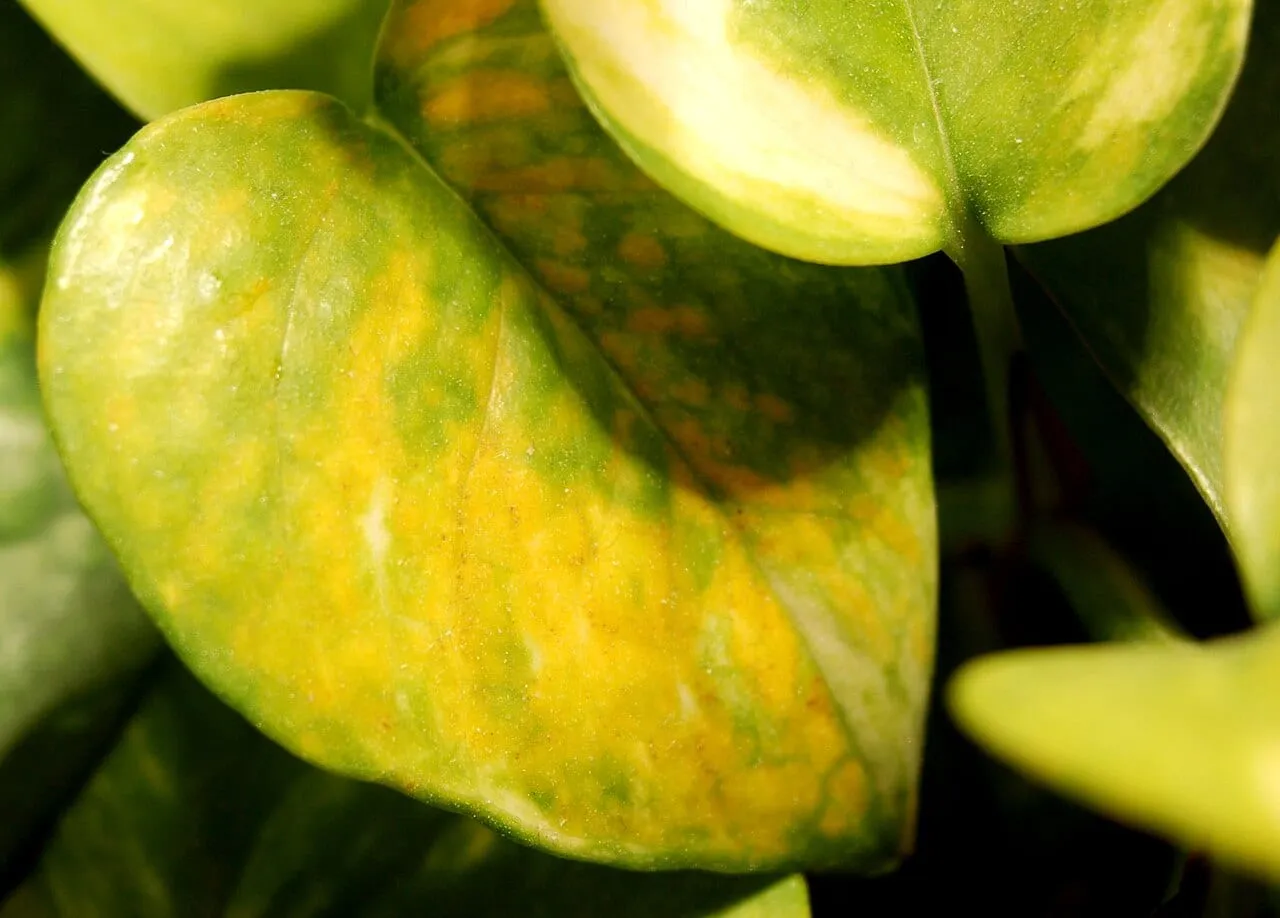
Variegation is present from the moment a leaf unfurls, has fairly hard-edged blocks or splashes, and appears on healthy growth. Chlorosis spreads across tissue that used to be green, with soft boundaries, and turns up on leaves that were previously fine.
If the pattern arrived after the leaf did, keep reading.
Which leaves went yellow
Position narrows this faster than anything else.
One old leaf at the base, occasionally. Normal. Iowa State Extension lists ordinary senescence of older leaves among the causes of yellowing and leaf drop. A pothos sheds an old leaf now and then while pushing new growth.
Several lower leaves at once. Usually water — see below.
Pale, small new growth on long bare stems. Light, not water.
Overwatering, the default answer
Iowa State separates wilting into two causes that produce nearly identical symptoms. Over-watering comes from “excessive frequency, lack of drainage, waterlogged saucers, compacted soil, oversized containers”; under-watering from insufficient frequency, poor absorption, or small porous pots.
The confusion matters, because a soggy pothos looks thirsty. Roots sitting in water cannot take up oxygen, and a plant that cannot respire cannot draw water either — so it wilts and yellows in wet soil.
Check the soil, not the leaves. If the mix is still wet several days after watering, and the lower leaves are uniformly yellow with soft brown patches, you have your answer. Let it dry until the top two inches are dry, and make sure the pot drains.
Light
Pothos tolerates low light but does not thrive in it. Iowa State attributes spindly growth to low light levels, and that is what you see first: long gaps between leaves, smaller new leaves, and variegated cultivars losing their variegation as the plant maximises chlorophyll.
Direct midday sun does the opposite and bleaches pale patches into the leaf surface. Those patches are localised on the side facing the window, with a sharp boundary — quite different from whole-leaf yellowing.
Feeding
Iowa State lists under-fertilisation among the causes of yellowing. Nitrogen is mobile within a plant, so a plant running short moves it out of old leaves into new ones — producing uniform pale yellowing on the oldest leaves while new growth stays green.
This is only plausible if the plant has been in the same mix a long time and has never been fed. If you repotted recently, look elsewhere.
The leaf will not turn green again
Once the chlorophyll in a leaf has broken down, it is gone. Cut yellow leaves off at the base of the petiole so the plant stops supporting them.
Judge whether your fix worked by what the next leaves look like, not by whether the damaged ones recover. They will not.
- pothos
- yellow leaves
- overwatering
- troubleshooting