Houseplants
Why Rubber Plants Drop Their Leaves
Rubber plants drop lower leaves after a move, a draught, or a change in watering. How to identify the trigger and stop the shedding.
The Garden Magic Hub
- Light
- Partial sun
- Water
- Moderate
- Level
- Intermediate
On this page
Ask what changed
Rubber plants drop leaves in response to change more readily than in response to neglect. Before working through causes, think back one to three weeks: a new position, a repot, the heating starting, a cold delivery, a window left open.
Iowa State Extension lists cold exposure during transport, temperature fluctuations and draughts among the causes of leaf yellowing and drop — alongside a “quick transition to a very different light intensity.”
A newly bought rubber plant that sheds several lower leaves in its first month is usually acclimating, not dying.
Light change
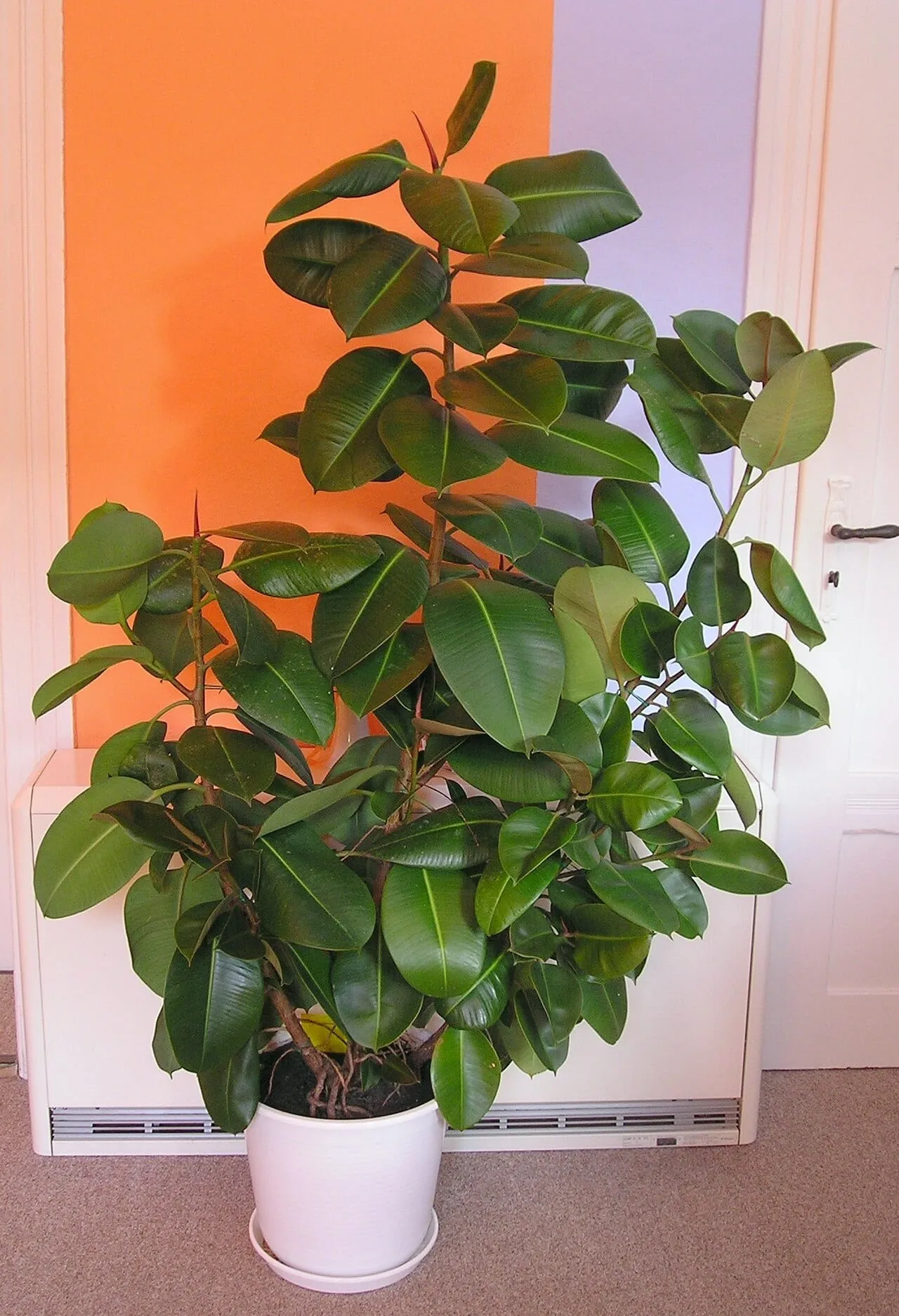
Nursery-grown Ficus elastica is raised in far brighter conditions than most homes provide. Moved indoors, it drops the leaves it can no longer support and rebuilds for lower light.
The same happens in reverse when a plant that has been in a dim corner is put into direct sun, which Iowa State covers as excessive light intensity for a shade-adapted plant.
What to do: choose a position with bright indirect light and leave the plant there. Move it in stages if you must move it. Rotating it occasionally for even growth is fine; relocating it repeatedly is not.
Draughts and cold
The positional pattern is the clue. Leaves dropping from one side of the plant — the side facing a door, a vent or a cold window — point at temperature rather than roots.
Rubber plants dislike sudden chill. A spot beside an exterior door in winter will shed steadily all season with no other cause.
Watering
Iowa State lists moisture extremes in both directions as causes of yellowing and leaf drop.
Too wet: lower leaves yellow uniformly and drop, the mix stays damp for days, and the stem base may soften. This is the more common error, because a large pot of dense mix holds water far longer than people expect.
Too dry: leaf edges crisp before the drop, the pot feels light, and the mix has shrunk from the sides.
Check the mix to a depth of a couple of inches before watering, and empty the saucer afterwards. Iowa State specifically lists waterlogged saucers among the causes of over-watering, and a plant this size is usually standing in one.
Which leaves, and how many
- The occasional lowest leaf — normal. Rubber plants shed old leaves as they grow.
- Several lower leaves, yellowing first — water at the roots.
- One side of the plant — draught or light.
- New growth affected, or leaves dropping green — check for pests and inspect the roots. Green leaves dropping without yellowing usually means shock or cold.
What to expect
A rubber plant will not regrow leaves on a bare section of stem. Growth resumes from the top, and lower bareness is permanent unless you prune to force branching.
Success looks like the drop stopping and new leaves emerging, not the plant filling back in.
- rubber plant
- leaf drop
- ficus
- acclimation