Houseplants
Why ZZ Plant Leaves Turn Yellow
A ZZ plant stores water in its rhizomes, so yellowing leaves almost always point to watering rather than light. How to read the symptom correctly.
The Garden Magic Hub
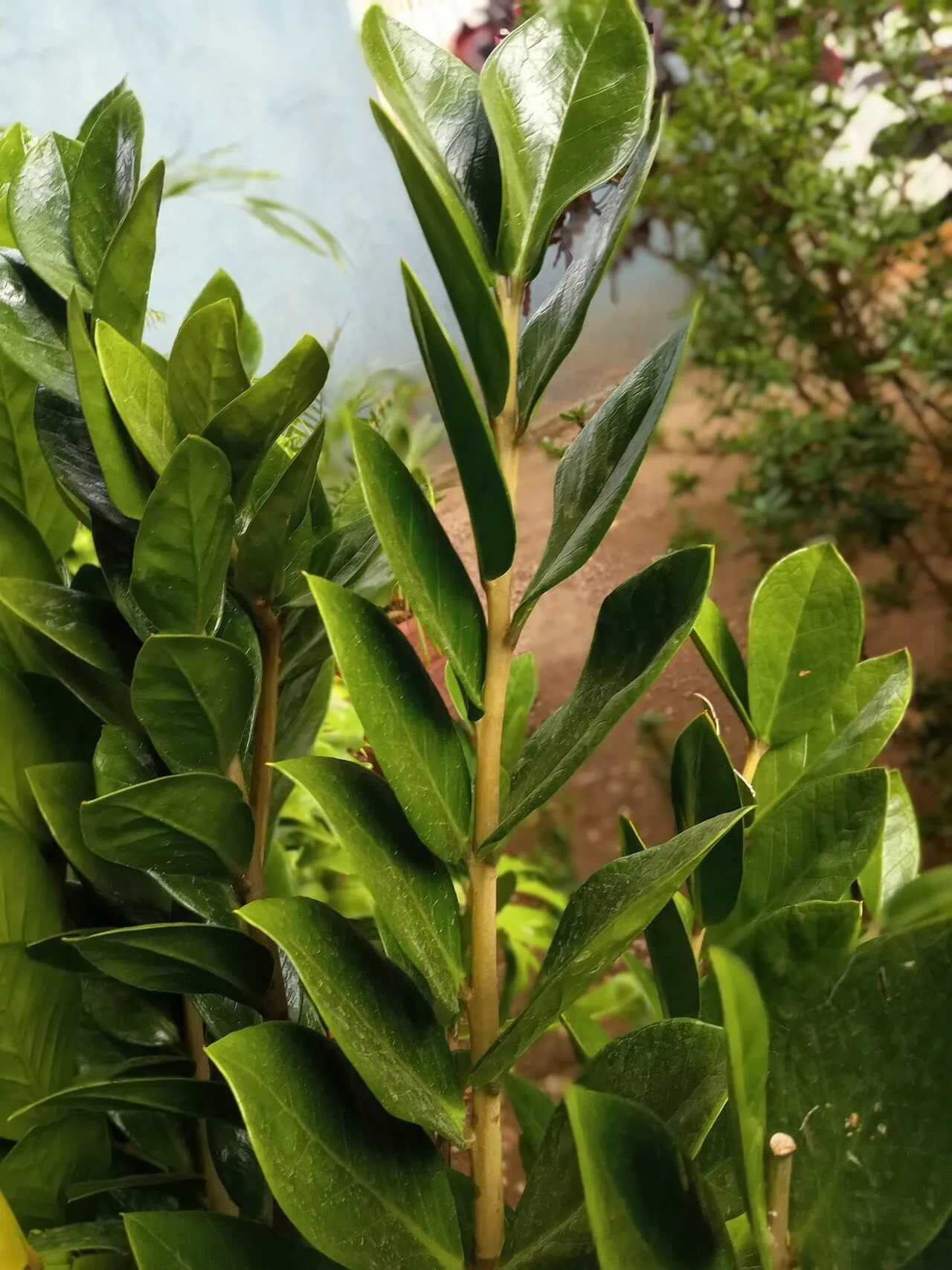
- Light
- Partial sun
- Water
- Low
- Level
- Beginner
On this page
Start from what the plant is built for
A ZZ plant stores water underground in potato-like rhizomes. That single fact explains most of what goes wrong with it.
A plant carrying its own reservoir does not need frequent watering, and it has no defence against a pot that stays wet. When a ZZ yellows, watering is the first thing to examine and usually the last.
Overwatering looks like this
Lower leaflets yellow first, often several along a stem at once, and the yellowing is uniform rather than patchy. Stems may soften near the base. The mix is still damp days after you watered.
Iowa State Extension attributes over-watering to “excessive frequency, lack of drainage, waterlogged saucers, compacted soil, oversized containers” — and every one of those applies more strongly to a plant that already stores its own water.
The oversized container point is worth dwelling on. A ZZ moved into a much larger pot sits in a volume of mix its roots cannot dry out, and that mix stays wet for weeks.
What to do: stop watering. Check the rhizomes by sliding the plant out — firm and plump is fine, soft and brown is rot. Trim anything mushy, repot into a gritty free-draining mix, and water only when the mix is dry most of the way down.
Underwatering is possible but rarer
A ZZ that has genuinely run dry will yellow too, and Iowa State lists moisture extremes in both directions as a cause of yellowing and leaf drop.
The difference is the pot. A dry ZZ feels light, the mix has pulled from the sides, and the rhizomes will be shrivelled rather than soft. Given how long the plant can coast on its reserves, this usually means months of neglect rather than a missed week.
Light
ZZ plants are famous for tolerating low light, which is not the same as preferring it. In genuinely dark corners, growth slows to nothing and older leaflets are shed as the plant balances its books.
Iowa State also warns about the opposite: a “quick transition to a very different light intensity” causes scorch and drop. A ZZ moved from a dim office to a sunny windowsill will react, and the damage appears on the most exposed leaflets.
Bright indirect light suits it. Move it gradually if you are moving it at all.
Old age
Individual leaflets yellow and drop with age, and whole stems eventually senesce after several years. One yellow leaflet on an otherwise thriving plant, with new shoots emerging from the mix, is not a problem.
Count the affected leaflets before you change anything. One is normal; a stem’s worth is not.
- zz plant
- yellow leaves
- overwatering
- rhizomes