Outdoor Plants & Flowers
Climbing Roses: Choosing, Training and Pruning
Climbers do not climb, and the difference from a rambler decides when you prune. How to train canes for maximum bloom.
The Garden Magic Hub
- Zone
- 4–9
- Light
- Full sun
- Water
- Moderate
- Level
- Intermediate
On this page
They do not climb
Climbing roses have no tendrils, no twining stems and no adhesive pads. Iowa State Extension describes them as “vigorous-growing roses that produce long canes that require support” and notes plainly that they “don’t ‘climb’.”
They produce canes of 5 to 20+ feet and lean. Everything you get from a climbing rose depends on you tying it to something.
That single fact explains most disappointing climbers: they were planted against a wall with nothing to fix them to.
Climber or rambler — the distinction that matters
Get this wrong and you will prune the flowers off every year.
Ramblers are the older type. Vigorous and fast-growing, with small flowers in large dense clusters produced only in spring — and critically, they flower from old wood.
Climbers are usually repeat-flowering and flower from new wood.
The pruning follows directly:
| Flowers on | Blooms | Prune | |
|---|---|---|---|
| Rambler | Old wood | Once, in spring | Right after flowering, in early summer |
| Climber | New wood | Repeatedly | Early spring |
Prune a rambler in early spring and you remove the wood carrying that year’s flowers. This is the single most common climbing rose mistake.
Train the canes sideways
This is the technique that separates a climber covered in flowers from one with a few blooms at the very top.
Illinois Extension puts it directly: training canes to grow more horizontally encourages the growth of bloom-producing side shoots.
A rose cane growing vertically pushes its energy to the tip and flowers there. Bend the same cane toward horizontal and buds break all along its length, each producing a flowering lateral.
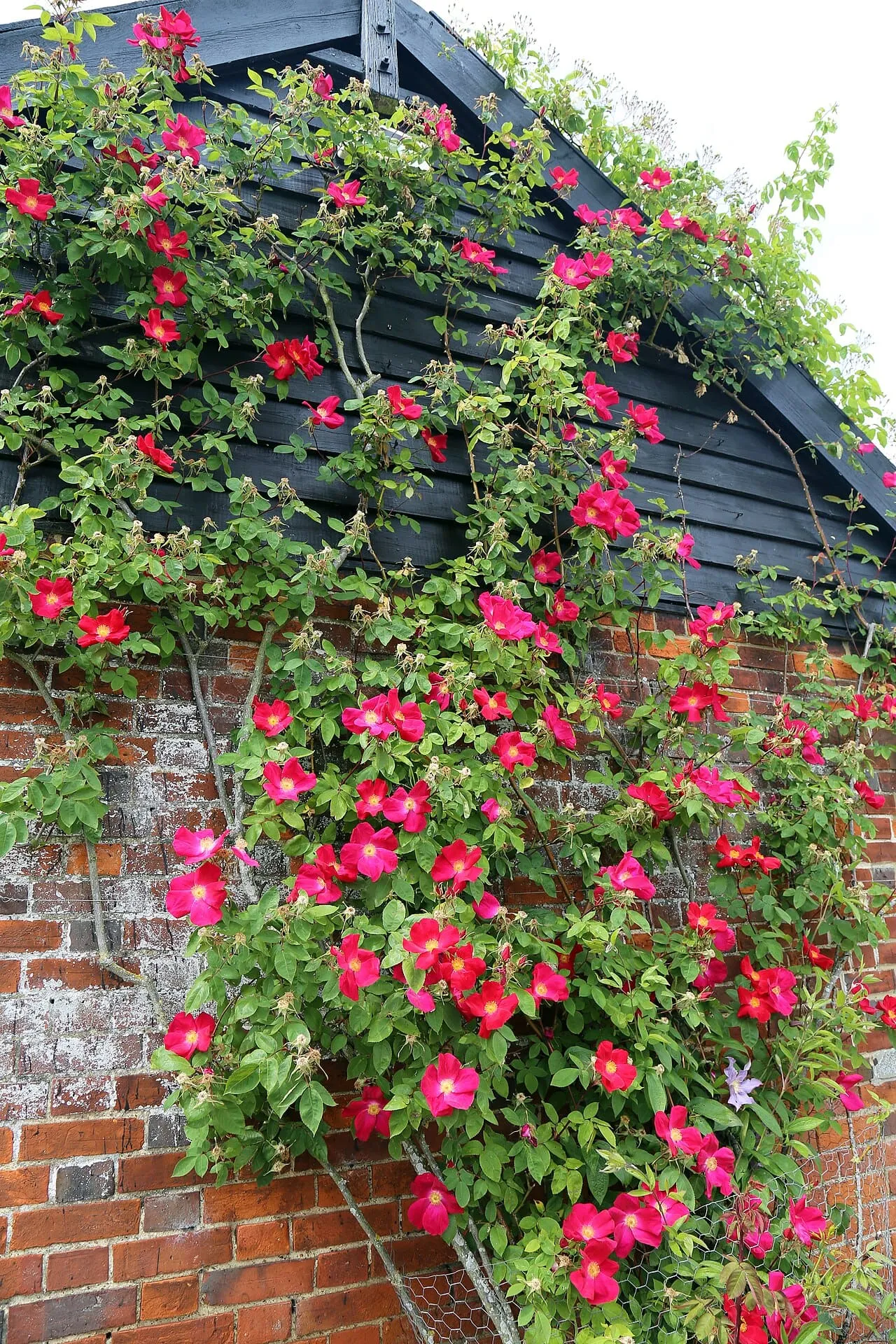
In practice: fan the main canes out sideways as they grow, tie them at a shallow angle, and train along horizontal wires or a fence rather than straight up a post. On a pillar, spiral the canes around it rather than running them vertically — same effect.
Tie with soft ties, and check them annually so they do not cut into thickening canes.
Pruning, in order
Do not prune hard. Illinois is explicit that you should not cut climbers back as much as you would a hybrid tea. Cutting a climber to a low framework destroys the structure it flowers from.
Remove the oldest canes. Start by taking out very old and declining canes at the base. On an established plant, removing one or two of the oldest each year keeps it renewing.
Shorten the laterals. This is where the flowers come from. Illinois: reducing the side shoots or laterals to 3 to 6 inches stimulates flower production.
Then tie in. Once dead and old canes are out, the remaining work is training to the support, using heading cuts to force buds to break in the direction you want.
Give them three years
A newly planted climber spends its first two seasons building canes and often flowers little. Resist pruning it in that period beyond removing damage — you are growing the framework everything later hangs on.
Choosing for cold climates
Hardiness is the real constraint. Iowa State notes many climbers suffer “extensive winter dieback” in cold regions, which defeats the purpose since the long canes are the plant.
The hardiest named options are the Canadian-bred climbers: ‘William Baffin’ (8–10 feet), ‘Henry Kelsey’ (7–9 feet) and ‘John Cabot’ (6–8 feet).
In a cold zone, a hardy climber that keeps its canes beats a beautiful one that dies back to the ground every winter.
- roses
- climbing roses
- ramblers
- pruning