Shade Perennials
How to Grow and Care for Autumn Fern
New fronds emerge coppery-pink and the plant stays standing through winter. One of the easiest hardy ferns — with one caution NC State raises about naturalising.
The Garden Magic Hub
- Zone
- 6–12
- Light
- Shade
- Water
- Moderate
- Level
- Beginner
- Season
- Spring
On this page
Autumn fern is the fern to plant if you have decided ferns are not worth the trouble. It is tough, deer-proof, stands up through winter, and does something no other common hardy fern does.
The colour is backwards
The name suggests autumn colour. In fact the display comes in spring.
NC State Extension describes it precisely: “young fronds are glossy, coppery pink; mature fronds are deep, glossy green.”
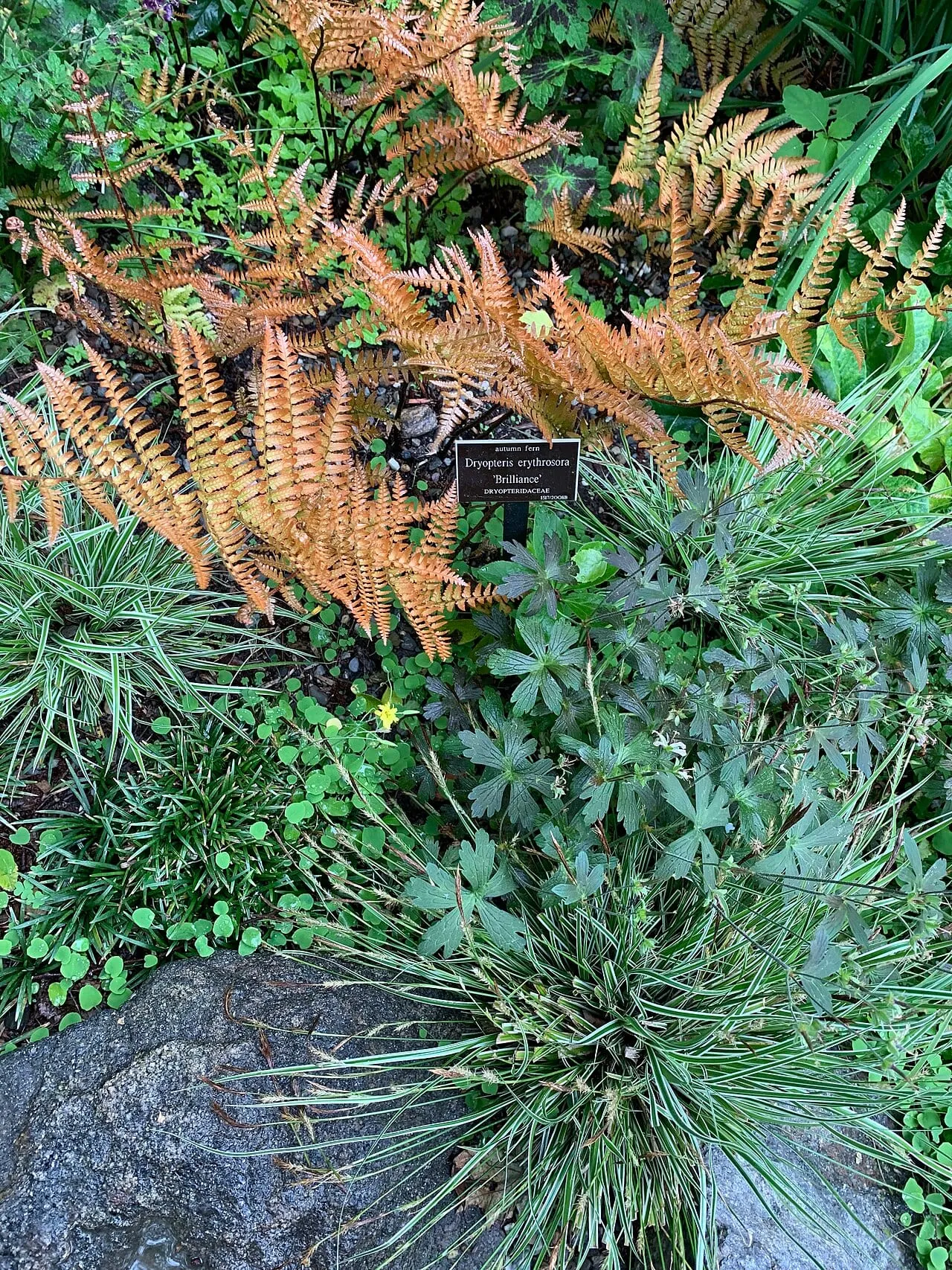
New growth unfurls copper, bronze and salmon-pink, holds that colour for weeks, then hardens to dark glossy green. Because the plant produces flushes of new fronds through the season rather than all at once, a healthy clump usually carries some copper against the green from spring into summer.
The cultivar ‘Brilliance’ — shown above — was selected for stronger and longer-held colour, and is worth seeking out over the plain species for that reason.
It stands up in winter
NC State classes it as semi-evergreen and, more usefully, notes that it “remains erect in winter.”
That second detail is the one that matters in a garden. Plenty of ferns are technically evergreen and still collapse into a brown mat at the first hard frost. Autumn fern holds its shape, which makes it one of the few reliable sources of structure in a shade bed in January.
Cut the old fronds back in late winter, just before the new coppery growth appears, rather than in autumn.
Conditions
Hardiness: zones 6b to 12b.
Size: 1.5 to 2 feet tall and 2 to 3 feet wide — a broad, arching clump rather than an upright one.
Light: genuinely flexible. NC State lists dappled sunlight, deep shade (under two hours of direct sun), and partial shade as all acceptable. Deep-shade tolerance is unusual and useful — this is a plant for the difficult north side of a house.
Soil: acidic, below pH 6.0, with high organic matter, moist and well-draining. Work in leaf mould or compost before planting and mulch afterwards.
Water: keep it moist while establishing. NC State notes that once fully established, the fern can tolerate brief droughts — again unusual for a fern, and the reason it survives in gardens where more demanding species fail.
One specific caution: protect plants from drying winds. An exposed windy site desiccates the fronds even when the soil is moist.
Deer leave it alone
NC State lists it as “seldom damaged by deer.”
In a shade garden under deer pressure, where hostas get grazed to stumps, that is close to decisive. Ferns generally are unpalatable to deer, and this one is among the toughest of the hardy ferns besides.
The caution worth knowing
NC State includes a note that most garden writing about this plant omits:
“This species may naturalize in NC as it has in other states and may become a problematic invasive species.”
That is a flag rather than a prohibition — it is not listed as a noxious weed, and the spread is slow. But it is an honest warning from an extension service about a plant sold everywhere as a well-behaved shade perennial, and it is worth acting on in two ways.
First, check with your own state extension office or native plant society before planting it near woodland. Guidance varies regionally and changes.
Second, if you garden next to natural woodland, consider a native alternative — Christmas fern (Polystichum acrostichoides) is evergreen, deer-resistant and native across much of the East, and fills the same role without the question mark.
Propagation
By spores, and the clump also spreads slowly through underground creeping rhizomes. Division of an established clump in spring is the practical route for a home gardener.
That slow rhizomatous spread is worth noting alongside the naturalisation caution — it is not a runner, but it does gradually widen.
The short version
Coppery new fronds in spring, glossy green in summer, standing structure in winter, tolerant of deep shade and brief drought, and ignored by deer. Acidic soil with organic matter, shelter from drying wind, and cut back in late winter. Buy ‘Brilliance’ for the best colour — and check local guidance first if you garden beside woodland.
- autumn fern
- dryopteris
- shade gardening
- deer resistant
- evergreen ferns