Shrubs
How to Grow and Care for Camellia Sinensis
Green, black, white and oolong tea all come from this one shrub — the difference is which leaves you pick. And it is hardy to zone 6, so more gardeners could grow it.
The Garden Magic Hub
- Zone
- 6–9
- Light
- Partial sun
- Water
- Moderate
- Level
- Intermediate
- Season
- Fall
On this page
Every cup of green, black, white and oolong tea in the world comes from one species. Not four plants — one shrub, picked differently and processed differently.
That shrub is Camellia sinensis, and you can probably grow it.
It is hardier than people expect
NC State Extension gives it as hardy in zones 6a through 9b.
That is a much wider range than the tea plant’s reputation suggests. Zone 6 covers a large part of the mid-Atlantic, the Ohio valley, and the interior South — regions where nobody thinks of growing tea. There are commercial tea gardens in South Carolina, Alabama and Washington State, and home plants do fine well outside the traditional picture of misty tropical hillsides.
Size: 6 to 15 feet tall and 4 to 8 feet wide left to itself — a substantial shrub, though pruning for harvest keeps it much smaller.
One plant, four teas
This is the fact most people find surprising, and NC State states it directly:
“Smaller young leaves and leaf buds are used for making green tea, the older larger leaves for oolong and black tea, and the buds for white tea.”
So the distinction between tea types begins with what you pick and is completed by how you process it — chiefly how much you allow the leaves to oxidise before heat stops the process. Green tea is heated quickly to prevent oxidation; black tea is fully oxidised; oolong sits between the two.
The classic picking is “two leaves and a bud” — the terminal bud with the two youngest leaves below it, which is the tenderest and most aromatic growth.
Pruning is what makes it harvestable
A tea plant left alone becomes a 15-foot shrub with its new growth out of reach. NC State’s recommendation is specific:
“For optimal tea production, it is best to prune to 4-5’ just before spring growth to encourage shoots.”
Two things happen. The plant stays at a height you can pick from, and hard pruning before growth starts forces a flush of the young shoots that are the actual crop.
In commercial gardens this is taken further — bushes are maintained as a flat-topped “plucking table” at waist height. At home, 4 to 5 feet is a sensible compromise between yield and the plant looking like a shrub rather than a hedge.
Conditions
Light: full sun or partial shade. In hot regions, afternoon shade produces better leaf quality.
Soil: acid, below pH 6.0. This is not negotiable — like other camellias, and like blueberries, it cannot take up iron in neutral or alkaline soil and will yellow and decline. Soil test before planting.
It is otherwise adaptable on texture — clay, loam, sand or high organic matter — provided drainage is good.
Water: NC State lists it as heat and drought tolerant once established, though young plants and plants being picked hard want steady moisture.
Be patient
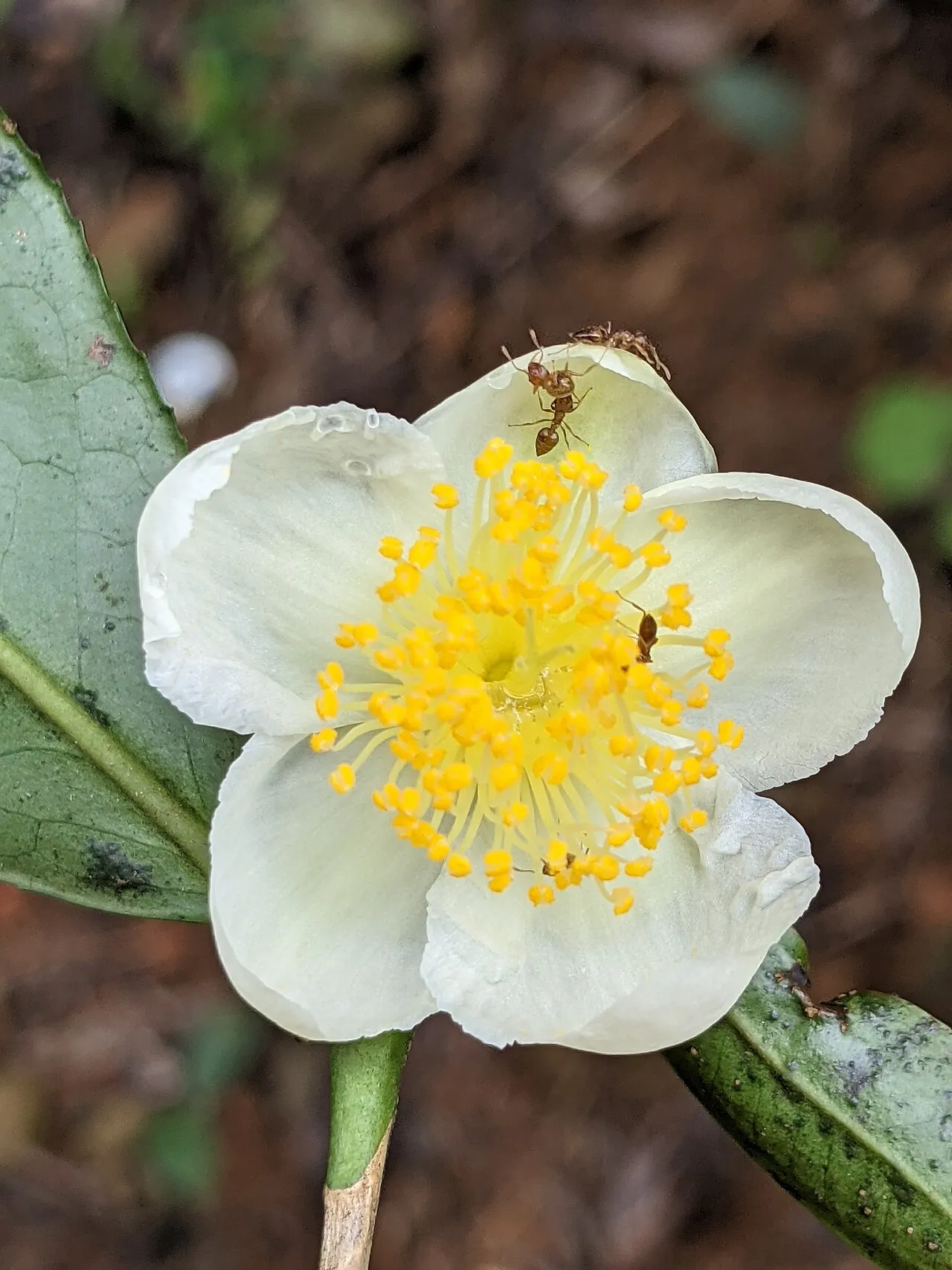
Flowering starts when plants are about 4 years old, in autumn through early winter — small white camellia flowers with a yellow centre.
You can begin picking leaves before that, once the plant is established enough to spare the growth, but a genuinely productive bush takes several years. This is a long-term planting, not a season’s project.
Propagation
Root cuttings or seed. Seed is slow and variable; cuttings from a plant you know performs well are the better route if you can get them.
Problems
NC State’s list is the standard camellia set: scale insects, aphids, spider mites, viruses, dieback, cankers, flower blight and root rot.
Scale is the most likely on an established plant and shows as sticky honeydew and sooty mould. Root rot follows poor drainage, as always.
The short version
An acid-soil shrub hardy to zone 6, giving small white flowers in autumn from about year four. Prune to 4 to 5 feet just before spring growth to force the young shoots you pick. Take the bud and top two leaves, and let how you process them decide whether you have made green, white, oolong or black tea.
- tea plant
- camellia sinensis
- edible shrubs
- acid soil
- pruning