Herbs
How to Grow and Care for Angelica
Angelica is a six-foot biennial that dies after it seeds, burns skin in sunlight, and has deadly lookalikes. Grown deliberately, it is worth all three.
The Garden Magic Hub
- Zone
- 5–8
- Light
- Partial sun
- Water
- High
- Level
- Intermediate
- Season
- Summer
On this page
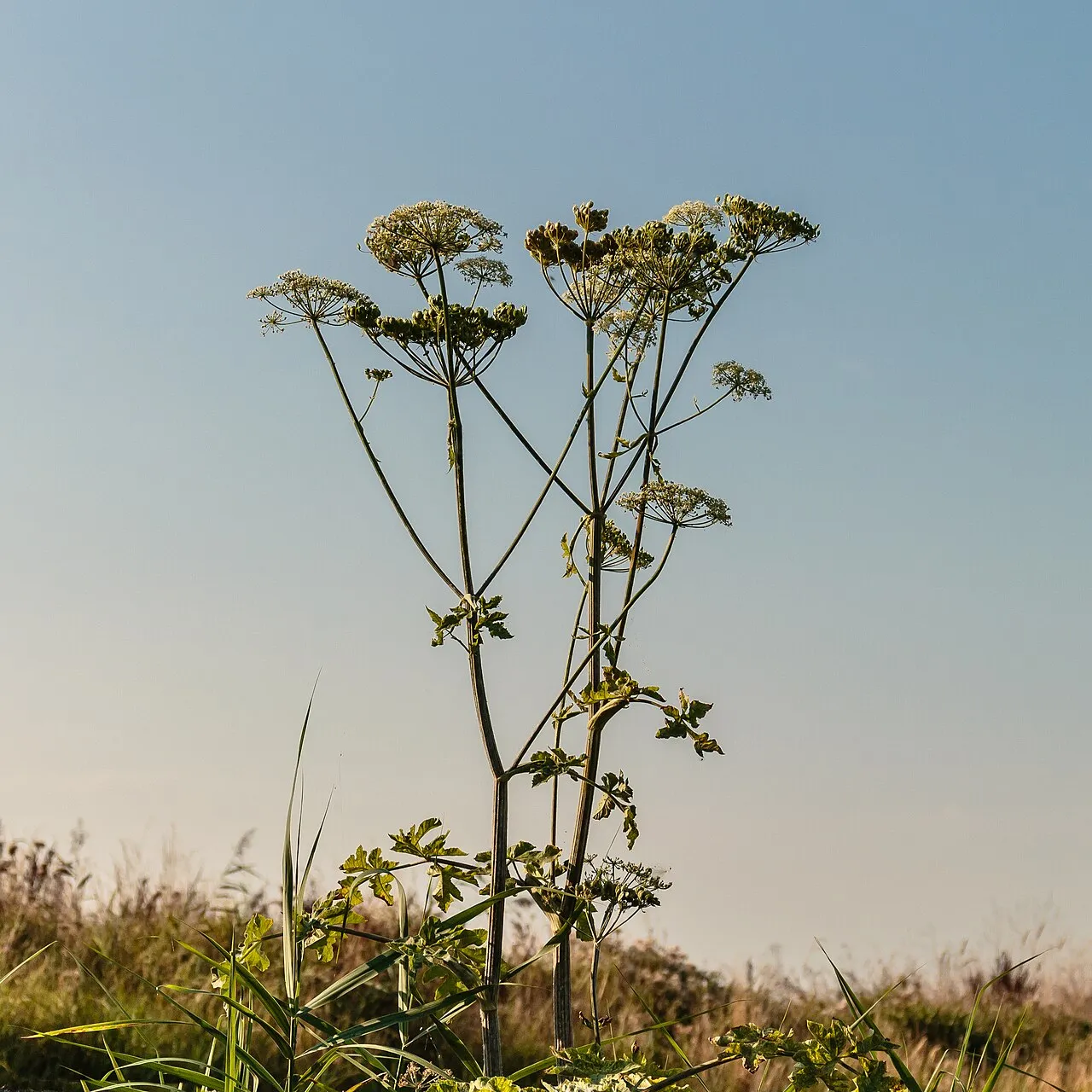
Angelica is grown for architecture as much as for flavour — a six-foot umbellifer with dinner-plate flower heads that dominates whatever it stands in. It is also a plant with three specific hazards worth understanding before you put one in.
Safety first, because two of these are serious
It can burn your skin in sunlight. NC State Extension notes angelica “may cause sensitivity to sunlight and contact dermatitis” — it contains furocoumarins, the same class of compound behind giant hogweed burns. Sap on skin plus sunlight can produce a burn or blistering rash. Wear gloves and long sleeves when cutting it back, and avoid handling it on a hot bright day.
It has dangerous lookalikes. Angelica is one of many white-flowered umbellifers, and NC State’s warning is direct: it resembles wild carrot but also Conium maculatum — poison hemlock — so “verify identity before ingesting.”
Take that literally. Poison hemlock is lethal in small quantities, water hemlock more so, and both grow in exactly the damp ground angelica likes. Never eat any umbellifer you did not plant yourself from labelled seed. Nothing in this article is an identification key, and a photograph is not one either — if you are trying to identify a wild plant, ask your county extension office.
Grown deliberately, from bought seed, in a bed you know, angelica is fine. Foraged, it is a genuinely bad idea.
It dies after flowering
Angelica is, in NC State’s description, “a robust biennial or short-lived perennial” that “produces foliage in the first year and flowers in the second year then the plant dies after the seed ripens.”
So the plan has to account for the plant’s disappearance:
- Year one gives you a mound of large divided leaves and nothing else. This is normal.
- Year two produces the flower stems, the umbels, and the seed — and then the plant is finished.
The way to keep angelica in a garden is to let it self-seed. Leave a proportion of the seedheads standing, let them ripen and drop, and thin the seedlings the following spring. Deadheading everything gives you a tidier plant and no angelica in two years’ time.
You can also delay the end. Cutting the flower stems before seed sets sometimes buys another season of foliage, since it is seed ripening rather than flowering that triggers death.
Size, and what that means for siting
3 to 6 feet tall and 2 to 4 feet wide, with flower umbels around 6 inches across in summer, in yellowish-white sometimes tinted pink.
At that scale it is a back-of-border or wild-garden plant. It also casts real shade — a mature second-year angelica will shade out anything small planted beside it, then vanish and leave a hole. Plan for both.
Conditions
Hardy in zones 5a to 8b, in full sun or partial shade. In hotter parts of that range, partial shade is the safer choice.
Soil is easy — loam, clay or sand at acid to neutral pH — but moisture is not negotiable. NC State wants moist to occasionally wet conditions and says plainly: “do not let it dry out between watering.” Angelica grows naturally along damp ground and streambanks, and a plant that dries out repeatedly bolts early or collapses.
If you have a damp corner that defeats other herbs, that is where this belongs.
Propagation
Seed, or root cuttings in the second year.
Sow fresh seed where you want the plant to grow. Angelica makes a deep taproot and resents transplanting, so a self-sown seedling left in place almost always outperforms one moved from a pot.
In the kitchen
The roots, leaves, seeds and young stems have a flavour NC State describes as similar to liquorice. The traditional use is candying young stalks for the bright green decoration on cakes; the stalks can also be cooked like celery, and the seeds flavour liqueurs — angelica is one of the botanicals in gin and in chartreuse.
Harvest young stems in the second spring, before the plant flowers and the stems turn woody. And harvest only from your own labelled plant, for the reason above.
The short version
Damp soil, partial shade, and room for a six-foot plant that will die once it sets seed. Let some seed drop or you will not have it again. Wear gloves and long sleeves when cutting it, keep sap off skin in sunlight, and never eat a wild umbellifer.
- angelica
- biennial
- umbellifers
- phototoxicity
- self-seeding