Annuals
How to Grow and Care for Annual Vinca
Annual vinca is not a vinca. It is a heat-loving Madagascar periwinkle that rots if planted early into cold soil — the single mistake that kills most of them.
The Garden Magic Hub
- Zone
- 10–11 (grown as an annual)
- Light
- Full sun
- Water
- Low
- Level
- Beginner
- Season
- Summer, Fall
On this page
Annual vinca is one of the most heat-tolerant bedding plants available, and one of the most commonly killed — almost always in the same way, and almost always in May.
It is not a vinca
Start here, because the name causes real confusion at the garden centre.
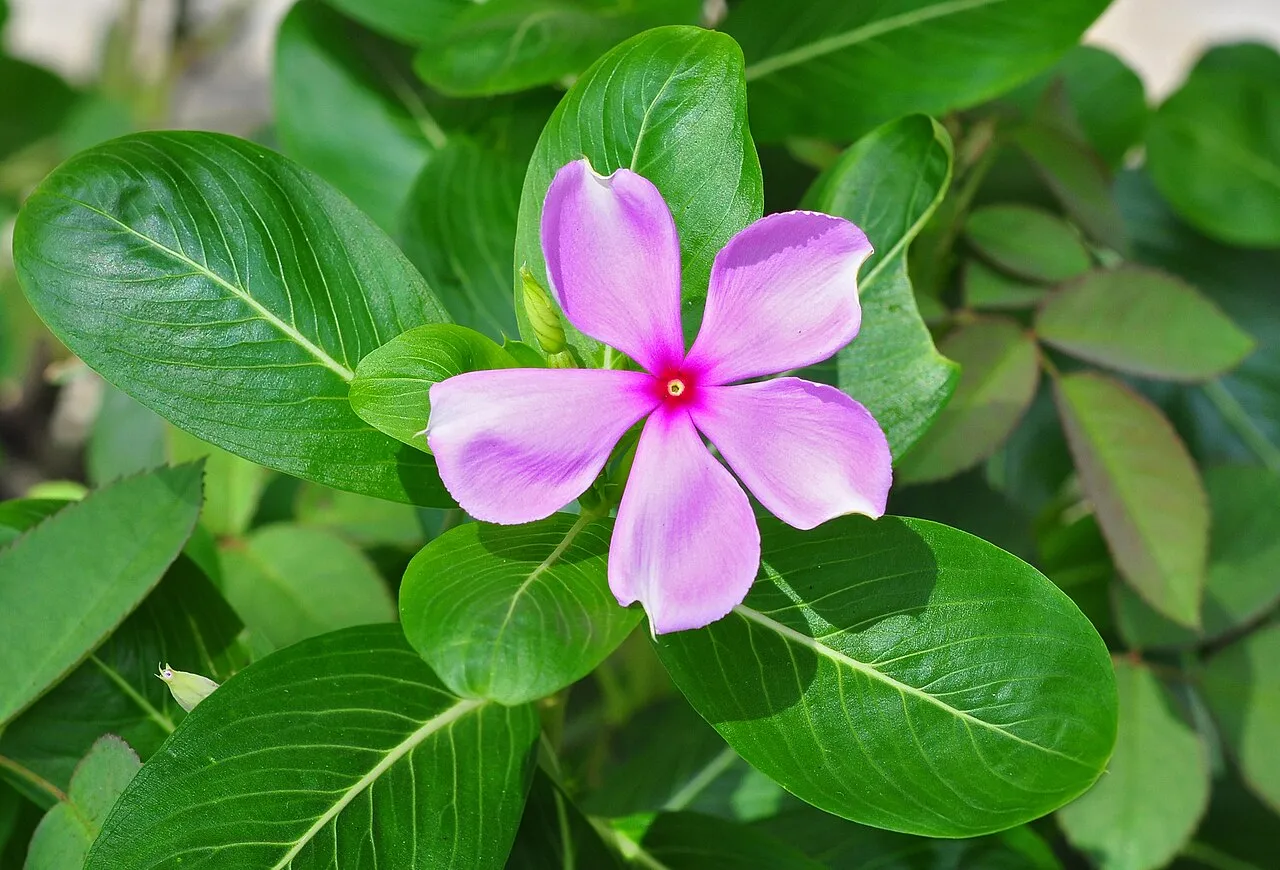
Annual vinca is Catharanthus roseus, the Madagascar periwinkle. The Vinca you may also be thinking of — Vinca minor and Vinca major — is a trailing evergreen groundcover, a different genus entirely, hardy far further north and grown for foliage rather than flowers.
They are both in the dogbane family and both have five-petalled flowers, which is where the shared common name comes from. Beyond that, nothing about their care transfers. Advice written for periwinkle groundcover will not help you with an annual vinca, and vice versa.
The mistake: planting it too early
This is the whole article, really.
Catharanthus roseus is a tropical plant, hardy only in zones 10a to 11b and grown as an annual everywhere else. NC State Extension gives the timing plainly: sow in March in warm temperatures, and plant outside in early June.
Early June, not early May. Bedding plants appear in shops long before the soil is warm enough for this one, and annual vinca set out into cold, wet spring ground does not merely sulk — it gets Phytophthora, and Phytophthora kills it.
The disease is a water mould, and it thrives in exactly the conditions of a cold wet spring bed. Plants collapse from the base, wilt despite moist soil, and go black at the stem.
Two things prevent it:
- Wait for warm soil. Once nights are reliably mild and the soil has warmed, the risk drops sharply.
- Buy resistant cultivars. NC State notes that some cultivars show good resistance, naming the Cora® and Nirvana® groups specifically. If you have lost vinca before, buy one of these by name.
Then it becomes almost unkillable
Once it is in warm ground, annual vinca is one of the toughest plants in the border.
NC State credits it with moderate to high drought tolerance and performance in dry soil, and — the reason it earns its place — it “blooms even during heat stress.” Where petunias sulk and impatiens collapse in a humid August, vinca keeps flowering, from June until frost.
That combination of heat tolerance, drought tolerance and continuous bloom makes it the default choice for hot exposed beds, parking strips, and containers that do not get watered every day.
Light, soil and water
Full sun gives the best flowering, though it tolerates partial and dappled shade.
Moist, well-drained soil at an acid pH suits it best, but it tolerates a range of soils provided drainage is adequate. That qualifier is the important one, and it is the same theme as the planting date — this plant’s only real enemy is wet, cold roots.
Water it in to establish, then let it dry between waterings. Overwatering an established annual vinca is worse than underwatering it.
Deadheading is not required. It is self-cleaning, dropping spent flowers on its own.
Size
Compact — 6 inches to 1.5 feet tall and 8 inches to a foot wide, depending on cultivar. Upright and trailing forms are both sold; check the label if you are planting a hanging basket.
Toxicity
Annual vinca contains vinca alkaloids, the same class of compounds used in chemotherapy drugs. NC State rates the severity as low, but is specific about what large quantities can cause: vomiting, diarrhoea, low blood pressure, hallucinations, tremors, seizures, coma and death.
In practice, a child or pet nibbling a leaf is unlikely to come to harm. It is still not a plant to grow where animals graze deliberately.
The short version
Different genus from the groundcover periwinkle. Do not plant it until the soil is genuinely warm — early June in most of the country — and buy a Phytophthora-resistant cultivar if you have lost one before. After that, full sun, sharp drainage, minimal water, no deadheading, and flowers until frost.
- annual vinca
- madagascar periwinkle
- heat tolerant
- phytophthora
- bedding plants