Bulbs
How to Grow and Care for Autumn Crocus
Autumn crocus is a beautiful fall bulb and one of the most poisonous plants sold in garden centres. It is also confused with saffron crocus, which has killed people.
The Garden Magic Hub
- Zone
- 4–9
- Light
- Partial sun
- Water
- Moderate
- Level
- Beginner
- Season
- Fall
On this page
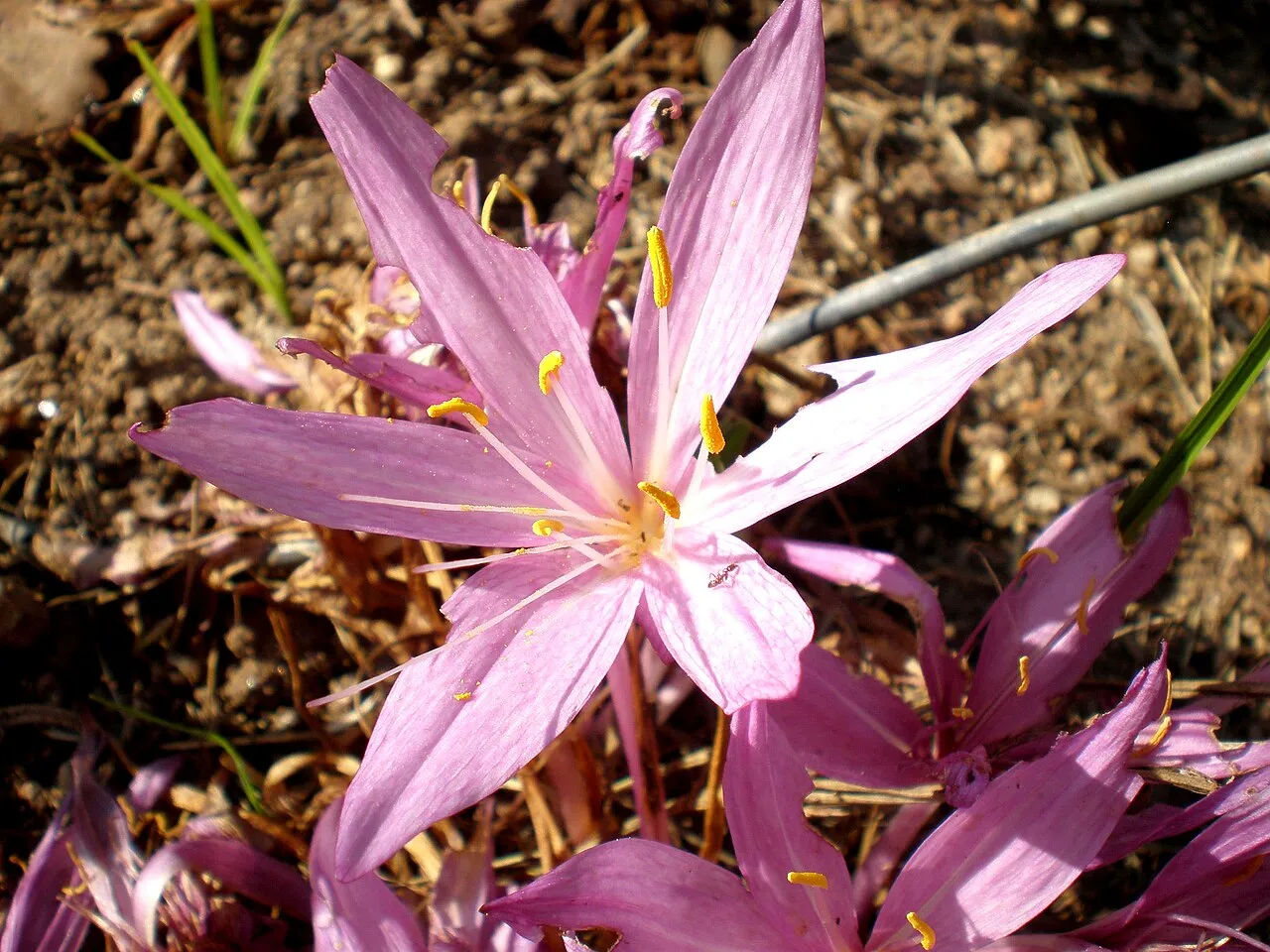
Autumn crocus does something wonderful — it throws up lilac-pink flowers from bare ground in September, when the garden is winding down. It is also among the most dangerous plants you can buy without a warning label.
Read this before anything else
NC State Extension classifies Colchicum autumnale as highly toxic:
“Highly toxic and can be fatal if ingested. Symptoms include cramping, bloody vomiting, diarrhea, increased blood pressure, respiratory failure, shock, multi-organ damage, bone marrow suppression.”
The active compound is the alkaloid colchicine. All parts of the plant are poisonous, and especially the corm — the bulb-like structure you handle when planting. It also causes contact dermatitis.
This is not the “low severity, mild stomach upset” toxicity that most garden plants carry. Colchicine poisoning is a medical emergency with no simple antidote, and the symptoms characteristically appear hours after ingestion, by which point a great deal of damage is already underway.
The saffron confusion, which is the lethal part
NC State notes it is “often confused with Crocus sativus (true saffron crocus), but autumn crocus is distinctly different and highly toxic.”
Both flower in autumn, both are lilac-purple, and both push flowers up from bare ground. Saffron is harvested from the red stigmas of Crocus sativus. People have been poisoned, some fatally, harvesting “saffron” from Colchicum.
This article is not an identification key, and you should not use the photograph above as one. The rule that keeps you safe is simpler than any field character:
Never harvest saffron from a plant you did not buy, labelled, as Crocus sativus.
If you want saffron, buy named Crocus sativus corms from a bulb supplier and keep them in a bed of their own, nowhere near Colchicum. If you have inherited an unidentified autumn-flowering bulb, treat it as Colchicum and do not eat any part of it.
Worth knowing for context: the two are not even closely related. Colchicum is in the Colchicaceae, and a true crocus is in the iris family. One visible consequence is stamen count — colchicums have six, crocuses have three — but again, that is context, not a licence to forage.
Growing it
With the above understood, it is an easy and rewarding plant.
Hardiness: zones 4a to 9b. Size: 6 to 8 inches tall and wide.
Light: full sun or partial shade.
Soil: well-drained loam, across a wide pH range of 4.5 to 7.5. NC State notes it tolerates summer drought but not dry soils — meaning it copes with a dry dormant summer, but does not want to be baked in permanently arid ground.
Planting: set the corms 2¾ to 4 inches deep, in late summer. They often flower within weeks of planting, sometimes before they have properly rooted.
The odd life cycle
This catches people out and is worth planning around.
Flowers appear in autumn with no leaves at all — hence the other common name, naked ladies. Bare stems and flowers push straight out of the soil.
Leaves appear the following spring, broad and strappy, and die back by early summer. They are considerably bulkier than the flowers, and they look untidy as they yellow.
So the planting has two very different appearances at two different times of year, and a gap in between when there is nothing there at all. The usual solution is to plant colchicums through low groundcover or among perennials that mask the spring foliage and fill the summer gap.
Do not cut the leaves down while they are still green — that is how the corm rebuilds for next autumn.
Siting, with the toxicity in mind
Given the hazard, think about placement rather than treating it as an ordinary bulb:
- Not in a vegetable garden or herb bed, where a corm could be mistaken for an onion or shallot. This is the realistic domestic accident.
- Not where children dig.
- Wear gloves when handling corms, because of the contact dermatitis.
- Label the planting, and tell anyone else who gardens with you.
The short version
A genuinely lovely autumn bulb: plant corms 3 to 4 inches deep in late summer in well-drained soil, expect flowers within weeks and leaves the following spring, and leave the foliage to die back naturally. Then treat it as the poison it is — gloves on, away from the vegetable beds, and never, under any circumstances, harvested for saffron.
- autumn crocus
- colchicum
- toxic plants
- fall bulbs
- naked ladies