Perennials
How to Grow and Care for Balloon Flowers
Balloon flower emerges very late in spring, so it gets dug up by gardeners who think it died. Mark it, leave it alone, and it will outlast most of the border.
The Garden Magic Hub
- Zone
- 3–8
- Light
- Full sun
- Water
- Moderate
- Level
- Beginner
- Season
- Summer
On this page
Balloon flower is a genuinely low-maintenance, long-lived perennial, and almost all the advice for it amounts to the same instruction: leave it alone.
It comes up very late — mark it
This is the single most useful thing to know, because it is how people lose the plant.
Missouri Botanical Garden notes that new stems emerge late in spring, and warns gardeners not to damage the crowns by cultivating too early.
In practice: everything else in the border is up and growing, the balloon flower patch is bare soil, and you conclude it did not survive the winter. Then you fork it over to plant something else, and you have killed a perfectly healthy plant.
MoBot’s solution is simple and worth adopting: leave the old stems standing through winter and remove them only when new growth appears. They mark the spot precisely, at no cost.
If you have cut them down, a plant label pushed in beside the crown in autumn does the same job.
Do not move it, and do not divide it
The second instruction is equally simple.
Balloon flowers have fragile, fleshy roots, and NC State is direct that “division and transplanting are difficult due to the fragile fleshy root system.” MoBot’s conclusion is that it is probably best to leave established plants undisturbed.
So this is a plant you site once. Choose the spot properly, because there is no easy second chance — and unlike most perennials, it does not need periodic division to stay vigorous. It simply keeps going, often for many years.
If you must move one, do it in spring as growth begins, dig very wide and deep, and accept that it may sulk for a season.
The flowers
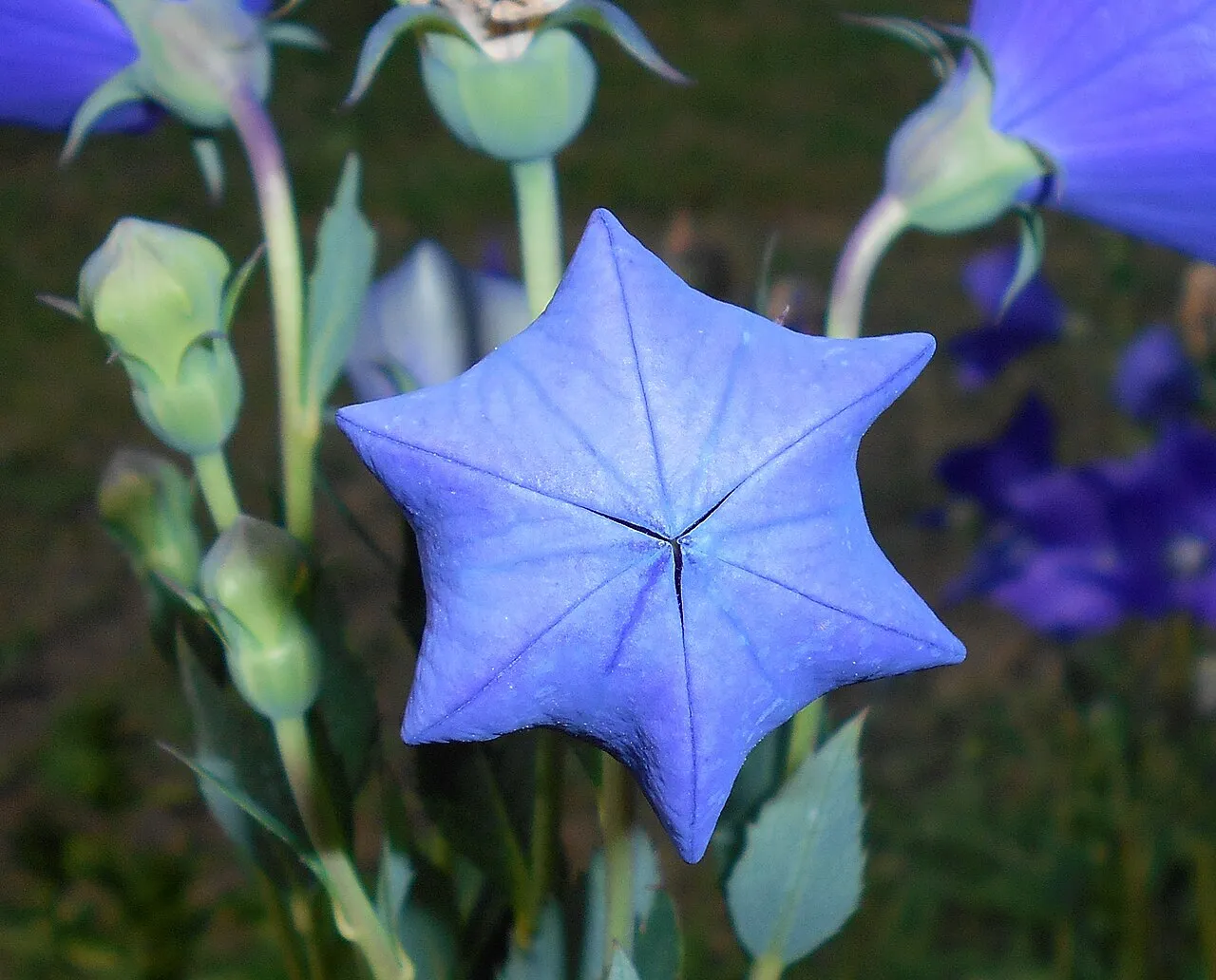
The name comes from the unopened buds, which inflate into five-angled balloons before opening. NC State notes they pop when squeezed, which is a large part of why this plant is popular with children.
Open flowers are broad bells with five pointed lobes, 1 to 3 inches across, in blue-violet, white or pink, through spring and summer.
Deadheading prolongs the bloom season — worth doing, though it is fiddly on a plant with this many buds. Snap off spent flowers individually rather than shearing, so you do not remove the unopened balloons behind them.
Conditions
Hardy zones 3a to 8b — genuinely cold-hardy.
Size: 1 to 2 feet tall and 1 to 1.5 feet wide. Compact, and suited to the front or middle of a border.
Light: full sun or partial shade. Full sun gives sturdier stems; some afternoon shade is welcome in hot climates.
Soil: loam with good drainage, at an acid pH. Drainage is the requirement to take seriously — fleshy roots in wet winter soil rot.
Taller forms can flop, particularly in rich soil or part shade. The dwarf cultivars (‘Sentimental Blue’, ‘Astra’ and ‘Fuji’ series) avoid the problem, and are the better choice for a small garden.
Maintenance
NC State rates it low overall, which matches the rest of this article. Beyond deadheading, there is very little to do: no staking on the compact forms, no division, no feeding beyond ordinary soil care.
Cut the stems back after frost — or better, per the point above, leave them until spring.
The short version
Full sun, well-drained soil, and then almost nothing. Do not divide it, do not move it, and above all mark where it is, because it emerges weeks after everything else and gardeners dig it up believing it has died.
- balloon flower
- platycodon
- late emerging
- long lived perennials
- deadheading