Annuals
How to Grow and Care for Bells of Ireland
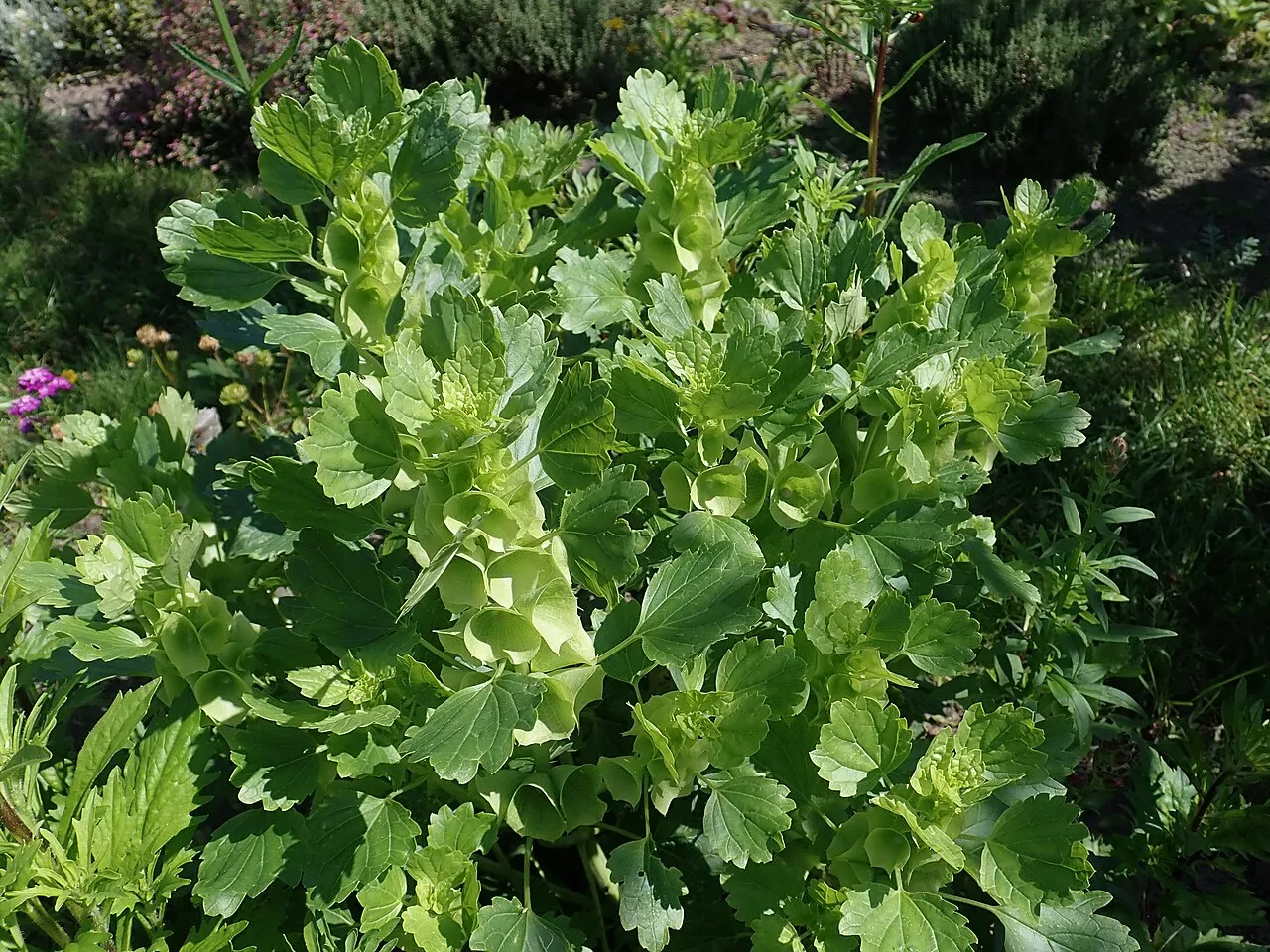
The green bells are not flowers — they are calyces, which is exactly why they last so long in a vase and dry so well. A cool-season annual that hates humid heat.
The Garden Magic Hub
- Zone
- 2–11 (grown as an annual)
- Light
- Full sun
- Water
- Moderate
- Level
- Intermediate
- Season
- Summer
On this page
Bells of Ireland is one of the few genuinely green “flowers” in the garden, and one of the best things you can grow for cutting. It is also not quite what it appears to be.
The bells are not flowers
NC State Extension is clear about the structure: the showy green shells are calyces, not petals, and the actual flowers are tiny white blooms encased within them.
That distinction is the reason the plant behaves as it does. Petals are short-lived, delicate structures built to attract pollinators and then fall. A calyx is a protective structure built to last — which is why bells of Ireland holds for so long in a vase, and why it dries so much better than a true flower.
It is also, less obviously, a mint — family Lamiaceae. Look at the square stems and the scalloped, opposite leaves and it is unmistakable once pointed out.
It is a cool-season annual
Semi-hardy annual, grown across zones 2a to 11b as a summer crop.
The critical limitation NC State names is climate rather than cold: hot, humid summers are problematic. Bells of Ireland is at its best in a cool summer and sulks in Gulf Coast heat. In hot regions, treat it as a spring crop — sow early, cut early, and do not expect it to carry through July.
Sow it outdoors, not in
This is the practical point that decides whether you get a crop.
NC State gives both options — outdoors a few weeks before the last frost date, or indoors 8 to 10 weeks before — but notes plainly that outdoor starting produces better results.
That is worth following. Bells of Ireland has a taproot and resents root disturbance, and transplanted seedlings often stall. Direct sowing into cool spring soil sidesteps the problem entirely.
Sow into a prepared, loose seedbed and press the seed into the surface rather than burying it deeply. Thin to about 9 to 12 inches apart.
Conditions
Light: full sun, or partial shade with at least a few hours of direct light.
Soil: well-drained, consistently moist, loose and moderately fertile. It tolerates a range of textures and pH, but the moisture matters — plants that dry out produce short stems and small bells.
Size: 2 to 3 feet tall and 1 to 1.5 feet wide.
Staking: NC State notes it may need stakes to prevent sprawl. Tall stems carrying heavy calyces flop in wind or rain, and a flopped stem bends permanently. For cutting, a grid of netting the plants grow up through is easier than individual staking.
Cutting and drying
Both uses are excellent, and the timing is the same for each.
Cut the stems before the seed ripens. Once seed sets, the calyces begin to coarsen and lose colour.
For drying, NC State’s method is straightforward: hang the stems in bunches in a dry place with good air circulation. They fade from bright green to a soft parchment as they dry, which is part of the appeal.
Strip the lower leaves before putting stems in water — the foliage fouls vase water quickly, as with most mints.
One handling note: the stems carry small spines at the leaf joints, easy to miss and unpleasant to grab. Gloves are sensible when harvesting a quantity.
Problems
NC State records no serious diseases or insect pests, which makes the climate limitation the only real obstacle.
If plants collapse in midsummer in a hot region, that is the heat rather than a disease, and there is no treatment for it beyond growing them earlier next year.
The short version
A mint-family annual whose green bells are calyces, not petals — which is why they last. Direct sow a few weeks before the last frost rather than transplanting, keep the soil consistently moist, net or stake the stems, and cut before seed sets. In a hot humid climate, grow it as a spring crop and let it go when the heat arrives.
- bells of ireland
- moluccella
- cut flowers
- drying flowers
- direct sowing