Perennials
How to Grow and Care for Blue Poppy
The Himalayan blue poppy needs cool, humid summers under 80°F. Most US gardens cannot supply that, and this article says so before telling you how to try.
The Garden Magic Hub
- Zone
- 3–8 (climate matters more than zone)
- Light
- Partial sun
- Water
- High
- Level
- Advanced
- Season
- Summer
On this page
Almost every article about the Himalayan blue poppy opens with how beautiful it is. This one will start with the part that saves you money.
You probably cannot grow it
Missouri Botanical Garden does not soften this:
“The difficulty (some gardeners say impossibility) of growing this plant has risen to the level of legend. Their cultural requirements of cool temperatures, moist soils, and perfect drainage in summer and winter usually cannot be achieved.”
The specific requirement is the one that rules out most of the country: summer temperatures typically below 80°F, with mild winters, in cool humid shade.
Consider where that actually exists in the United States. The Pacific Northwest — coastal Oregon, Washington, and comparable parts of northern California. Mountain gardens at elevation, where MoBot specifically recommends them for rock gardens. Parts of coastal Alaska, where they grow famously well. Some of northern New England and the upper Midwest, in a good year.
Everywhere else, a blue poppy is a plant you buy in spring and lose in August. Not because you did anything wrong, but because a plant adapted to Himalayan meadows cannot photosynthesise its way through a Missouri July.
If you are outside those regions, spend the money on something else. That is a more useful sentence than any care instruction I could give you.
The contradictory soil requirement
For those in the right climate, the second difficulty is a genuine tension in the soil brief.
MoBot’s requirements: soils must not dry out during the growing season, but must also have superior drainage, with some dryness in winter to prevent root rot.
So: constantly moist in summer, sharply drained always, and drier in winter. That is not a contradiction in nature — it describes a gritty, humus-rich mountain soil on a slope with meltwater moving through it — but it is very hard to build in a garden bed.
In practice it means a raised bed or slope, heavily amended with organic matter for water retention, with grit or sand through it for drainage, and no winter irrigation. Flat heavy ground will not do it at either end of the year.
Light
Part shade, in woodland-like conditions. MoBot notes that part shade helps insulate plants from the heat of the sun — which is the operative function here. You are not providing shade because the plant wants dimness; you are providing it to keep the crown and root zone cool.
Dappled light under high deciduous canopy, or a north-facing slope, is the target.
Humidity
Cool and humid. This is why the Pacific Northwest and coastal Alaska work and why the mountain West is harder despite the temperatures — cool dry air stresses the plant nearly as much as heat.
The monocarpic problem
One more thing worth knowing before buying: many Meconopsis, including forms sold as M. betonicifolia, tend to be monocarpic or short-lived — they build up for a few years, flower once, set seed and die.
Growers work around this by removing the first year’s flower buds to push the plant into a perennial habit, and by raising replacements from seed. Whether your plants persist depends on the exact clone as much as your care, and the taxonomy in this group is genuinely muddled — plants sold as M. betonicifolia are frequently M. baileyi, and the hybrid ‘Lingholm’ is more reliably perennial than either.
If you want the best odds, buy ‘Lingholm’.
If you are going to try anyway
- Right climate first. Nothing else compensates.
- Raised, gritty, humus-rich bed in part shade.
- Never let it dry out in summer; keep it drier in winter.
- Buy ‘Lingholm’ rather than seed-raised betonicifolia if you want a perennial clump.
- Remove the first flush of buds on a young plant to encourage it to persist.
- Expect to lose some. Even in the right conditions, this is a plant experienced growers lose.
The short version
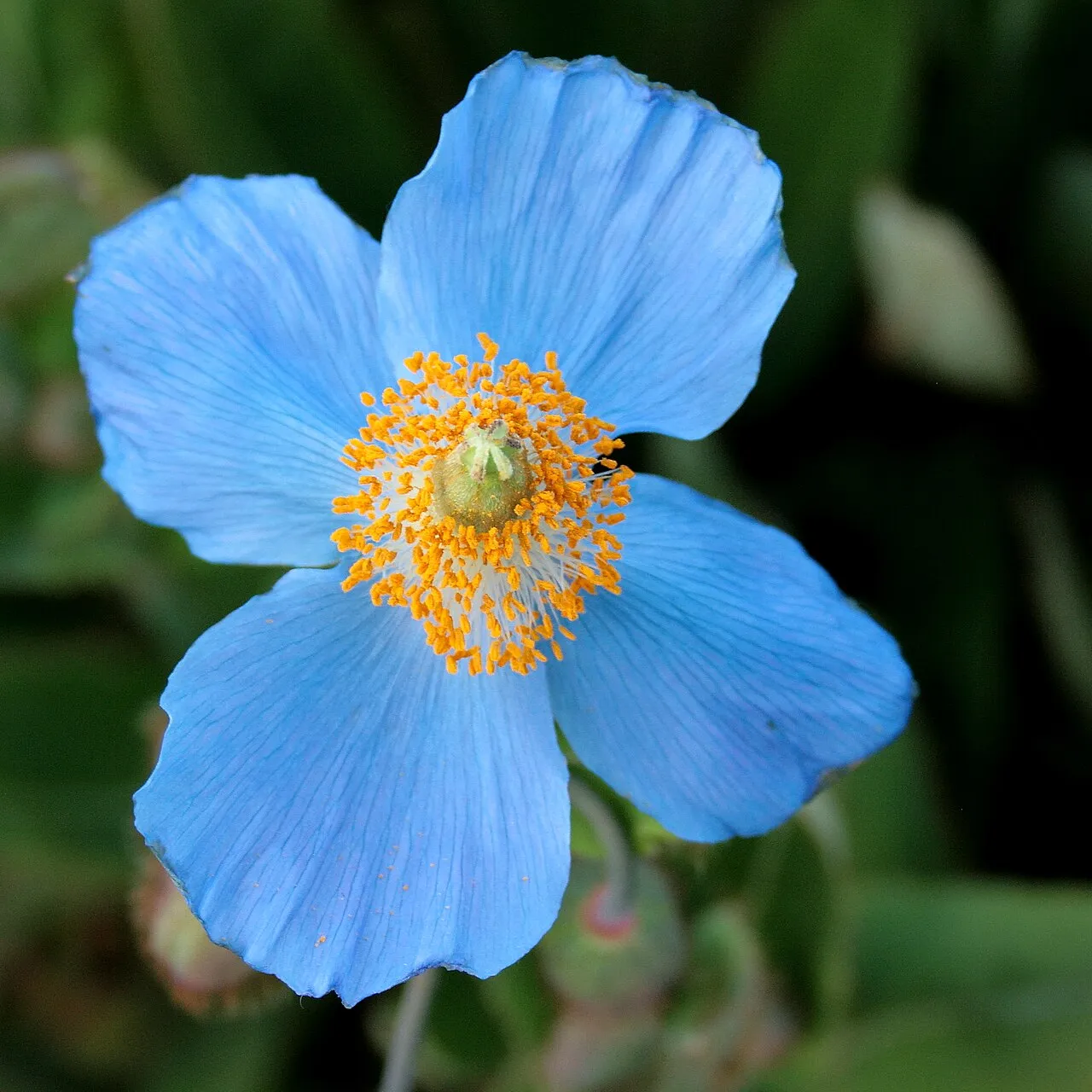
A genuinely extraordinary flower with a narrow climate window: cool humid summers under 80°F, part shade, constantly moist but sharply drained soil, drier in winter. If you garden in the Pacific Northwest, coastal Alaska or a cool mountain garden, it is worth every bit of effort. If you do not, the honest advice is to admire it in photographs.
- blue poppy
- meconopsis
- difficult plants
- cool climate
- shade perennials