Perennials
How to Grow and Care for Carnations
Garden carnations are not the florist's flower, and they are short-lived unless the drainage is right. Here is the soil they need and why they die in winter.
The Garden Magic Hub
- Zone
- 6–9
- Light
- Full sun
- Water
- Low
- Level
- Intermediate
- Season
- Summer
On this page
Two things trip people up with carnations. The plant in the garden is not really the flower in the bouquet, and the plant in the garden will not last long unless you get one specific thing right.
The florist’s carnation is a different proposition
The long-stemmed, tightly doubled carnations sold as cut flowers are greenhouse crops — selected for stem length and vase life, grown under glass with support netting and controlled conditions.
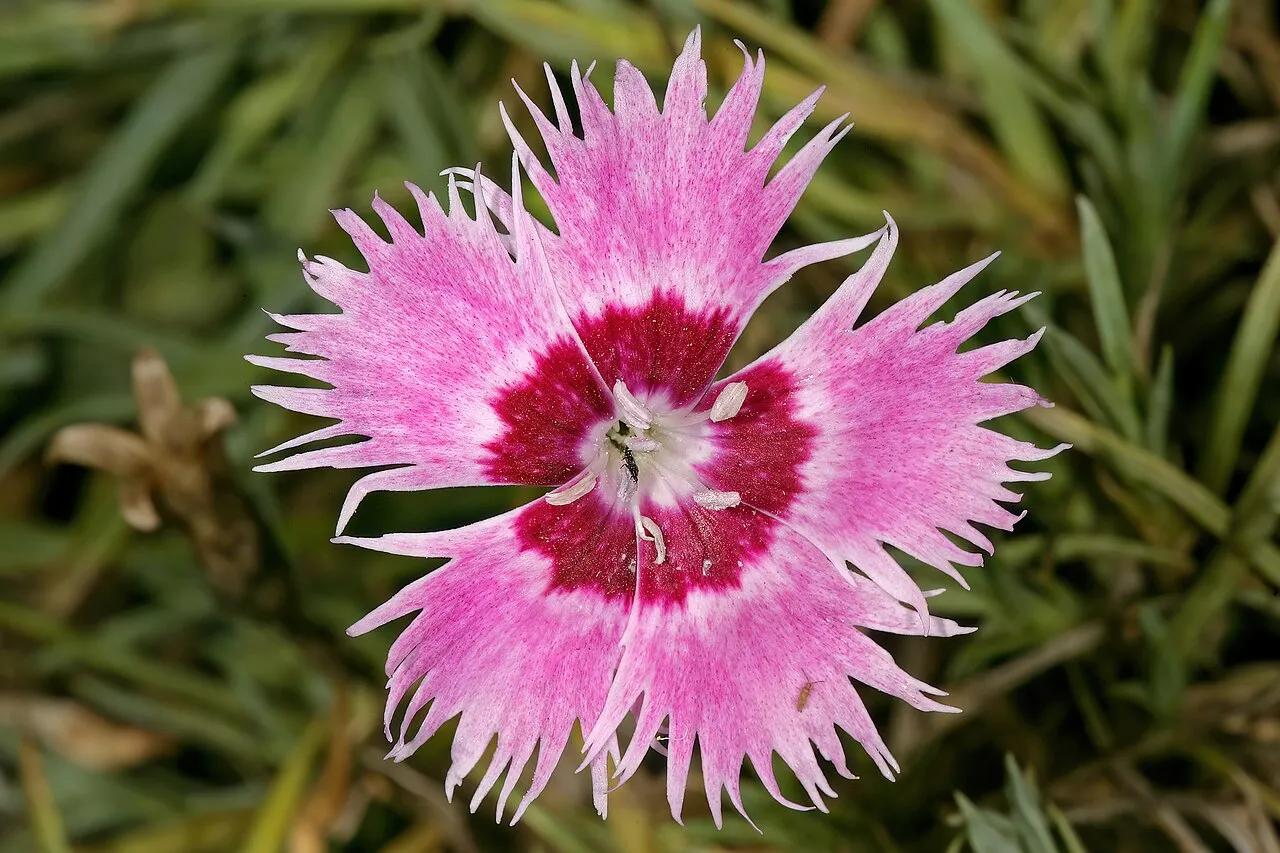
Dianthus caryophyllus in a border is a lower, looser, considerably tougher plant. NC State Extension gives garden forms at 1 to 4 feet tall and only 6 to 12 inches wide, flowering in summer with semi-double to double fragrant blooms.
Expecting florist-shop flowers from a border plant is the main source of disappointment here. Buy it for the scent, the grey-green foliage and the long summer display instead.
Drainage decides how long the plant lives
Dianthus have a reputation as short-lived perennials. That reputation is largely a drainage problem wearing a different hat — well-drained soil prolongs their life, and without it they behave as short-lived plants.
The failure mode is specific. Crown rot and root rot take them in winter and early spring, when the plant is dormant and the soil stays cold and wet. A dianthus that sailed through summer and vanished over winter was almost certainly sitting in wet ground, not frozen out.
So: gritty, loose, sharply drained soil. If your beds hold water, raise them or grow dianthus in containers — and in a container, use a mix with genuinely good drainage and never let it stay saturated.
The pH is unusual, and worth acting on
Most garden plants want slightly acid soil. Dianthus do not — they prefer neutral to slightly alkaline ground, and NC State’s tolerance range runs from pH 6.0 all the way past 8.0.
That makes them one of the few ornamentals genuinely happy in a limey soil, and it means the standard advice to acidify beds works against them. If your soil is markedly acid, a little lime is one of the few times that recommendation actually helps a flowering perennial.
Sun and summer
Full sun, or partial shade with at least a few hours of direct light. Flowering thins noticeably in shade.
Heat and humidity are the other limiting factor. Hot humid summers cause the centres of the clumps to melt out — the middle dies while the edges live on. There is no treatment; it is a climate response. Spacing plants for airflow and avoiding overhead watering both reduce it, and in the humid South it is a reason to treat dianthus as a cool-season plant rather than a summer-long one.
Getting a second flush
Cut the plants back by about half after the first flush of flowers. This is the single most effective piece of maintenance and it reliably encourages rebloom. Deadheading individual spent flowers helps too, but the harder cut is what resets the plant.
Propagation
Seed and stem cuttings both work. Because the plants are short-lived even in good conditions, taking cuttings every couple of years is the sensible way to keep a variety you like rather than waiting for the parent to fail.
Problems
Rust and crown rot are the diseases NC State names, and both are far more likely in poorly drained ground — the same root cause as the short lifespan.
One safety note: dianthus are toxic to cats, dogs and horses, though mildly — NC State describes mild gastrointestinal signs and mild dermatitis rather than anything severe.
The short version
Full sun, gritty sharply drained soil, and neutral to alkaline rather than acid. Cut back by half after flowering for a second flush. Expect the clump centre to suffer in a humid summer, take cuttings every couple of years, and treat winter wet as the thing most likely to kill them.
- carnations
- dianthus
- drainage
- crown rot
- alkaline soil