Foliage Annuals
How to Grow and Care for Coleus
Coleus is grown for leaves, not flowers, and modern cultivars are far more sun-tolerant than the old advice allows. Here is how to place, pinch and overwinter it.
The Garden Magic Hub
- Zone
- 10–11
- Light
- Partial sun
- Water
- Moderate
- Level
- Beginner
- Season
- Summer
On this page
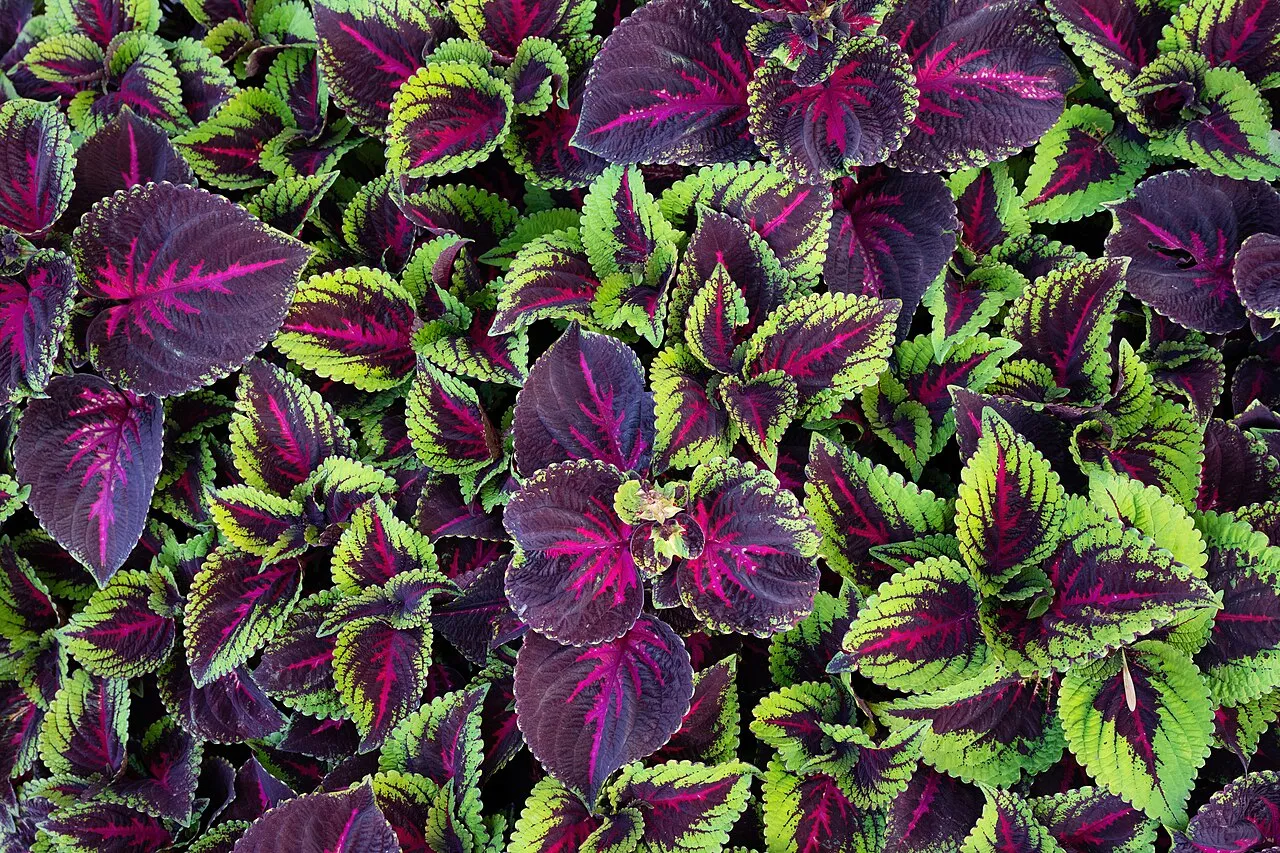
Coleus is the easiest way to get sustained, saturated colour into a planting without waiting for anything to bloom. It is also a plant whose standard advice — “grow it in shade” — is now only half right.
The name has moved around a lot
If you find this plant filed under three different genera, you are not confused; the botanists have been.
NC State Extension currently gives the accepted name as Coleus scutellarioides, listing Coleus blumei, Coleus pumilus, Plectranthus scutellarioides and Solenostemon scutellarioides as former names. The USDA PLANTS Database still files it as Solenostemon scutellarioides, and garden centres often label it Plectranthus.
All four names refer to the same plant. Nothing about growing it depends on which one is on the tag.
Light: check the cultivar, not the old rule
Coleus was for a long time a shade plant, and plenty of it still is. But NC State now describes the species as adaptable to full shade, part shade, or full sun — with two caveats that matter.
Plants “may wilt in full sun”, and excessive shade produces leggy, stretched growth with washed-out colour.
The resolution is that some cultivars are specifically bred for sun tolerance, and those are now widely sold. So the useful question is not “does coleus take sun” but “does this coleus take sun” — which is a label question.
As a general rule that works without label information: morning sun with afternoon shade gives good colour on almost anything in the genus, and dappled light all day is close to ideal. Deep shade will grow the plant but not colour it.
Soil and water
Moist, rich, loose soil with good drainage. Coleus is not drought tolerant and wilts dramatically when dry — it usually recovers, but repeated wilting costs you leaves and colour.
In containers, which is where a lot of coleus lives, that translates to checking daily in hot weather. A coleus in a small pot in July can need water twice a day.
Pinch it, and keep pinching
Pinching the stem tips creates bushier plants. This is the difference between a full mound of colour and a few long bare stems with leaves on the ends.
Start when the plant is young and repeat through the season whenever a stem runs away from the shape you want. Every pinch forces branching below the cut.
Remove the flowers
Coleus does flower — small spikes of pale blue or white. NC State calls them “insignificant” and notes they “can distract from the leaves.”
There is a practical reason to remove them beyond appearance: flowering shifts the plant’s energy toward setting seed and away from producing foliage, and plants allowed to bloom heavily tend to decline and get straggly. Pinch the spikes off as they appear.
It is an annual almost everywhere
Coleus is hardy only in zones 10a to 11b. Everywhere colder in the US it is grown as an annual, killed by the first frost.
That is not the end of it, though, because of the next point.
Cuttings are trivially easy
Cuttings root easily in water or clean potting soil. This is the single most useful thing to know about coleus.
It means you never have to buy the same cultivar twice. Take a few short tip cuttings in late summer before frost, root them in a jar of water on a windowsill, and pot them up to overwinter indoors. In spring, pinch them out to bush up and plant back out after the last frost.
It also means one plant can fill a border. A coleus bought in May and propagated through the summer supplies as many plants as you have room for.
Problems
Aphids, whiteflies and spider mites, particularly on plants brought indoors — the dry warm air of a heated house suits all three. Check overwintering cuttings regularly, because an infestation on a windowsill in February spreads to everything else.
One thing worth knowing before handling large quantities: coleus causes contact dermatitis in some people. If you are taking dozens of cuttings, gloves are sensible.
The short version
Buy for the leaves, check whether your cultivar is a sun type, and give it moist rich soil that drains. Pinch the tips repeatedly, pinch the flowers off entirely, and take cuttings in late summer so you never buy it again.
- coleus
- foliage plants
- cuttings
- pinching
- shade gardening