Container Plants
How to Grow and Care for Fuchsia
Fuchsias stop flowering above 76°F, which explains most disappointment with them. Here is how to site, pinch and overwinter them, and the heat-tolerant cultivars.
The Garden Magic Hub
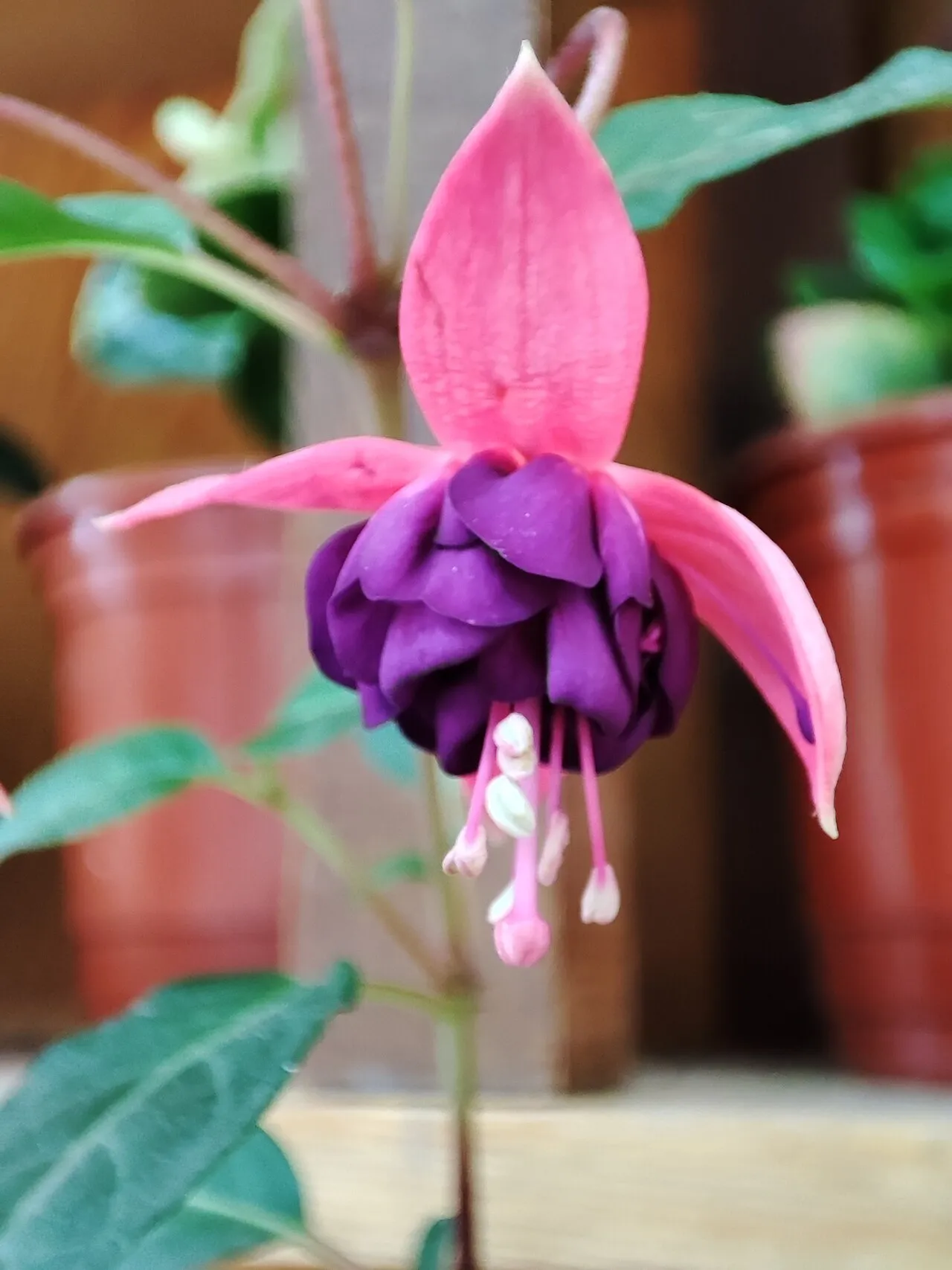
- Zone
- 6–10 (varies by type)
- Light
- Partial sun
- Water
- Moderate
- Level
- Intermediate
- Season
- Spring, Summer
On this page
Most disappointment with fuchsias comes down to a single number, and it is worth putting at the top.
They stop flowering above 76°F
Clemson HGIC gives the ideal range as 60 to 70°F during the day, with nights about 10 degrees lower — and states that flowering stops once the average daily temperature rises above 76°F.
That is not a high bar. Much of the United States clears it for weeks at a time, which is why the basket that looked spectacular in May sits there doing nothing in July.
Hot dry conditions make it worse: Clemson notes buds “fail to develop properly” and any flowers that do open “quickly fade and drop.”
Three responses are available, and they are all legitimate:
- Treat it as a spring and autumn plant. Enjoy the flush before and after summer and accept a quiet middle.
- Site it cool. Morning sun, afternoon shade, and somewhere with air movement rather than a hot sheltered corner.
- Buy heat-tolerant cultivars. Clemson names ‘Constance’, ‘Orange Drops’ and ‘Gartenmeister Bonstedt’ — the last is a triphylla type, and that group generally handles heat better than the big-flowered hybrids.
Upright or trailing
Two habits, and the label matters:
- Upright cultivars like ‘Beacon’ and ‘Winston Churchill’ suit pots and beds.
- Trailing cultivars like ‘Dark Eyes’ and ‘Swingtime’ are the ones for hanging baskets, where the drooping stems show the flowers off properly.
Putting an upright fuchsia in a basket gives you a plant that sits in the middle and points at the ceiling.
Light
Outdoors, partial shade, or at minimum protection from hot afternoon sun.
Indoors, Clemson suggests an east, west or south window in bright, indirect light. Deep shade will keep the plant alive without flowering.
Soil and water
Clemson’s potting recipe is equal parts peat moss, vermiculite, potting soil and coarse sand — open and free-draining, which matters because fuchsias want steady moisture without saturation.
Water when the soil surface feels dry. Baskets in summer may need checking twice a day; a fuchsia that dries out completely drops buds and often does not recover the flush.
Reduce watering in autumn to prepare the plant for its winter rest.
Feeding
A soluble complete fertiliser every two to four weeks through the growing season. Stop in the fall — Clemson says at least two weeks before bringing plants indoors — so growth hardens off rather than going into winter soft.
Pinching, which makes the plant
Clemson’s rule is precise and easy to follow: pinch each new shoot after it has produced two full sets of leaves.
Every pinch forces branching, and branching is where the flowers come from. A fuchsia pinched properly through spring becomes a dense mound covered in bloom; one left alone becomes a few long stems with flowers at the tips.
Stop pinching about a month before your first frost date, so the shoots you have forced have time to mature.
Deadhead spent flowers and the small berries that follow them — a plant left to set fruit slows its flowering.
Overwintering
Fuchsias will not survive a cold winter outdoors, with one exception noted below. The method is a cool dormancy rather than a warm windowsill:
Bring the plant into a cool location at 45 to 50°F — an unheated garage, basement or porch — and water sparingly, just enough to stop the potting mix drying out completely. Cut the plant back before or during this rest.
A fuchsia kept warm and bright all winter tends to grow thin, pale and pest-ridden. Cool and nearly dry is the right instinct.
The hardy exception: Fuchsia magellanica is the hardiest of the group. Its top growth dies back at the first frost, but the roots survive with mulching, and in cold areas it is grown as a herbaceous perennial that resprouts each spring.
Propagation
Softwood cuttings about 6 inches long taken in spring root in three to four weeks. Seed germinates in 21 to 28 days at 70 to 75°F, but named cultivars will not come true from it.
Taking cuttings in late summer is good insurance against losing an overwintering plant.
Pests
Whiteflies are the most common, per Clemson, followed by aphids — which cause the leaf curling people often mistake for a watering problem — plus thrips, mealybugs, spider mites and scale.
One pest deserves separate mention in the West. Fuchsia gall mite distorts and thickens leaves and shoot tips, reddens the foliage, and reduces flowering; UC IPM notes that where mites are abundant they can eventually stop all new growth. Damage looks like a virus or herbicide injury rather than an insect. Resistant cultivars are the practical answer where it is established.
The short version
Cool, bright shade and steady moisture. Pinch every new shoot after two sets of leaves until a month before frost. Expect flowering to stop above 76°F and plan around it, or buy ‘Gartenmeister Bonstedt’. Overwinter cool at 45 to 50°F, barely watered, and take cuttings as backup.
- fuchsia
- hanging baskets
- shade gardening
- overwintering
- pinching