Shade Perennials
How to Grow and Care for Hostas
Hostas are shade plants, but how much shade depends on leaf colour. Here is how to site blue, gold and variegated types, and what to do about slugs and deer.
The Garden Magic Hub
- Zone
- 3–9
- Light
- Shade
- Water
- Moderate
- Level
- Beginner
On this page
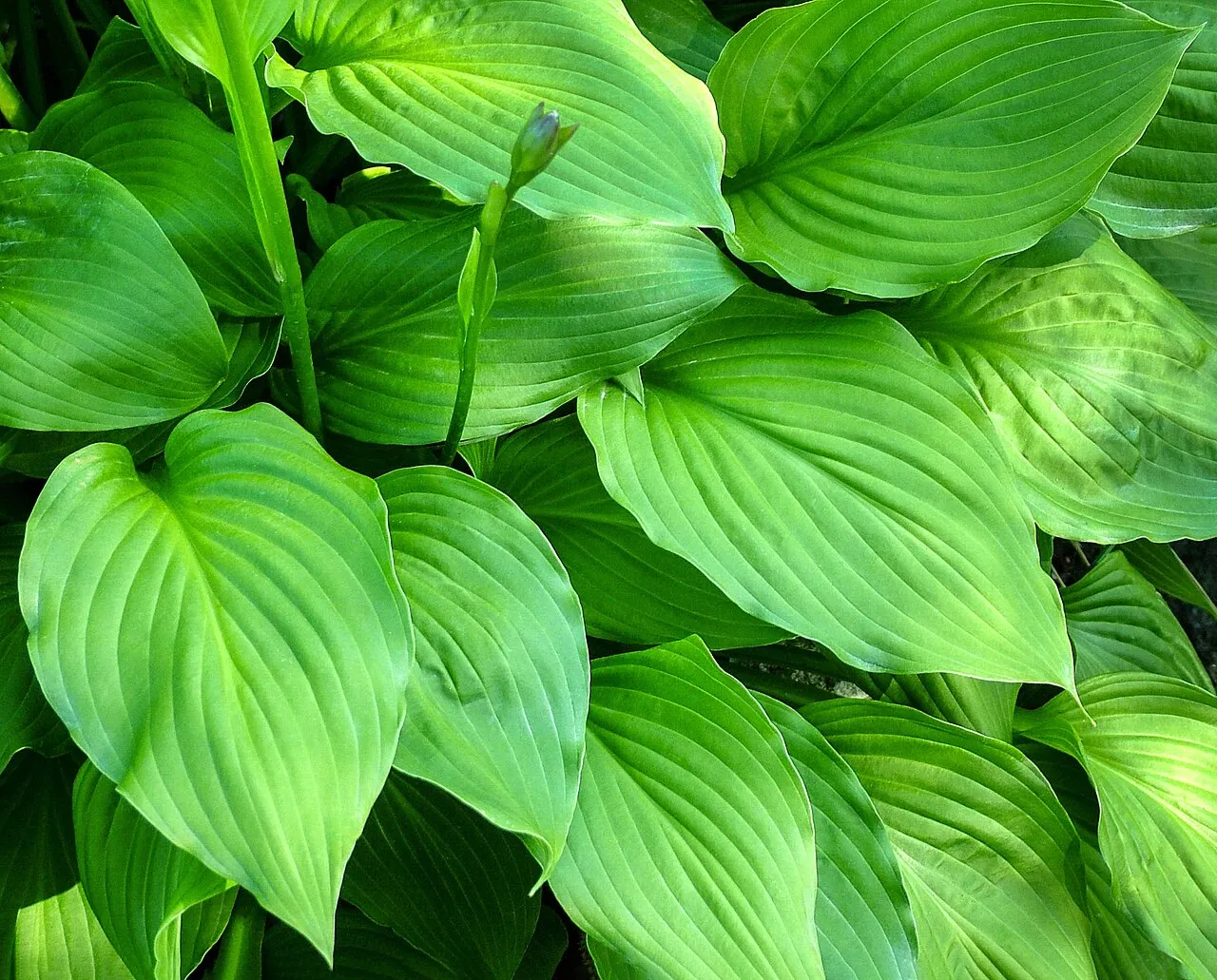
Hostas have a reputation as the plant you put where nothing else grows, which is true enough to be useful and wrong in one important way. “Shade plant” is not a single instruction — how much shade a hosta wants depends on what colour its leaves are.
Get that right and they are among the least demanding perennials available, hardy across zones 3a to 9b and content to sit untouched for years.
Light, by leaf colour
Clemson HGIC starts from the general position — hostas prefer partly shaded or shaded sites — and then splits it by type. This is the part that decides whether yours look good or scorched.
Blue hostas need shade. The blue is not pigment; it is a waxy coating on the leaf surface. Clemson notes it will “fade to green if the waxy leaf covering that gives them their color is rubbed off,” and strong sun and heat degrade it the same way. A blue hosta in afternoon sun turns green by midsummer.
Gold and chartreuse hostas want some sun to colour up. Clemson describes ‘Gold Standard’ developing a bright gold leaf centre with some sun, and ‘Sum and Substance’ achieving its best colour in sun. Kept in deep shade these types stay a muddy green.
Variegated hostas are the ones that burn. The pale sections have less chlorophyll and less protection, and Clemson notes that “sunscald initially occurs on the white, yellow, or lighter green sections.” Morning sun with afternoon shade is the safe placement.
Dappled light under high-canopy trees suits nearly everything in the genus. Deep shade against a north wall works too, with slower growth.
Soil and water
Well-drained soil with plenty of organic matter. Hostas tolerate a broad pH range — NC State gives acid through neutral — so drainage and organic content matter far more than pH.
Water is the requirement people underestimate. Clemson asks for an inch or more per week when rain does not supply it, and more in heat or where tree roots are competing. That last point is the catch: the shady spots hostas want are usually under trees, and trees take the water first. A hosta wilting flat by mid-afternoon under a maple is usually thirsty, not sunburnt.
Planting and spacing
Space plants 1 to 3 feet apart depending on eventual size, which ranges enormously — NC State gives 4 inches to 2.5 feet tall and 6 inches to 3 feet wide across dwarf to giant cultivars. Check the label rather than assuming, because a giant planted at dwarf spacing swallows its neighbours in three years.
Plant with the crown at soil level. Buried crowns rot.
Dividing
Hostas “do best when left undisturbed for several years,” so divide because you want more plants, not because they need it.
The timing advice differs slightly between sources — NC State suggests dividing every 3 to 5 years in early spring as leaves emerge; Clemson gives early fall, or spring before the leaves unfold. Both point at the same window: while the plant is dormant or just breaking, not in the heat of summer. Spring division has the advantage that you can see where the eyes are.
What actually goes wrong
Slugs are, in Clemson’s words, “the most common problem.” They rasp holes through the leaves overnight, and thin-leaved cultivars suffer worst. Thick, corrugated, blue-leaved types are noticeably more resistant. Beer traps work; Clemson cautions to use care with slug baits, which can also poison pets.
Deer are the reason many gardeners give up on hostas. They will graze a bed to stumps in a night, and no cultivar is genuinely deer-proof. If you have deer pressure, that is a fencing or repellent problem rather than a plant-selection one.
Voles are the invisible version — they feed on the root system and kill the plant, often with no above-ground warning until a clump lifts out of the ground when you tug it.
Foliar nematodes produce brown or yellow streaking between the leaf veins, bounded by them. There is no home treatment. Clemson’s advice is preventative and worth following at the nursery: do not buy plants showing yellowing and browning between the veins.
Viruses, including Hosta Virus X, cause mottling and ink-bleed patterns that people sometimes mistake for attractive variegation. There is no cure — affected plants should be dug up and disposed of, not composted or shared.
One safety note
All parts of hostas are toxic to cats, dogs and horses. Worth knowing before planting a border a dog patrols.
The short version
Match the light to the leaf: blue in shade, gold with some sun, variegated out of afternoon sun. Give an inch of water a week and more under trees. Leave clumps alone for years at a time. Then deal with slugs, and if you have deer, deal with deer.
- hostas
- shade gardening
- perennials
- slugs
- deer