Pests, Diseases & Problems
How to Get Rid of Aphids on Indoor Plants
Aphids cluster on new growth and multiply without mating, so numbers climb fast. How to spot them early and clear them without harsh sprays.
The Garden Magic Hub
- Level
- Beginner
On this page
Where to look
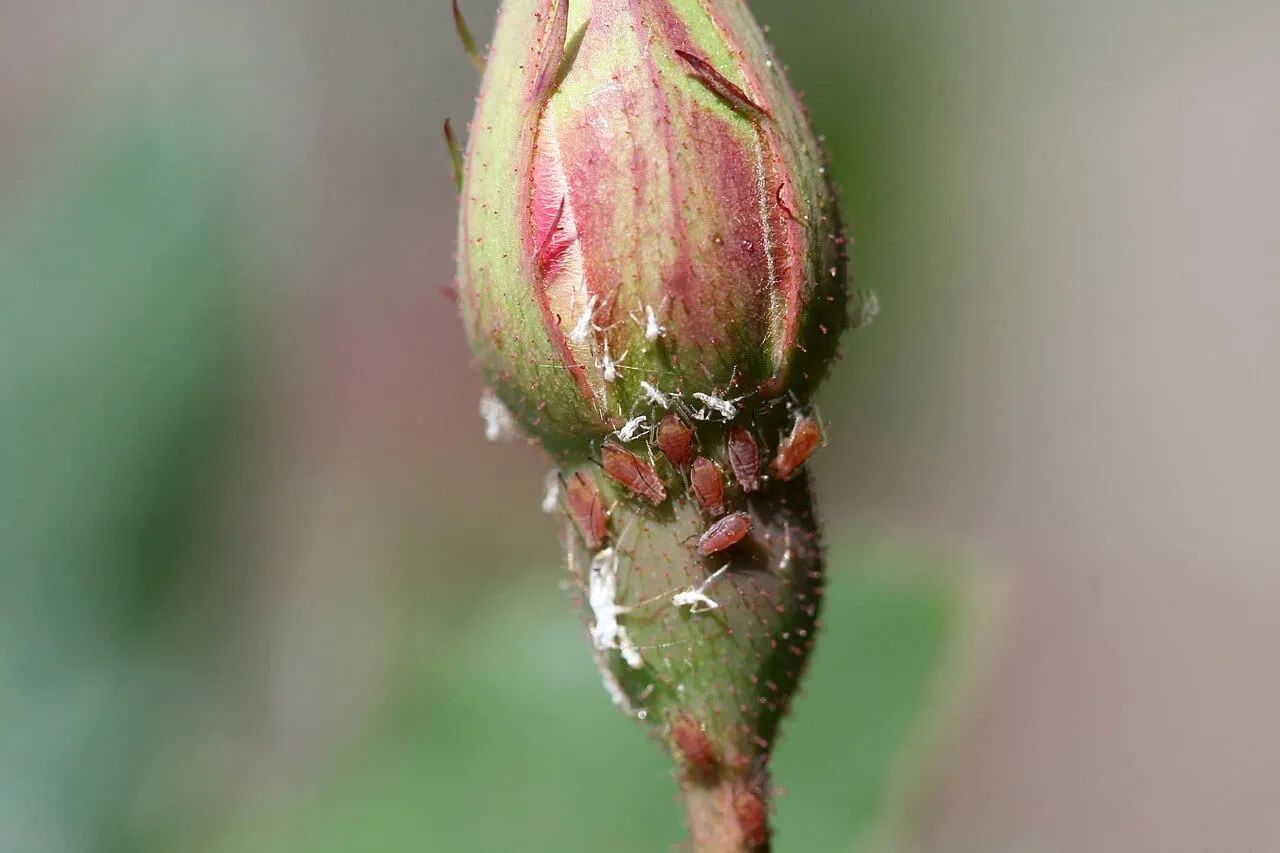
Aphids do not spread evenly over a plant. They cluster where the sap is richest: on new growth, on flower buds, and on the undersides of young leaves. UC IPM puts them “on new growth or on the underside of leaves.”
They are soft, pear-shaped and a few millimetres long, and the colour varies enough that it is a poor identifier — green, black, pink, grey and pale yellow are all common.
The tell most people miss
Look for the cast skins. UC IPM notes that infestations are “often evident by white cast skins that are left behind when aphids molt.”
Those papery white flecks stay stuck to the leaf after the insect has moved on. They are frequently mistaken for dust, and they are the clearest sign that a population has been present long enough to go through a moult.
The sticky evidence
Aphids feed on sap and excrete the excess. UC IPM describes this as “a shiny, sticky sap, called ‘honeydew,’ that can attract ants and encourage growth of sooty mold.”
If leaves below the growing tip feel tacky, or a dark film is developing on them, that is honeydew and the sooty mould that grows on it. The mould is not attacking the plant — it lives on the sugar — but it blocks light and it tells you a sap-sucking insect is above it.
Feeding also distorts what it damages: UC IPM notes aphids cause “leaves to curl and become distorted.” New leaves that emerge crumpled are a common first complaint.
Why they build up so fast indoors
A houseplant has no ladybirds, no lacewings, no parasitic wasps and no winter. Outdoors those things impose a ceiling; indoors nothing does, and a small population that would have been eaten in a week instead doubles.
Rinse before you spray
For most indoor infestations this is all that is needed, and it is the step people skip on their way to buying something.
UC IPM’s first recommendation is to wash aphids off with a water spray and to remove and dispose of infested plant parts. Aphids are soft-bodied and poorly attached; a firm rinse in the sink removes most of a colony, and pinching out one badly infested growing tip can remove the rest.
If you do spray, mind the interval
Insecticidal soap or horticultural oil, applied to cover the insects directly, is the standard next step.
Both are contact-only. Clemson HGIC notes that once the soap solution dries it has no effect on anything that arrives afterwards, and that repeat applications at four to seven day intervals are usually required — partly because some individuals are hidden and some are still eggs when you spray.
Two or three applications, four to seven days apart, is a realistic plan. UC IPM lists a soil-applied systemic only as a last resort, which for a houseplant it genuinely is.
Check what is next to it
Aphids produce winged forms, and a plant that touches another plant shares its pests. When you find them on one, inspect the new growth of everything within reach before you congratulate yourself.
- aphids
- houseplant pests
- new growth
- organic control