Pests, Diseases & Problems
How to Identify and Treat Mealybugs
Those white cottony specks in leaf joints are mealybugs. How to tell them from mould, reach the ones you cannot see, and stop the rebound.
The Garden Magic Hub
- Level
- Intermediate
On this page
What you are looking at
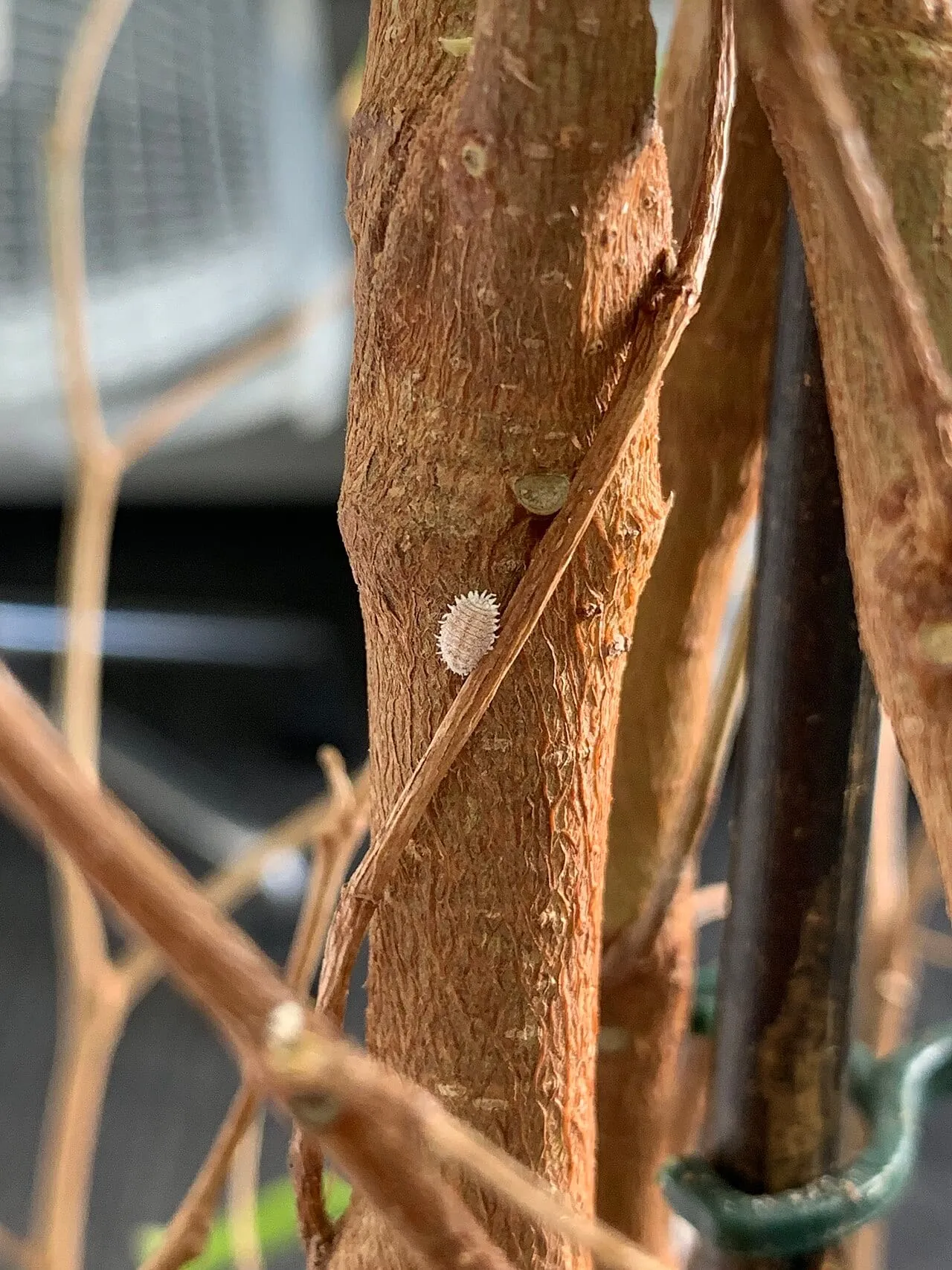
Mealybugs are scale insects that never developed armour. Clemson HGIC describes them as “small, pale insects related to scales… about ⅛ to ¼ inch long and move very sluggishly,” with adult females covered in “white, waxy material, making them look cottony.” Some species carry waxy filaments that project past the body like short legs.
The sluggishness is diagnostic. A mealybug moves, but barely — slowly enough that people assume it is stuck there rather than alive.
Cotton on the plant, not on the soil
The most common misidentification is white fuzzy growth on the surface of the potting mix, which is a harmless soil fungus and an entirely different problem.
Location settles it. Mealybugs sit on the plant — Clemson puts them on “lower surfaces of leaves and in leaf axils.” Soil mould never leaves the surface of the mix. If the white is in the crook where a leaf meets the stem, it is an insect.
Why it comes back after you thought you had won
Clemson notes that while most mealybugs are found on leaves and axils, “one species targets roots specifically.”
Root mealybugs live in the potting mix, out of reach of anything you spray on the foliage, and they are the usual reason an infestation you treated carefully reappears three weeks later. If you have cleared the visible insects twice and they keep returning, slide the plant out of its pot and look at the root ball and the inside of the container for the same white waxy deposits.
The sticky trail
Mealybugs suck sap and excrete honeydew, which grows sooty mould. Tacky leaves below an infestation, or a dark film developing on them, both point at a sap-feeding insect above.
The damage itself is not trivial. Clemson attributes “stunted and distorted growth and sometimes plant death” to mealybug feeding.
Treating it
For a light infestation, Clemson’s first recommendation is physical: hand removal, or “wiping each insect with a cotton swab dipped in rubbing alcohol.” This works well and is genuinely the right first move on a plant with a dozen insects on it.
Its limitation is obvious once you say it out loud — it only treats what you can see and reach. Insects in unopened leaf axils, in the crown, or on the roots are untouched.
For anything beyond that, insecticidal soap sprayed to cover the insects directly is the standard step. Note that the waxy coating is a barrier, so physical removal first genuinely improves what follows.
Soap is contact-only. Clemson’s guidance on insecticidal soaps is that once the solution dries it has no further effect, and that repeat applications at four to seven day intervals are usually needed — partly because some individuals are hidden and some are still eggs at the time you spray.
Plan on three or four rounds, not one.
Knowing when to stop
Clemson is direct that heavy infestations may require disposing of the plant. On a common, replaceable houseplant sitting next to a collection you care about, that is often the correct call rather than the defeatist one.
- mealybugs
- houseplant pests
- identification
- treatment