Pests, Diseases & Problems
How to Identify Root Rot and Save the Plant
Root rot is diagnosed by touching the roots, not by looking at the leaves. How to check, what can be saved, and how to repot what is left.
The Garden Magic Hub
- Level
- Intermediate
On this page
The leaves will not tell you
A plant with root rot wilts, yellows from the bottom, and stops growing. So does a plant that is simply too dry.
University of Maryland Extension notes that root rot produces wilting even when the potting mix is adequately moist. That is the detail that catches people out, because the instinct on seeing a wilt is to water again.
Nothing above the soil line settles it. You have to look at the roots.
Reading the roots
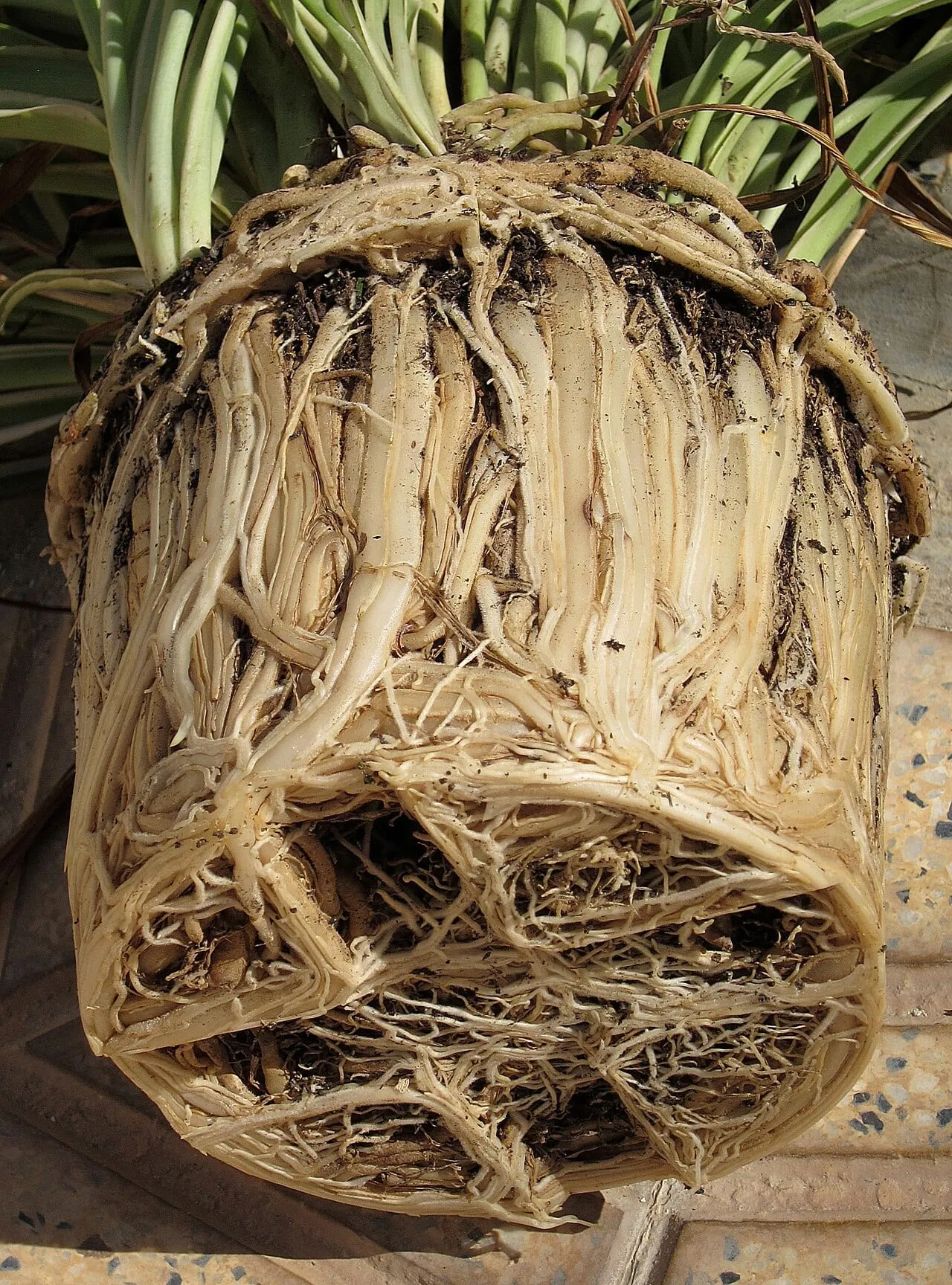
Support the base of the stem, tip the pot, and slide the root ball out. Do it even if the plant looks far gone — it takes a minute and it is the only diagnostic that counts.
Iowa State University Extension describes healthy root tissue as “firm, white, and show numerous feeder roots.” Rotted roots are the opposite: brown to black, soft or mushy.
The most reliable single test is the sheath. On a rotted root, Maryland notes, “the outer portion of the root can be easily pulled away from the core which leaves a fine hair-like thread.” Pinch a root and pull gently. Healthy roots resist. Rotted ones strip, leaving a thread of vascular tissue behind.
If most of the root system stays in the pot when you lift the plant, the decay is advanced.
What is actually growing there
Root rot is not one organism. Maryland names Pythium, Phytophthora and Rhizoctonia; Clemson’s Home & Garden Information Center adds Botrytis, Alternaria and Sclerotinia. Rhizoctonia can appear as coarse reddish-brown threads resembling spider webs. Phytophthora turns root tips dark brown and can move into the lower stem.
For a home grower, none of this changes what you do next. The distinction matters to a diagnostic lab, not to you.
Saving what is left
Trim every soft root back to firm tissue with clean shears, then repot into fresh sterile mix. Do not reuse the old mix.
Clemson advises scrubbing any reused pot and rinsing it in “a solution of one part bleach to nine parts water.” A new pot is simpler.
On fungicides, Clemson is refreshingly blunt: they exist, but “most indoor gardeners will find that these chemicals probably cost more than a new plant.” Maryland’s advice for severely infected plants is to throw them away. If two-thirds of the root system is mush, that is the honest answer.
What the sources do not say
Three questions every reader has, and none of the university sources above answer:
- how much root loss a plant can survive
- whether to cut back top growth to match the lost roots
- how long recovery should take
What I do is trim proportionally, keep the plant bright but out of direct sun, and judge success by whether new growth appears rather than by whether existing leaves recover. That is experience, not evidence, and it is labelled as such deliberately.
The one thing that prevents it
A drainage hole — and nothing substitutes for one.
Putting gravel in the base of a pot is the usual workaround, and it is more contested than either side admits. Extension services have long argued that a coarse layer raises the perched water table and makes saturation worse. A 2025 study in PLoS ONE tested it directly and found drainage layers usually reduced water retention — though it worked with saturated containers and did not measure plant growth.
Both positions agree on the part that matters: water needs somewhere to leave. If the pot has no hole, nothing you put in the bottom of it will fix that.
- root rot
- overwatering
- repotting
- diagnosis