Pests, Diseases & Problems
What the White Fuzz on Houseplant Soil Is
White fuzz on potting soil is usually a harmless saprophytic fungus, not a threat to the plant. What it means, and when it is worth acting on.
The Garden Magic Hub
- Level
- Beginner
On this page
Your plant is almost certainly fine
The white or greyish fuzz spreading across the surface of your potting mix is a saprophytic fungus — an organism that feeds on decaying organic matter rather than on living tissue. It is not attacking the plant, and in most cases it needs no treatment at all.
That is the answer, and most of what follows is about the two situations where it matters anyway.
What it is not
Three things get confused with it, and the distinction is easy.
Mealybugs are also white and fuzzy, but they sit on the plant — in leaf axils and on leaf undersides — never on the soil surface. If the white is in the crook where a leaf meets a stem, it is an insect, not a fungus.
Powdery mildew grows on leaves, not on the mix.
Mineral crust from hard water or fertiliser salts is white but hard and crystalline rather than fluffy. Rub it: fungus smears, salt crumbles.
The yellow mushroom version
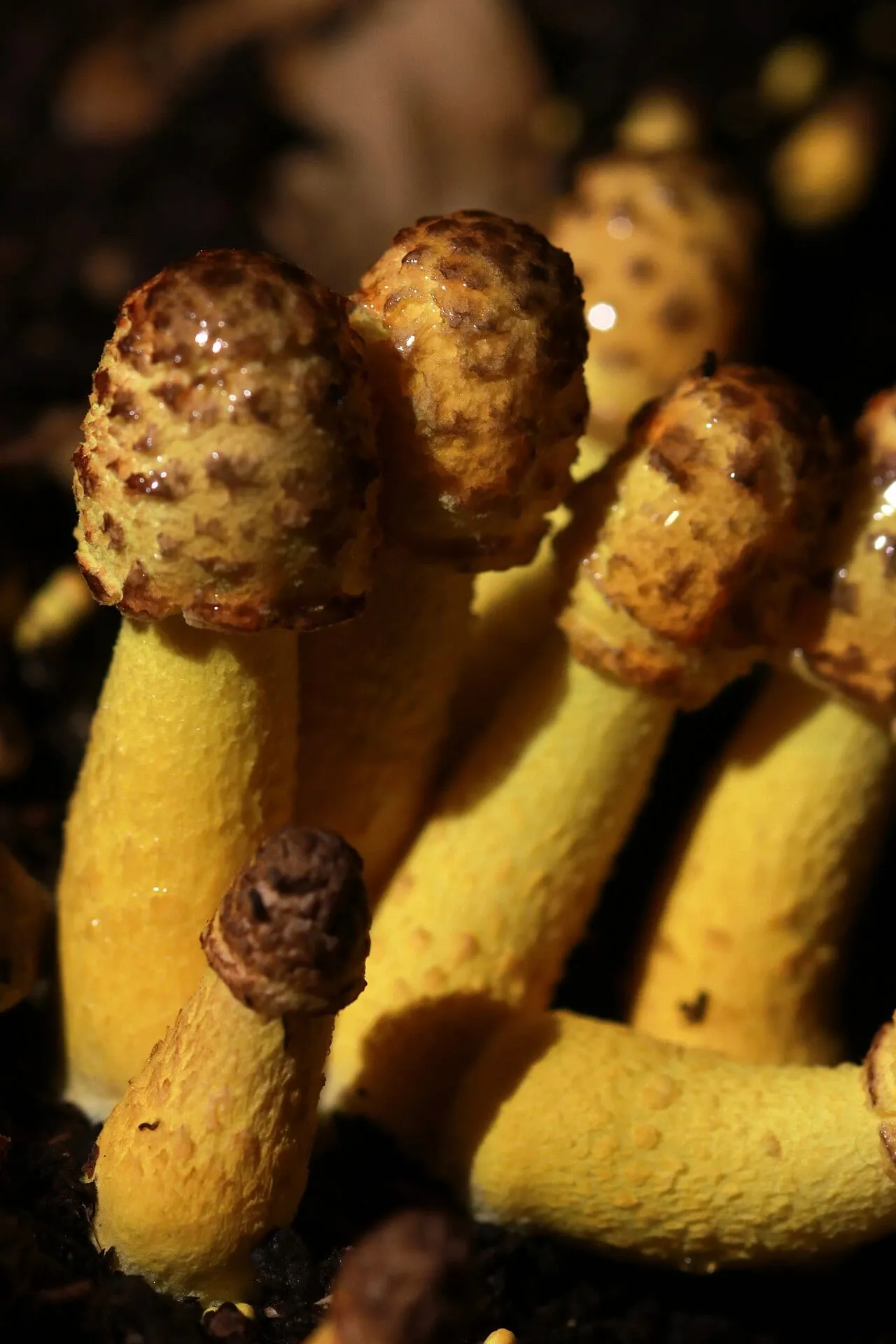
Sometimes the fungus fruits, and small bright yellow mushrooms appear in the pot. This is usually Leucocoprinus birnbaumii, the flowerpot parasol.
Penn State Extension describes it as “a saprotrophic fungus, meaning it thrives on decaying organic matter, leaf litter, compost, and commercial potting soils,” and notes that its presence “may serve to improve the quality of the soil.”
So it is harmless to the plant. It is not harmless to eat.
Penn State is clear that the fungus “does have medium severity poison characteristics,” with symptoms including “mild to severe diarrhea, vomiting, nausea, and other gastrointestinal upsets,” and advises removing it promptly “if there are small children and/or pets.”
That is the one situation where this needs action rather than reassurance. If a toddler or a cat has access to the pot, pick the mushrooms off as they appear.
What it is telling you
Persistent surface fungus is a moisture signal. Penn State puts it directly: “if they appear regularly, it is a sign that the soil is too moist and the plant is being overwatered.”
The fungus needs consistently damp organic matter to keep growing. The conditions that suit it — a mix that never dries at the surface, poor airflow, low light — are also the conditions that lead to fungus gnats and, eventually, to root rot. The mould itself is harmless. What it indicates often is not.
What to actually do
If there are no children or pets around it, you can genuinely ignore it. Scraping the surface off is cosmetic and it will return while conditions stay the same.
If you want it gone, change the conditions rather than attacking the fungus: let the surface dry properly between waterings, empty saucers instead of letting the pot stand in runoff, improve airflow around the plant, and move it somewhere brighter if you can.
Repotting is overkill for surface fungus alone. Save that for when you have found an actual root problem.
The useful reframe is this: the fuzz is not the problem you should be solving. The watering routine that produced it is.
- soil fungus
- white mould
- overwatering
- potting mix