Vegetable & Fruit Gardening
What Causes Blossom End Rot in Tomatoes
Blossom end rot is a calcium problem, but usually one of delivery rather than supply. Why watering fixes more cases than calcium sprays do.
The Garden Magic Hub
- Light
- Full sun
- Water
- Moderate
- Level
- Beginner
- Season
- Summer
On this page
What it looks like
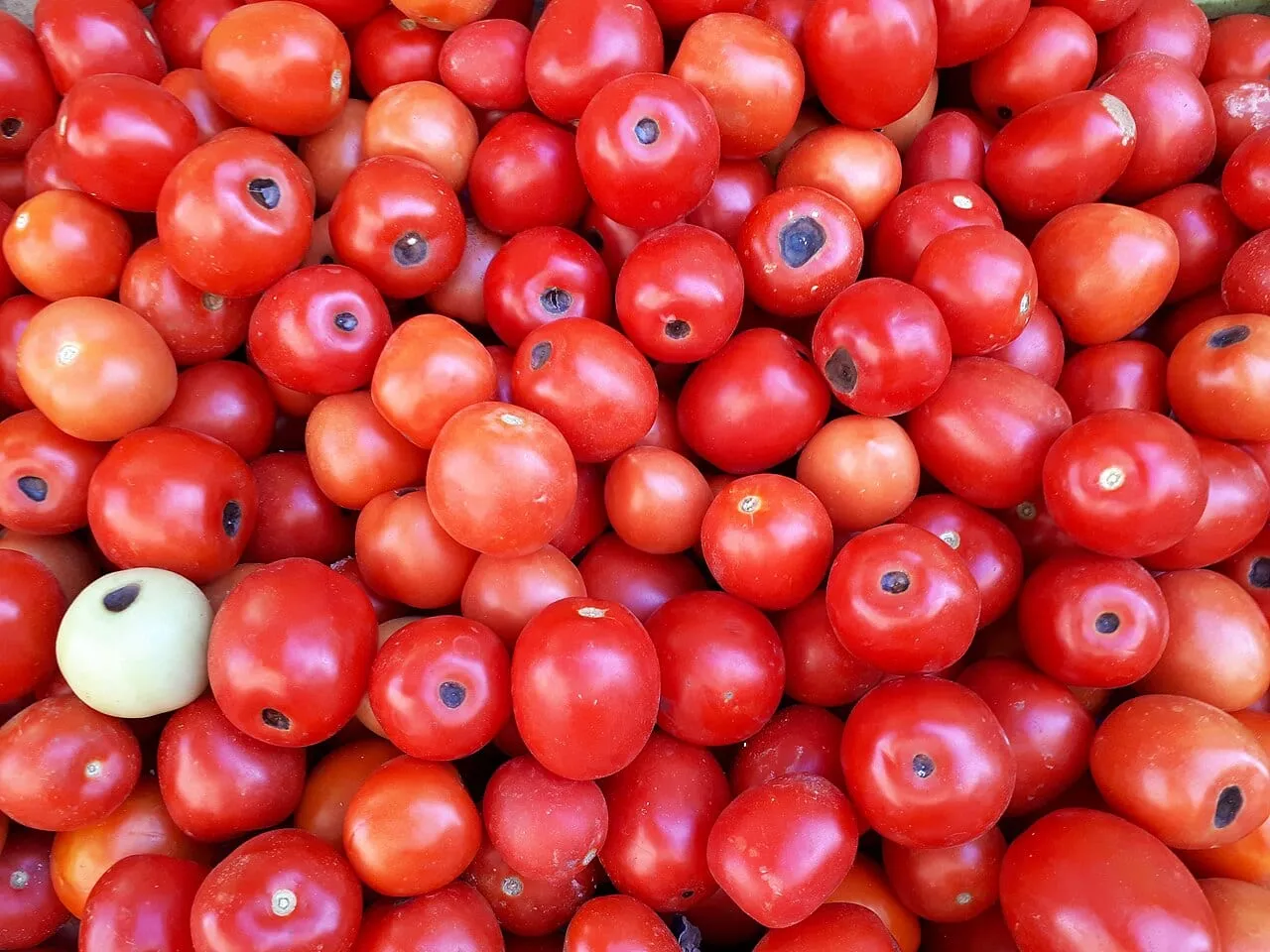
A sunken, leathery, brown-black patch on the bottom of the fruit — the blossom end, opposite the stem. It starts small and pale, then darkens and flattens as the fruit grows.
It is not a disease, nothing is spreading, and the rest of the fruit is edible if you cut the patch away.
The cause, stated precisely
Clemson HGIC attributes it to “a calcium deficiency in the developing fruit.”
Note the last three words. The deficiency is in the fruit, which is not the same as a shortage in your soil — and this is where most advice goes wrong in one direction or the other.
Clemson lists the factors that bring it on: moisture fluctuations, cool temperatures, insufficient soil calcium, root damage, and over-application of ammoniacal nitrogen, potassium or magnesium.
So soil calcium genuinely can be too low. But it is one entry on a list, and the others are mostly about whether calcium already present can reach a fruit that is expanding fast.
Why watering is usually the answer
Calcium moves through a plant in the water stream. When soil moisture swings between soaked and dry, uptake is interrupted, and the fruit — which is a poor competitor for calcium against leaves — gets shorted at exactly the moment it is growing fastest.
That is why blossom end rot so often appears on the first trusses after a dry spell broken by heavy watering, in containers that dry out between waterings, and on plants whose roots were damaged by hoeing.
Clemson’s control is correspondingly simple: maintain uniform soil moisture through irrigation and mulching.
Mulch is doing real work here. It is not decorative — it is what stops the swing.
When calcium is worth adding
Do not skip the soil test and start spraying. Clemson’s sequence is specific:
- Lime to bring the soil to pH 6.5, which both raises calcium and makes it available.
- If pH is already correct but calcium is genuinely low, apply gypsum (calcium sulfate) at 1 to 2 pounds per 100 square feet. Clemson notes gypsum as a sidedress supplement “has proven beneficial.”
- A calcium nitrate sidedress monthly is also listed.
Notice what is not on that list: foliar calcium sprays, crushed eggshells, powdered milk and antacid tablets, all of which circulate widely. Eggshells in particular break down far too slowly to affect this season’s fruit.
What to expect after you fix it
Affected fruit will not recover — the tissue is dead. Judge the correction by the next trusses, not the damaged ones.
It is also common for early fruit to show it and later fruit to be clean, simply because the plant’s root system has caught up with the demand. If your first two tomatoes had it and nothing since has, you may not need to do anything at all.
- tomato
- blossom end rot
- calcium
- watering