Brassicas
How to Grow and Care for Broccoli
Broccoli bolts from cold, not heat, and buttons from stressed seedlings. Both problems are decided before the plant is six inches tall.
The Garden Magic Hub
- Zone
- 2–11 (grown as an annual)
- Light
- Full sun
- Water
- Moderate
- Level
- Intermediate
- Season
- Spring, Fall
On this page
Broccoli has two characteristic failures, and both are decided long before the plant looks like broccoli. Getting them right is most of the job.
Bolting is caused by cold, not heat
This is the fact that reverses most people’s assumption.
Bolting means running to flower instead of forming a head, and gardeners generally blame summer heat. For cole crops it is the opposite. Michigan State Extension describes the trigger as a prolonged cold period of 10 or more consecutive days between 35 and 50°F, following a period of favourable growing conditions.
That is vernalization — the cold signal that tells a biennial it has been through winter and should flower. And there is a size relationship worth knowing: the larger the plant at the time of that cold exposure, the higher the incidence of bolting.
Practically:
- Do not plant out too early. A transplant set into cold spring soil, then hit by a cold snap, is the classic bolting setup.
- Do not plant out too large. A big, hardened plant is more susceptible than a small one.
- Wait for settled conditions rather than racing the season.
Heat is a separate problem — it degrades quality and makes heads open and loosen — but it is not what makes broccoli bolt.
Buttoning: small heads, straight after planting
The second characteristic failure. Buttons are tiny premature heads that form soon after the plants go in, on plants far too small to support a proper head.
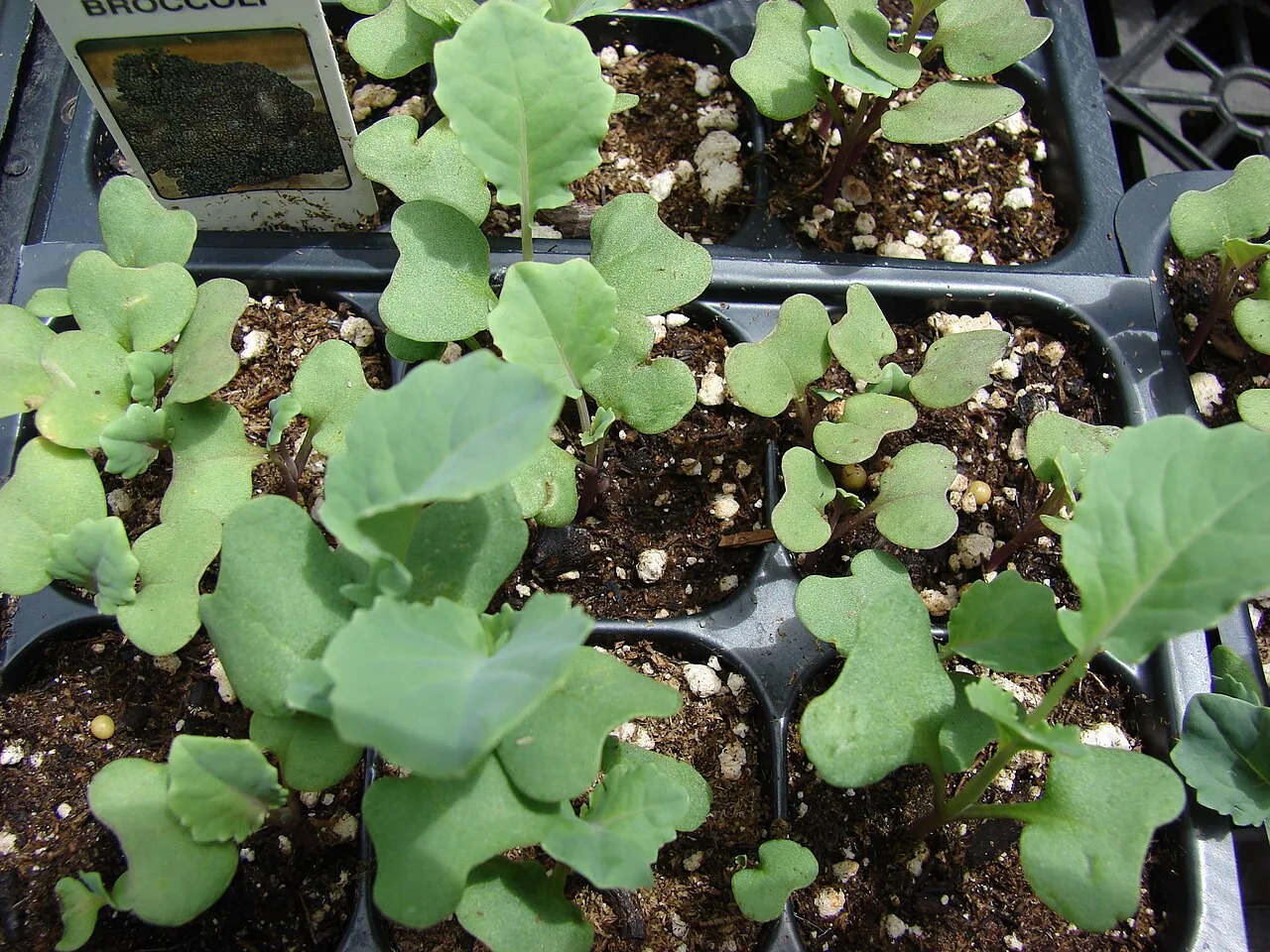
The cause is almost always the seedling, not your garden: buttoning results from mistreated seedlings held too long or improperly before sale or planting.
That makes it largely a purchasing decision:
- Buy young, actively growing transplants, not large ones that have been sitting on a garden-centre rack for weeks.
- Reject rootbound plants, or any that are yellowing or already showing a tiny head.
- If you raise your own, start 4 to 5 weeks before planting out and plant them on schedule rather than holding them.
Both failures trace back to the same principle: broccoli wants uninterrupted growth from seedling to harvest. Every check — cold, drought, root restriction, starvation — costs you head quality.
Transplants beat direct sowing in spring
Transplants are recommended for spring because they establish faster, which gets the crop harvested before early summer heat arrives.
For a spring crop, choose a heat-tolerant variety with a short cycle — 50 to 60 days to harvest. The longer-season varieties are better kept for autumn, when the season is running the other way and cooling weather works in your favour.
Autumn crops are, in most of the country, the easier of the two. There is no bolting-inducing cold snap ahead, and heads mature into cool weather, which improves flavour.
Spacing and soil
18 to 24 inches apart in the row, with rows 24 to 30 inches apart. In beds, one foot apart in all directions.
Full sun, fertile soil with plenty of organic matter, and consistent moisture. Broccoli is a heavy feeder — it is a plant asked to build a large flower head quickly — and it will not do it on thin ground.
Harvest
50 to 90 days after transplanting, depending on variety. Cut when the main head is 3 to 6 inches across with the flower buds still tightly closed.
Tightly closed is the operative test. Once individual buds begin to loosen and show yellow, the head has started to flower and quality drops fast. In warm weather this can happen within a couple of days, so check daily as the head sizes up.
Cut the main head with several inches of stem, at an angle so water runs off the cut.
Then keep harvesting
The main head is not the end of it. Side shoots develop after the central head is removed, giving a smaller but extended harvest over several weeks.
Variety matters here. Traditional open-pollinated types such as ‘De Cicco’ are well suited to home gardens specifically because they produce large numbers of side shoots, trading one big head for a longer picking season. Modern hybrids tend the other way — a large uniform head and fewer shoots.
Decide which you want before you buy seed.
The short version
Full sun, rich soil, steady water. Set out young, actively growing transplants once conditions are settled — too early invites bolting, too large a plant makes it worse, and a stressed seedling causes buttoning. Cut the head at 3 to 6 inches while the buds are still tight, then keep cutting the side shoots.
- broccoli
- cool season crops
- bolting
- transplants
- side shoots