Root Vegetables
How to Grow and Care for Cassava
A staple for hundreds of millions of people, and highly toxic raw. Cassava needs nine frost-free months and processing that is not optional.
The Garden Magic Hub
- Zone
- 10–12
- Light
- Full sun
- Water
- Moderate
- Level
- Advanced
On this page
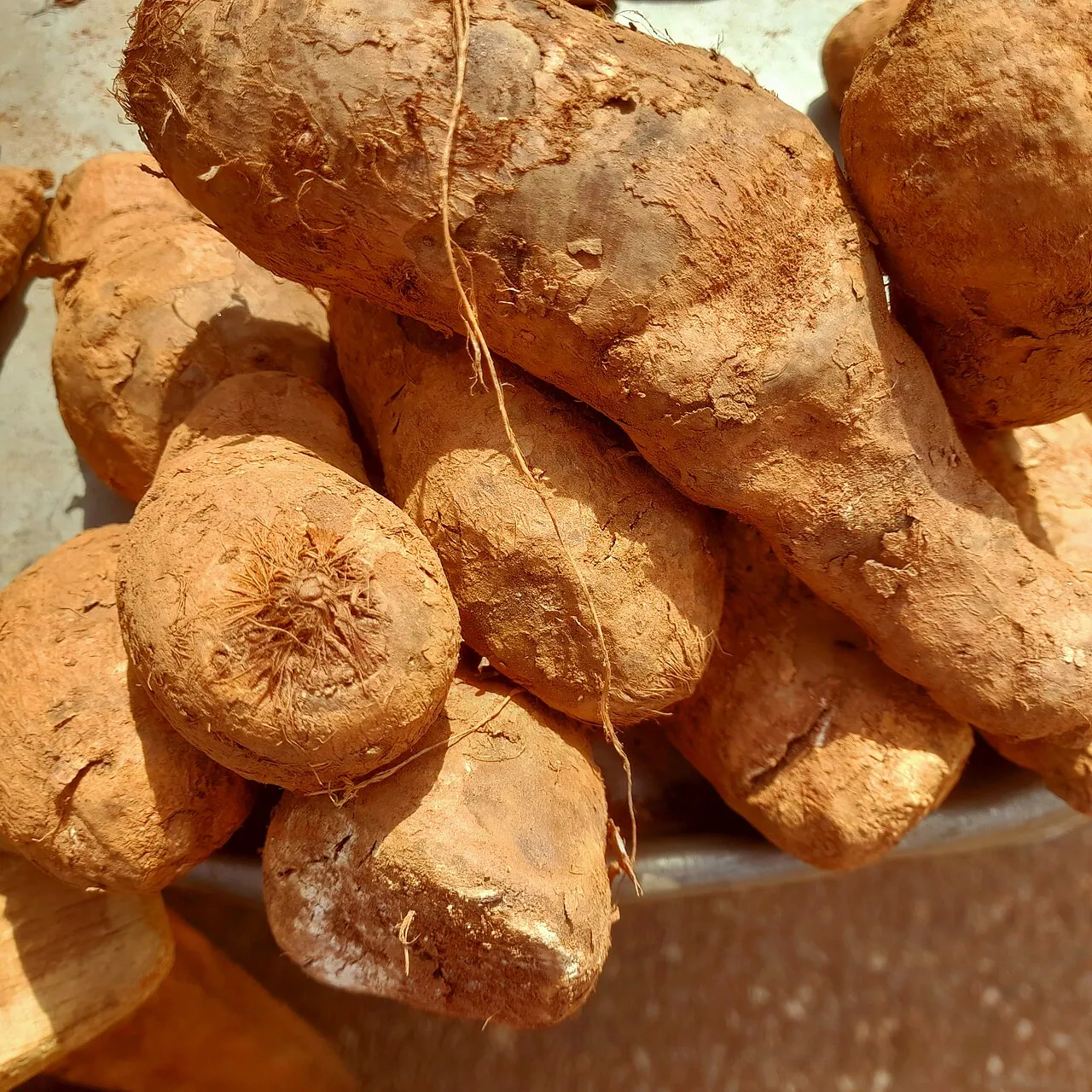
Cassava feeds hundreds of millions of people and is one of the most important staple crops on earth. It is also, in NC State’s classification, a high severity poison — and the two facts are not in tension. They are the reason traditional processing exists.
The toxicity
NC State Extension is blunt:
“HIGHLY TOXIC, MAY BE FATAL IF EATEN! Raw tubers and root peelings cause weak and irregular breathing, weakness, excitement, depression, staggering, pupil dilation, spasms, convulsions, and coma of short duration.”
The compounds are the cyanogenic glycosides linamarin and lotaustralin, and the roots contain hydrocyanic acid — cyanide. Damage to the root tissue releases it.
Concentration varies. So-called “sweet” cassava varieties carry far less than “bitter” ones, and the highest levels sit in the peel and the fibrous core. But no cassava is safe eaten raw.
On preparation, and what this article will not do
NC State states the roots must be properly prepared and cooked before eating — traditionally peeled and boiled, or processed into tapioca, gari and similar products.
This article is not going to give you a processing method. Safe preparation of cassava is a real culinary tradition with regionally specific techniques — peeling, soaking, grating, fermenting, pressing, drying, prolonged boiling — and the margin for error with a cyanogenic crop is not something a general gardening page should be teaching from.
If you intend to eat what you grow, learn the processing from a source grounded in the cuisine that uses it, or from an extension service in a cassava-growing region. Do not improvise, and do not assume ordinary cooking is sufficient — it is not, for bitter varieties.
Grown as an ornamental, none of this arises. The variegated forms are handsome subtropical foliage plants, and nobody is obliged to eat the roots.
The climate requirement rules out most of the US
Hardy in zones 10a to 12b, and NC State gives the growing requirement precisely: 8 to 9 months without frost or temperatures below 60°F to produce edible roots.
Read that carefully. Not frost-free — above 60°F for eight or nine months. That is south Florida, south Texas, Hawaii, Puerto Rico and comparable climates. A zone 9 garden with cool nights will grow the plant and not the crop.
In colder regions it can be grown in a large container as an ornamental and overwintered under cover, but treat roots as unlikely.
Growing it
Size: 6 to 10 feet tall and wide — a substantial shrub with distinctive palmate leaves.
Light: full sun, or partial shade.
Soil: moist, fertile, sandy and well-drained, though it tolerates clay and loam. It prefers good drainage and handles occasionally dry conditions — cassava’s reputation as a famine crop rests on tolerating poor soil and drought better than most staples.
Propagation is from stem cuttings, not seed. Sections of mature stem about a foot long are planted directly, angled or horizontally. This is how cassava is grown everywhere it is a crop, and it is why a single plant supplies material for many more.
Harvest by lifting the whole plant at 8 to 9 months. The roots do not store well once lifted — they deteriorate within days — which is why cassava is traditionally harvested as needed rather than all at once.
The short version
A tropical shrub needing eight to nine months above 60°F to produce roots, grown from stem cuttings in full sun and well-drained soil. The roots are a major world staple and are highly toxic raw, with the peel worst of all. If you plan to eat them, learn the processing from a source rooted in a cuisine that does it properly — not from a garden article.
- cassava
- manioc
- toxic plants
- tropical crops
- root vegetables