Nut Trees
How to Grow and Care for an Almond Tree
Almonds bloom earlier than any other stone fruit, which is why most US gardeners get a beautiful tree and no nuts. Here is the frost maths and the pollination rule.
The Garden Magic Hub
- Zone
- 7–9
- Light
- Full sun
- Water
- Moderate
- Level
- Advanced
- Season
- Spring
On this page
Almond trees are easy to grow and hard to harvest from. The tree itself is undemanding; the crop depends on a few weeks in early spring going exactly right, and in most of the United States they do not.
Why most home almonds fail
Utah State Extension puts the problem plainly: almonds are early bloomers, and the flowers and developing fruit are highly sensitive to spring frost.
The numbers are unforgiving:
| Temperature | Effect |
|---|---|
| Below 28°F during or after flowering | Damages flowers and prevents fruiting |
| Slightly below freezing, midbloom to pea-sized fruit | Crop can be significantly damaged |
| Below −10°F in winter | May damage fruit buds |
| Below −20°F in winter | Damages woody stems and branches |
Read the top two rows carefully. The tree does not have to be damaged for the crop to be lost — a single night just under freezing while it is in bloom is enough, and almonds bloom weeks before peaches, apples or anything else in the orchard.
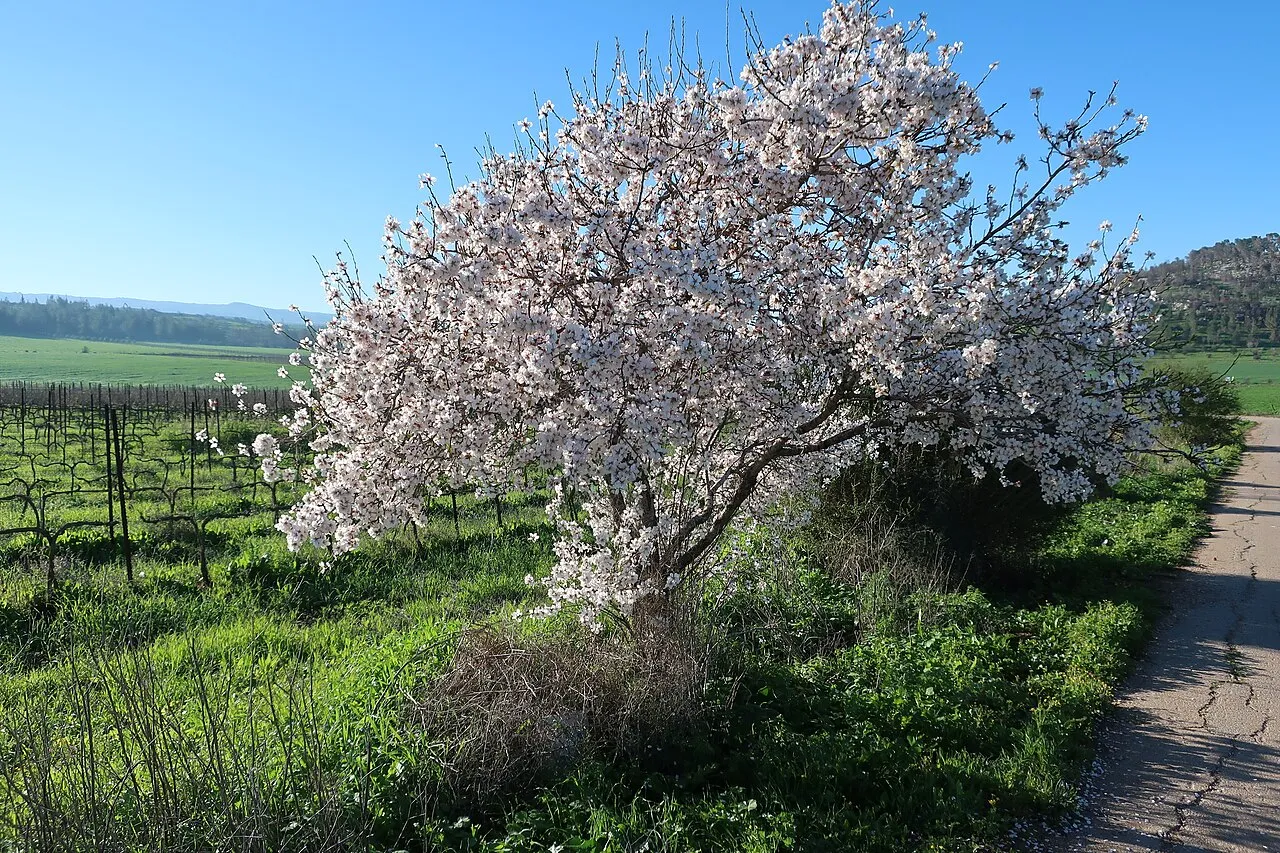
That is why the picture at the top of this page shows blossom on completely bare wood beside a still-dormant vineyard. The tree is committing to a crop while winter could plausibly return.
So the honest question before planting is not “will it survive here” but “does my last hard frost reliably come before late February?” In much of California, the low desert, and parts of the southeast, yes. In most of the rest of the country, no — and you will have a beautiful early-flowering ornamental that fruits perhaps one year in four.
You need two trees
Almonds are not self-fruitful. Utah State is explicit: pollen must come from a different almond cultivar, and you need either two compatible cultivars or a compatible peach nearby.
Almonds are close cousins of peaches and nectarines, which is why a peach can serve as a pollinator, though matching bloom time matters.
Honeybees are the main pollinator, and they are the second half of the frost problem — bees fly poorly in cold, wet weather, so a chilly bloom period can leave flowers unpollinated even without a frost.
If you have room for only one tree, you will not get almonds.
Chill hours
Almonds need 400 to 500 hours below 45°F to break dormancy properly.
This is a moderate requirement — lower than most apples — and it is why almonds suit warm-winter regions. In a very mild winter area, insufficient chill produces erratic, extended bloom and poor set. Check your cultivar’s stated chill requirement against your local average.
Site and soil
Full sun and well-drained soil. Like most Prunus, almonds are intolerant of waterlogging and prone to root and crown rot in heavy ground. Plant high on a mound if drainage is at all doubtful.
They are less cold tolerant than peaches, which is worth registering if you are used to growing peaches successfully.
Giving the crop a chance
If you are near the margin, the practical measures are the same as for any early-blooming stone fruit:
- Site on a slope rather than in a hollow, so cold air drains away rather than pooling around the tree at dawn.
- Avoid a warm south-facing wall, which pushes bloom even earlier into the frost window. A cooler north or east aspect delays flowering, which here is an advantage.
- Cover a small tree on nights forecast below freezing during bloom. Cover to the ground to trap soil warmth.
- Choose the latest-blooming cultivar your supplier offers.
Harvest
The fruit is a drupe — a leathery hull around the shell, closely related to a peach with the flesh removed. Nuts are ready when the hulls split open and begin to dry, usually late summer to autumn.
Shake or knock the nuts down, hull them promptly, and dry them thoroughly before storage. Almonds left in damp hulls mould quickly.
Problems
The standard stone-fruit set: aphids, borers and mites among pests, and the Prunus diseases — brown rot, shot hole and canker — favoured by wet spring weather. Squirrels and birds will take the crop before you do if you let them.
The short version
Two different cultivars, full sun, sharp drainage, and 400 to 500 chill hours. Then be realistic about frost: almonds bloom before anything else, and a single night below 28°F in bloom costs you the year. Grow one for the flowers by all means — just plant it knowing the nuts are the bonus, not the plan, outside a genuinely mild-spring climate.
- almond tree
- nut trees
- cross pollination
- frost damage
- chill hours