Fruit Trees
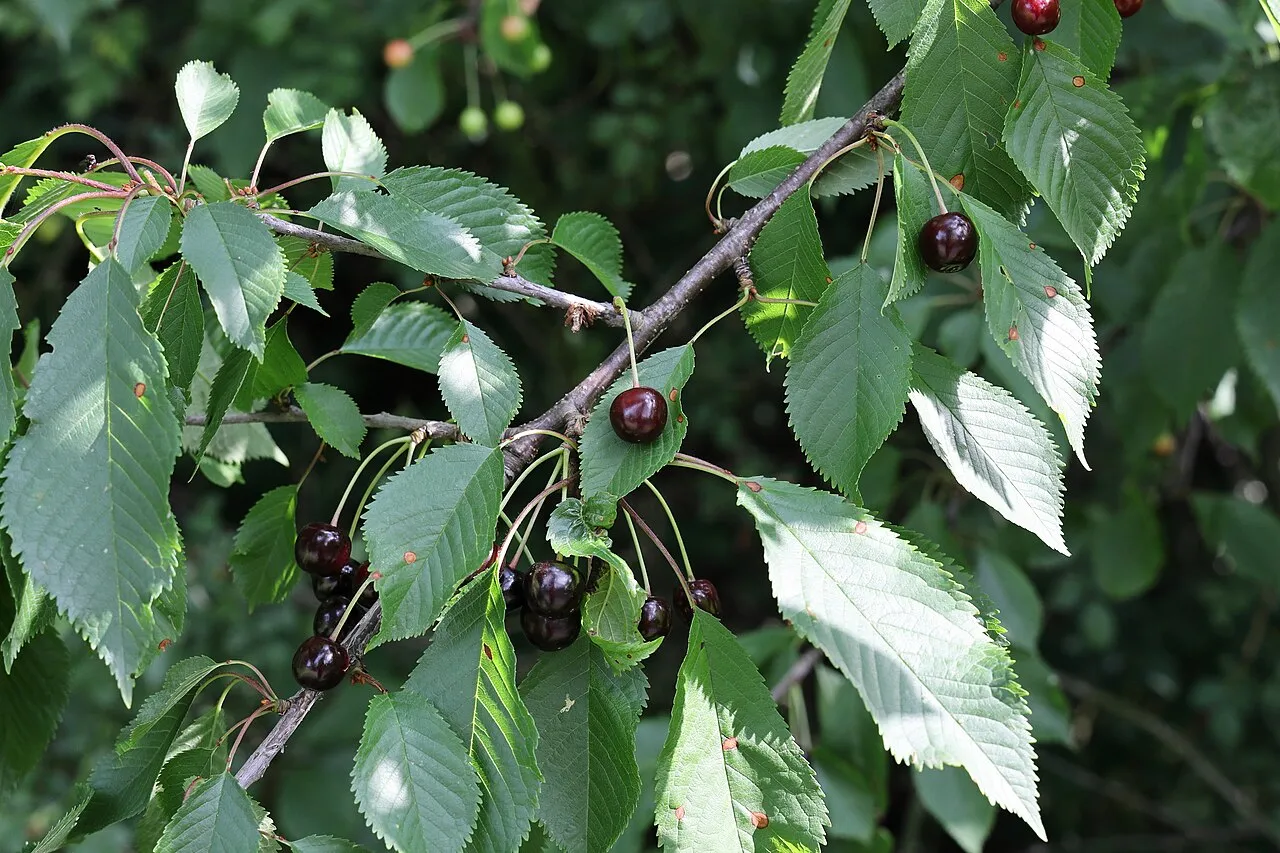
How to Grow and Care for a Bing Cherry Tree
Bing cannot pollinate itself and splits in the rain. Both are solvable, but for most home gardeners a self-fertile variety is the better tree.
The Garden Magic Hub
- Zone
- 5–8
- Light
- Full sun
- Water
- Moderate
- Level
- Advanced
- Season
- Summer
On this page
Bing is the cherry everyone pictures — large, dark, firm, intensely sweet. It is also, for a home garden, one of the more demanding sweet cherries to succeed with, and both reasons are worth knowing before you plant one.
Bing cannot pollinate itself
This is the first thing that goes wrong, and it produces the classic complaint: a beautiful tree, plenty of blossom, no fruit.
Bing is self-unfruitful. It needs pollen from a different, compatible cherry variety. Michigan State Extension notes Bing trees do not pollinate one another — so two Bings, or a row of them, gets you nothing.
Suitable pollinizers include ‘Black Tartarian’, ‘Van’, or a sour cherry such as ‘Montmorency’.
Distance matters. Penn State Extension advises planting two or more varieties no further than 35 to 50 feet apart — the closer the better. Bees have to carry the pollen, and they work the nearest flowers.
Not every sweet cherry can pollinate every other one. Sweet cherries have overlapping incompatibility groups, and some well-known pairings are sterile with each other. Do not assume that any two named cherries will do the job — Oregon State publishes a compatibility and bloom-timing chart for exactly this reason. Check it, or ask the nursery for a named compatible pair.
Bloom timing has to overlap too. A compatible variety that flowers two weeks later is no use.
The honest recommendation
For most home gardeners with room for one tree, a self-fertile variety is the better buy: ‘Lapins’, ‘Stella’, ‘Whitegold’, ‘Sweetheart’ and ‘Blackgold’ all set fruit without a partner.
Bing is worth planting if you have room for two trees, want that specific fruit, and garden somewhere with dry summers. Otherwise you are taking on a pollination problem for a cherry that is also the one most likely to split.
Rain cracking
The second problem, and the reason Bing is difficult east of the Rockies.
Bing is highly susceptible to rain-induced fruit cracking. Rain on ripening fruit is absorbed directly through the skin; the flesh swells faster than the skin can stretch, and the fruit splits. Split cherries rot within a day or two.
Oregon State has a whole publication on it, which tells you how seriously commercial growers take it.
What a home grower can actually do:
- Pick early and pick often once colour develops. A cherry at full ripeness is at maximum risk.
- Watch the forecast in the final two weeks and strip the tree ahead of a wet spell.
- Keep soil moisture steady through the season, since a dry spell followed by rain is the worst case.
- Cover a small tree — on a dwarf rootstock this is realistic, and it doubles as bird protection.
Climate is the real determinant. In a dry-summer climate Bing is excellent. In a humid summer with July thunderstorms, expect to lose fruit most years.
Growing it
Zones 5 to 8, full sun, and well-drained soil — sweet cherries are notably intolerant of wet feet and prone to root and crown rot in heavy ground. Plant high on a mound if drainage is uncertain.
Rootstock decides size. Standard sweet cherries reach 30 feet or more, which is unmanageable for home picking and netting. Buy on a dwarfing or semi-dwarfing rootstock — Gisela series or similar — and keep the tree at a height you can reach.
Prune in dry weather, ideally late summer rather than winter. Prunus are vulnerable to silver leaf and bacterial canker, both of which infect through cuts in wet conditions.
Birds will take the entire crop if you let them, and they know when cherries are ripe better than you do. Netting is not optional on a mature tree.
The short version
Bing needs a compatible pollinizer within 35 to 50 feet, and it splits in rain. Buy it on a dwarfing rootstock, with a checked-compatible partner, if you have dry summers and space for two trees. If you have room for one, or wet summers, plant a self-fertile variety like ‘Lapins’ or ‘Stella’ and get cherries instead of a lesson.
- bing cherry
- sweet cherry
- cross pollination
- fruit cracking
- fruit trees