Berries
How to Grow and Care for Blueberries
Test your soil pH before you buy anything. Above 6.0 and Clemson says pick a different site — no amount of care fixes it. Then choose the right type for your region.
The Garden Magic Hub
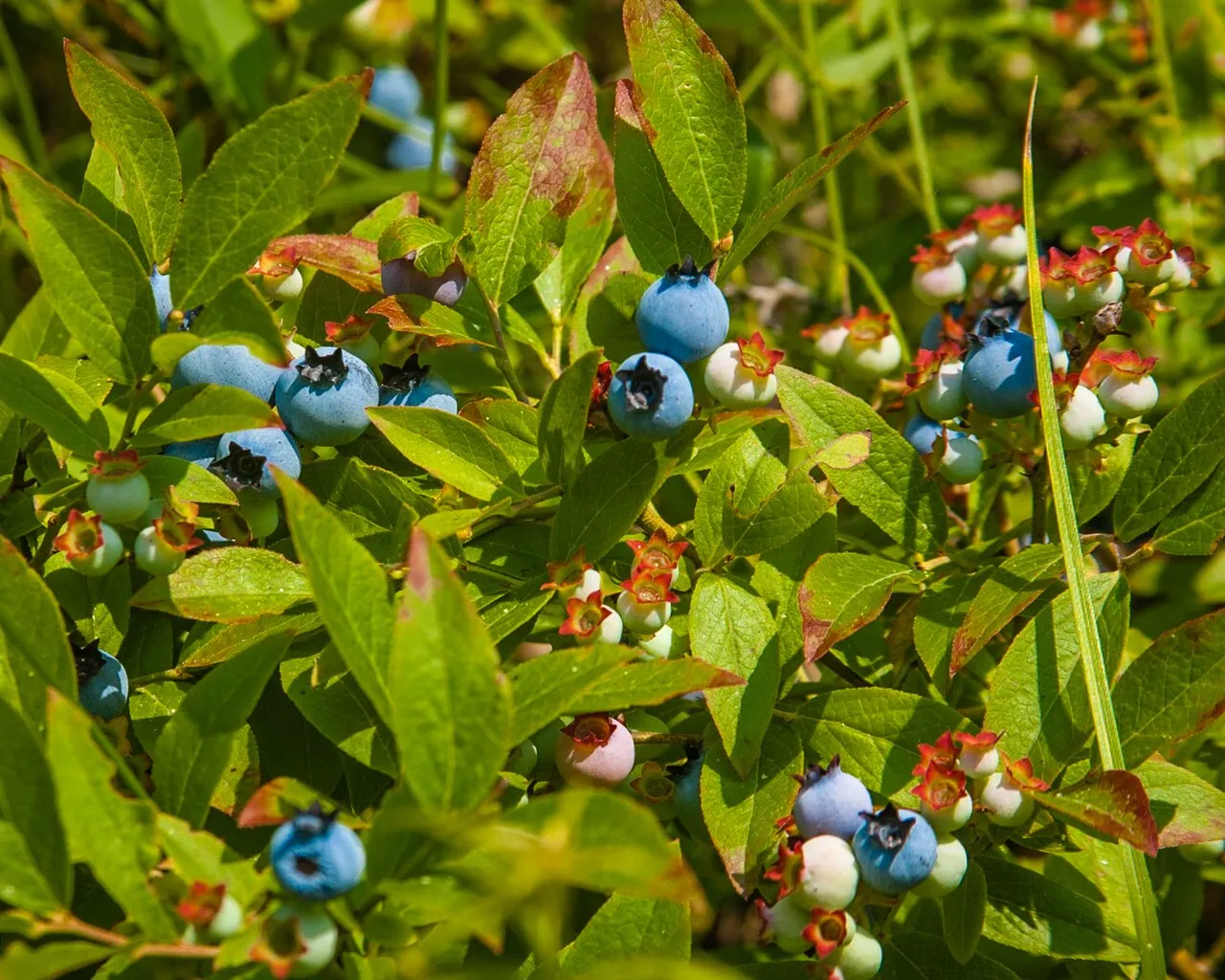
- Zone
- 3–10 (varies by type)
- Light
- Full sun
- Water
- Moderate
- Level
- Intermediate
- Season
- Summer
On this page
Blueberries are among the most rewarding fruit you can grow and the least forgiving about one thing. Get that thing right and they are easy for decades. Get it wrong and nothing else you do matters.
Test the pH first. It is a go/no-go decision.
Blueberries need genuinely acid soil, and Clemson HGIC puts the threshold as a hard stop rather than a preference:
“If the pH is above 6.0, select another planting site.”
That is unusually blunt advice from an extension service, and it is worth taking literally. A blueberry in near-neutral soil cannot take up iron; it yellows, sulks, and dies slowly over a few seasons while you feed and water it.
So the order of operations is: soil test, then buy plants — not the other way round.
If your pH is between 5.5 and 6.0, Clemson suggests wettable sulfur at 90% concentration. Note the timing: “Any sulfur applications should be made at least three months prior to planting because it takes several months for sulfur to reduce the pH.” You cannot amend on planting day.
If your pH is well above 6.0, grow blueberries in containers or a dedicated raised bed filled with an acid mix. That is a much better plan than fighting your native soil forever.
One caveat in the other direction: in manganese-rich Piedmont soils, keep the pH above 5.0 to avoid manganese toxicity. Acid, not limitless acid.
Choose the type for your region
Three groups, and picking the wrong one is the second most common mistake.
Rabbiteye (Vaccinium virgatum) — Clemson calls it “the most adaptable, productive and pest-tolerant” type. The default for the southeast, and the most tolerant of imperfect conditions.
Southern highbush — hybrids bred for lower chilling requirements and greater tolerance of high summer temperatures. Ideal for the South and for mild-winter regions where northern types will not get enough chill.
Northern highbush (V. corymbosum) — the classic type for cold regions, and the one Clemson notes is less recommended in the southeast.
Buy from a regional supplier rather than a national catalogue if you can; they will stock what actually crops where you are.
You probably need two
Rabbiteye varieties show “a great degree of self-incompatibility; therefore, a minimum of two varieties is required.” One rabbiteye bush on its own will crop very poorly.
Southern highbush cultivars are self-fertile, but Clemson notes they produce larger and earlier-ripening berries with cross-pollination. So two is better even where one will work.
Plant two different named cultivars with overlapping bloom, not two of the same.
Planting
Timing: bare-root plants in late winter (February–March); container plants in fall (November–December).
Depth: the same depth they grew at in the nursery. Blueberries are shallow-rooted and resent deep planting.
Spacing:
| Type | In the row | Between rows |
|---|---|---|
| Rabbiteye | 6 ft | 10–12 ft |
| Southern highbush | 4–5 ft | 8–10 ft |
Full sun for the best crop.
Mulch, and pick the right mulch
Apply 2 to 3 inches of organic mulch, and the choice of material matters here more than usual.
Clemson notes pine bark chips or sawdust have a pH between 3.5 and 4.5, which makes them preferable to hardwood mulches for a plant this acid-dependent. Pine straw works too.
Mulch also stabilises soil moisture, which matters because those shallow roots dry out fast.
Water
Two to three times per week during dry spells. Blueberries have fine, shallow, fibrous roots with no deep reserve, and uneven watering shows up directly as small fruit and poor bud set for next year.
Feeding — where people kill them
Clemson’s warning is short: “Blueberries are easily damaged by excess fertilizer.”
The rules:
- Do not fertilise immediately after planting. Wait until the first leaves have reached full size.
- Then apply 1 tablespoon of an azalea fertiliser — a 10-5-4, 10-8-8 or 11-7-7 — at six-week intervals until midsummer.
- Stop by midsummer so growth hardens off.
Use an acid-forming azalea or camellia feed, not a general-purpose fertiliser. And resist the urge to give a struggling plant more — a yellowing blueberry is almost always a pH problem, and fertiliser makes it worse.
Be patient for three years
Remove the flower buds in years one and two. It feels wrong, and it is the right thing to do — the plant puts that energy into roots instead, and you get a far better bush.
Realistic yields from Clemson: about half a pound per bush in year three, 1 to 2 pounds in year four, and mature southern highbush plants producing more than 8 pounds a year.
The short version
Soil test first — above pH 6.0, plant somewhere else or use containers. Choose rabbiteye or southern highbush by region, plant two different cultivars, mulch with pine bark, water two to three times a week in dry spells, feed lightly with an azalea fertiliser, and strip the flowers for the first two years.
- blueberries
- soil pH
- acid soil
- cross pollination
- mulching