Herbs
How to Grow and Care for Holy Basil
Holy basil is not a stand-in for sweet basil — it tastes of clove and is grown for tea. Here is how tulsi differs, and how to grow and harvest it.
The Garden Magic Hub
- Zone
- 10–11 (grown as an annual)
- Light
- Full sun
- Water
- Moderate
- Level
- Beginner
- Season
- Summer
On this page
Holy basil is bought by a lot of people expecting sweet basil with a nicer name, and it is not that at all. Grown for what it actually is, it is one of the easier and more rewarding herbs in a hot summer garden.
It is a different plant from sweet basil
Ocimum tenuiflorum — formerly Ocimum sanctum, and widely sold as tulsi or tulasi — is a separate species from the sweet basil (Ocimum basilicum) you would use for pesto.
NC State Extension sets out the differences: tulsi foliage “tends to have a purple cast, its flowers are not as large, and it is shorter-lived” than culinary basil.
The bigger difference is flavour. NC State describes the leaves as having “a spicy bite that is a mix of clove, mint, and basil.” That clove note is unmistakable and it does not behave like sweet basil in the kitchen — it is assertive, slightly medicinal, and better in tea, broths and Thai-style stir-fries than in anything expecting the soft sweetness of Genovese basil.
If you want pesto, grow sweet basil. If you want tulsi tea, grow this.
The plant
An aromatic annual, or a short-lived perennial or subshrub in warm climates. Growth is rapid, and it makes an erect, multi-stemmed plant to about 3 feet.
It is hardy only in the warmest zones, so almost everyone in the US grows it as a summer annual, killed by the first frost.
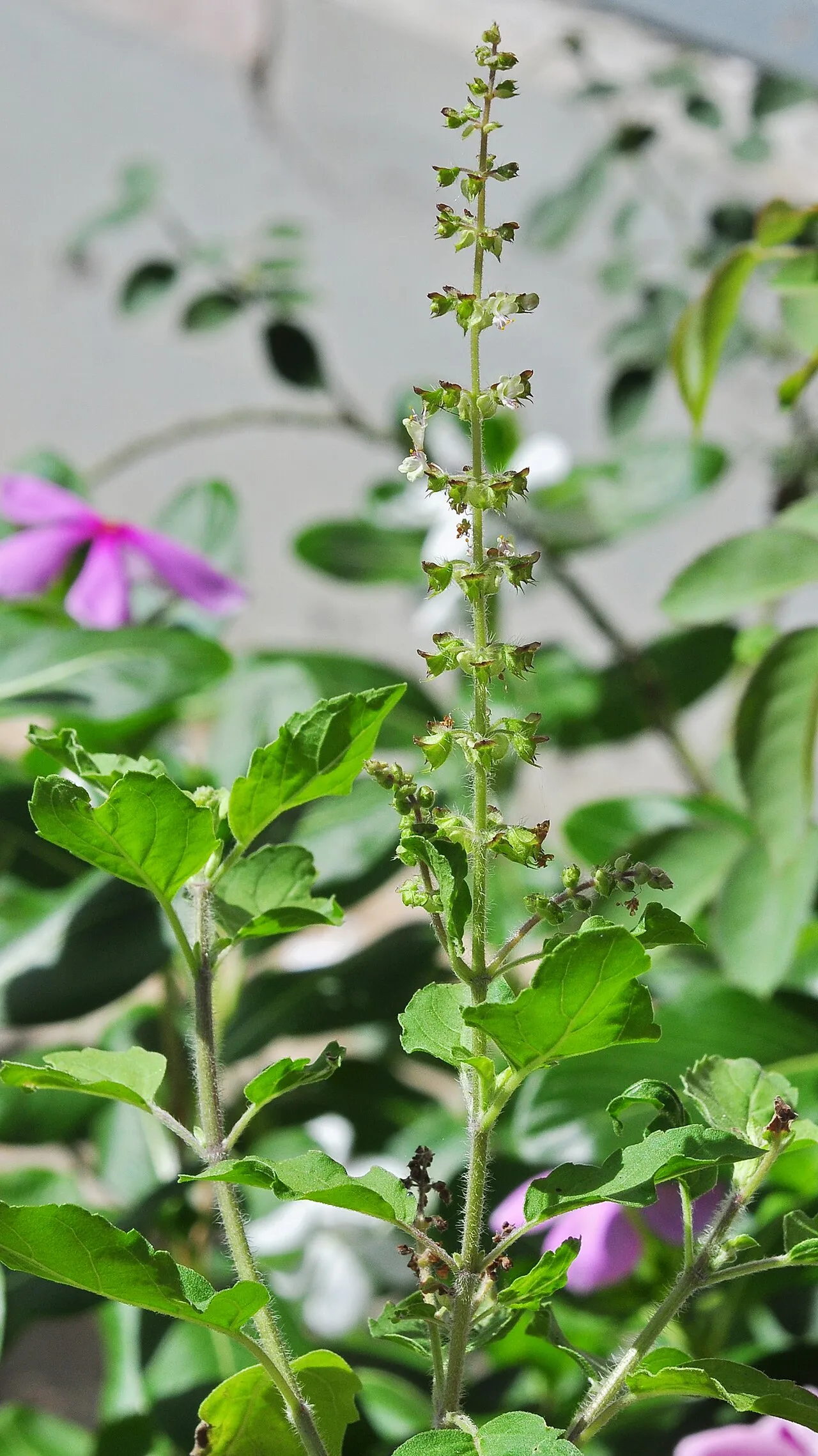
Flowers are tiny and tubular in white, pale pink or lavender, carried in terminal spikes 4 to 12 cm long, with the purple-brown bracts that make the flower stalk look darker than the individual blooms.
Growing it
Full sun — six or more hours. Tulsi is a tropical plant from southern Asia and it wants heat. It grows fastest in the part of summer when sweet basil starts to struggle.
Soil should be well-draining, moist loam with plenty of organic matter. It tolerates a range of pH and soil types, with one exception NC State is clear about: it “does poorly in water logged soils.”
That is the single condition to get right. Good drainage matters more than fertility, and a tulsi sitting in heavy wet ground will sulk and rot at the base.
Water regularly but let the surface dry between waterings.
Sowing and self-seeding
Propagate from seed, started indoors 6 to 8 weeks before the last frost and planted out once the soil is properly warm — like most tropical herbs it resents cold soil.
NC State also notes it “easily propagates itself by seed.” In a warm garden a plant left to flower and drop seed will give you volunteers the following year. Whether that is welcome is your call, but for a plant that is short-lived anyway, letting it seed is the low-effort way to keep it going.
Harvesting, and the flowering question
Here tulsi diverges from sweet basil in a way worth knowing.
With sweet basil you pinch out flower spikes relentlessly, because flowering ends leaf production and turns the flavour bitter. With tulsi, the flowering tops are traditionally harvested along with the leaves for tea, and the plant is short-lived regardless of what you do.
So the practical approach is a middle one: pinch the growing tips regularly through the season to keep the plant bushy and productive — the same technique as any basil — but treat a flowering plant as usable rather than spoiled, and let at least one plant run to seed if you want volunteers.
Harvest leaves and flowering tops in the morning. They dry well for tea, which is the main use.
Uses
Tulsi holds a significant place in Hinduism and in Ayurvedic medicine, where NC State notes it is traditionally used to cleanse the body and for stomach and skin issues.
Those are traditional uses rather than clinical claims, and this article is not making a medical one. As a culinary herb, the leaves are excellent in tea and hold up to cooking better than sweet basil.
Pests
NC State names one main problem: Japanese beetles, which can do real damage to the foliage, with hand removal the recommended response. Knock them into soapy water in the morning while they are sluggish.
Otherwise tulsi is notably trouble-free — noticeably less prone to the downy mildew and cold-damage blackening that plague sweet basil.
The short version
Full sun, warm soil, good drainage, and no waterlogging. Grow it as an annual, pinch the tips to keep it bushy, harvest leaves and flowering tops for tea, and let one plant seed itself. Expect clove, not pesto.
- holy basil
- tulsi
- herbs
- self-seeding
- japanese beetles