Vegetable & Fruit Gardening
Why Tomato Leaves Curl
Curling tomato leaves are usually heat or water stress, not disease. How to tell physiological rolling from herbicide damage and virus.
The Garden Magic Hub
- Light
- Full sun
- Water
- Moderate
- Level
- Beginner
- Season
- Summer
On this page
The good news first
Most curled tomato leaves are physiological leaf roll, and Clemson HGIC is unambiguous about what that means for your crop: “the symptom of leaf roll does not significantly damage the crop.”
It looks alarming and it usually costs you nothing. Before you spray anything, work out which of three quite different things you are looking at.
Physiological leaf roll
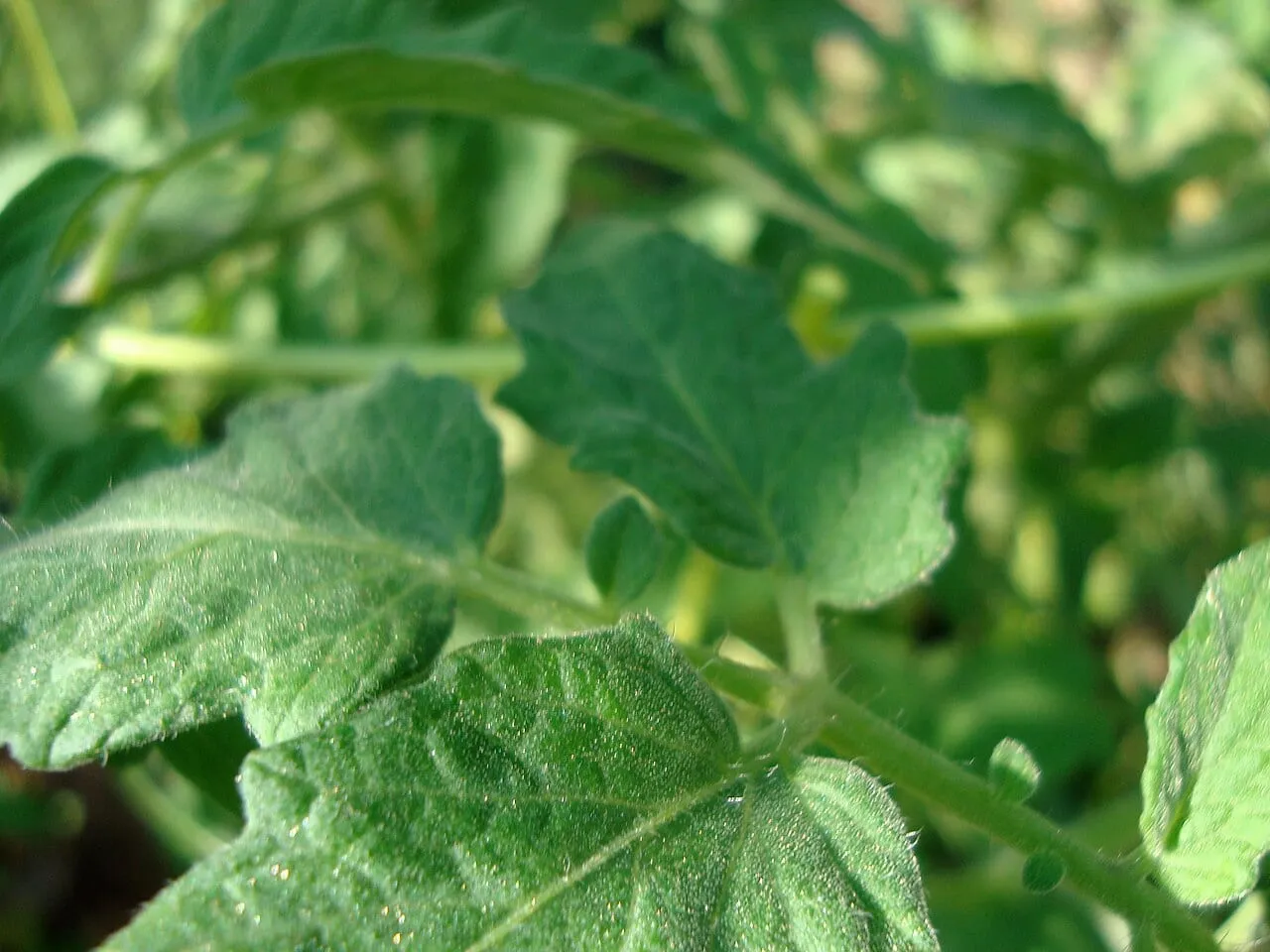
This is the common one. Clemson describes “upward curling of the leaflets” on older leaves, which may become “leathery and stiff.”
The pattern is the tell. It starts on the older, lower leaves and rolls upward, and the leaf tissue itself stays a normal green — thickened and stiff, but not discoloured, mottled or distorted.
Clemson attributes it to “high temperatures, prolonged periods of wet soil conditions, and drought,” and also to severe pruning or root damage from cultivating too close to the plant.
Note that both extremes of watering appear on that list. Leaf roll is a stress response, not a specific signal, which is why it shows up after a heatwave and also after a week of rain.
What to do: very little. Clemson’s management is to plant on well-drained soil and irrigate during drought. If you rolled the leaves by hoeing too close or pruning hard, the plant recovers on its own.
Herbicide damage
This is the one worth ruling out, because it is not recoverable and it changes what you do next season.
Clemson separates herbicide injury from leaf roll by the distortion: exposure to 2,4-D or glyphosate causes distortion of stems and foliage, not simple rolling. New growth comes out twisted, strap-like or cupped, stems may bend or fuse, and the damage concentrates in the newest growth rather than the oldest.
Drift from a neighbour’s lawn treatment is a common route. So is compost or manure made from treated hay, which is worth suspecting if several unrelated plants in the same bed are distorted.
Virus
Clemson’s third category involves “mottling, spotting, or twisting.”
The distinguishing feature is that the leaf colour is wrong, not just its shape. Mosaic patterning, pale and dark green patches, or yellow mottling alongside the curl point at a virus. Curl-and-mottle together is a virus until proven otherwise, and infected plants should be removed rather than treated.
The one-minute version
| What you see | Likely cause |
|---|---|
| Older leaves roll upward, stay green, feel leathery | Physiological leaf roll — harmless |
| Newest growth twisted, strap-like, stems distorted | Herbicide exposure |
| Curling plus mottling, mosaic or yellow patches | Virus — remove the plant |
If it is the first row, water consistently, mulch, and stop worrying about it. Rolled leaves on an otherwise vigorous plant carrying fruit are not a problem you need to solve.
- tomato
- leaf curl
- heat stress
- diagnosis