Pollinator Plants
How to Grow and Care for Bidens
A heat and drought tolerant annual that flowers all season without deadheading — and, unusually for a garden-centre bedding plant, a species native to the lower 48.
The Garden Magic Hub
- Zone
- 8–11 (grown as an annual)
- Light
- Full sun
- Water
- Low
- Level
- Beginner
- Season
- Summer, Fall
On this page
Bidens is one of those plants people buy on impulse from a rack of bedding annuals, plant in a container, and then never think about again — because it simply gets on with it. It is also, surprisingly, a native.
It is native to the lower 48
The USDA PLANTS Database records Bidens ferulifolia as native to the lower 48, with a natural range through the southwestern United States and into Mexico.
That is unusual for something sold as generic bedding. Most container annuals are tropical or Mediterranean introductions; this one grows wild in Arizona and New Mexico. If you are trying to put more natives into your planting without giving up on containers, Bidens is an easy and unglamorous way to do it.
A note on the genus. Bidens is large, and it includes plenty of North American natives alongside some genuinely weedy ones — the common names beggarticks, sticktight and bur marigold all come from the barbed seeds that attach themselves to clothing and animal fur. The ornamental B. ferulifolia is not the problem species, but if you have ever pulled dozens of flat black seeds off your socks after a walk, you have met a relative.
Why it earns a spot
Illinois Extension describes it as a reliable garden annual for continuous bloom, with a low, upright, mounded habit, growing 8 to 12 inches tall and spaced 16 to 24 inches apart.
Three properties make it genuinely low-effort:
Heat tolerant. It keeps flowering through midsummer when many bedding annuals stall.
Drought tolerant. It establishes easily and copes with dry spells — again unusual in a container plant, where drying out is the normal cause of failure.
No deadheading required. Illinois notes it blooms readily without deadheading. Given that deadheading is the main chore with most long-flowering annuals, this is the plant’s strongest practical argument.
Trial gardeners report mixed results on whether a midseason shear improves things. If a plant gets straggly by August, cutting it back by about a third and watering it usually brings a fresh flush — but it is optional rather than necessary.
Conditions
Light: full sun. Flowering thins noticeably in shade.
Soil: ordinary, well-drained. It does not need rich ground, and overfeeding produces leafy growth at the expense of flowers.
Water: regularly while establishing, then sparingly. Once established it tolerates dry conditions well.
Hardiness: perennial only in the warmest zones, grown as an annual almost everywhere in the US.
Pollinator value
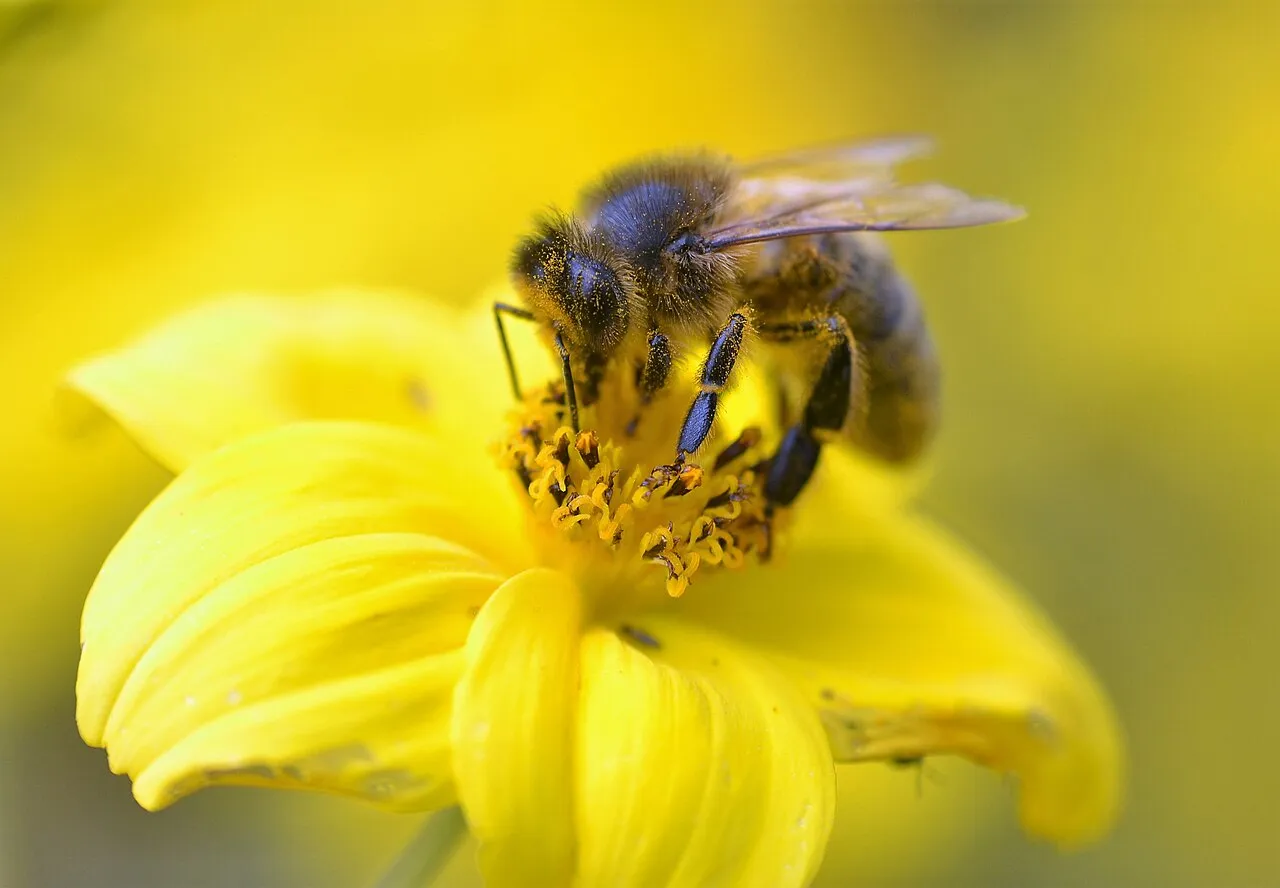
The flowers are open, shallow yellow daisies — the easiest possible structure for a short-tongued insect to feed from. Bees work them constantly, as in the photograph above, and the long bloom season means the plant is still supplying nectar into autumn when much else has finished.
For a container or a border edge where you want something that flowers for months and feeds insects while doing it, there are few easier choices.
Problems
Few. It is a tough plant with no significant pest or disease issues in ordinary garden conditions. The realistic failure modes are too much shade, too much fertiliser, or being planted out before the soil warms.
The short version
Full sun, ordinary soil, and very little water once established. Eight to twelve inches tall, spaced 16 to 24 inches, flowering from summer into autumn with no deadheading needed. And unlike most of the bedding rack, it is a species native to the lower 48.
- bidens
- native plants
- pollinators
- container plants
- drought tolerant