Native Perennials
How to Grow and Care for Butterfly Weed
The native milkweed to plant instead of tropical milkweed. Drought tolerant, deer resistant, and a monarch host — but its taproot means you only get one chance to site it.
The Garden Magic Hub
- Zone
- 3–9
- Light
- Full sun
- Water
- Low
- Level
- Beginner
- Season
- Summer
On this page
If you have read that tropical milkweed is a problem and wondered what to plant instead, butterfly weed is the usual answer — and it is a better garden plant besides.
It is genuinely native
NC State Extension gives its native range as the eastern and southern United States plus Mexico, and the USDA PLANTS Database records it as native to the lower 48 and Canada.
Hardy through zones 3a to 9b — an enormous range, covering nearly every US garden.
Crucially, it dies back to the ground every winter. That annual reset is exactly what tropical milkweed fails to do in warm climates, and it is why native milkweeds do not accumulate OE parasite spores or confuse monarch migration.
Monarch value
NC State documents it as a food source for the larvae of the monarch butterfly — monarch caterpillars can only develop on Asclepias.
The adult flowers also feed a wide range of butterflies, bees and other pollinators through summer. It is one of the more efficient wildlife plants per square foot of border.
One practical note for monarch gardeners: butterfly weed has narrower leaves and a tougher texture than swamp milkweed or common milkweed, and monarchs will use all of them. If your goal is caterpillars specifically rather than nectar, planting more than one native Asclepias species gives them options. Ask your extension office which are native to your area.
The taproot decides everything
This is the practical constraint, and it is worth planning around before you buy.
NC State notes butterfly weed has a deep taproot and “does not transplant well” because of it — plants are best left undisturbed once established.
Three consequences:
Buy small plants, not large ones. A young plant in a small pot has less taproot to disturb and establishes far more reliably than a big expensive specimen.
Site it once, properly. There is no moving it later without probably killing it, and it does not need dividing.
Sowing in place works well. Seed sown where the plant is to grow avoids transplant shock entirely. Seed needs a period of cold moist stratification, so autumn sowing outdoors, or a month in the refrigerator before spring sowing, is the usual route.
It is also slow to appear in spring. Butterfly weed is widely reported to emerge later than almost anything else in the border, which leads people to dig up a perfectly healthy plant believing it died. I have not found an extension source that states this explicitly, so treat it as gardeners’ experience rather than documented fact — but mark the position in autumn either way. It costs nothing.
Conditions
Light: full sun, or partial shade with 2 to 6 hours.
Soil: genuinely adaptable — clay, loam, sand or shallow rocky ground. What it wants is drainage.
Water: highly drought tolerant, and NC State notes it thrives in poor, dry soils. This is a plant that does better with neglect than with attention. Rich soil and regular watering produce floppy growth and invite the one disease that matters.
Size: 1 to 2 feet tall and 1 to 1.5 feet wide — compact, suited to the front of a border.
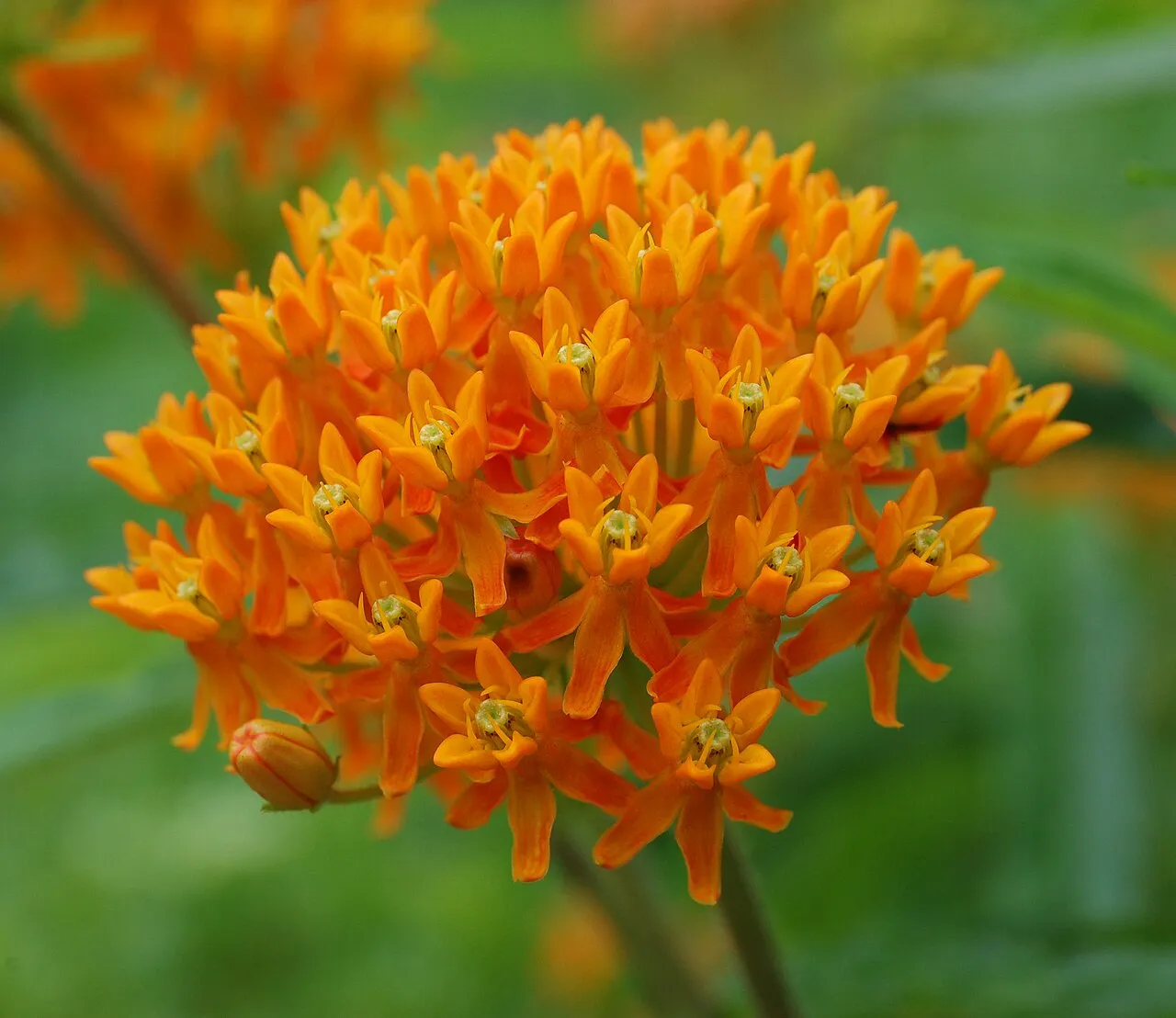
Bloom: May through August, in bright orange to yellow-orange.
Problems
Crown rot in wet soils is the real one, and it follows directly from the drainage requirement. A butterfly weed that vanishes over winter was almost certainly sitting in cold wet ground.
Otherwise: aphids — the bright orange oleander aphid colonises milkweeds routinely and is largely cosmetic, so hose them off rather than spraying, since sprays kill monarch caterpillars too. Plus occasional rust and leaf spot.
Deer resistant, per NC State.
Toxicity: like all milkweeds it is toxic to dogs, horses and cats. That toxicity is the point — it is what monarch caterpillars sequester to make themselves unpalatable to birds.
The short version
A tough, compact, drought-tolerant native for full sun and well-drained soil, flowering orange from May to August and feeding monarchs. Buy small plants or sow in place, because the taproot means you cannot move it. Then give it poor dry ground and leave it alone.
- butterfly weed
- milkweed
- monarch butterflies
- native plants
- drought tolerant