Pollinator Plants
How to Grow and Care for Blood Flower
Tropical milkweed is the milkweed conservation groups tell you not to plant. Here is why, what to do if you already have it, and what to grow instead.
The Garden Magic Hub
- Zone
- 8–11 (grown as an annual elsewhere)
- Light
- Full sun
- Water
- Moderate
- Level
- Beginner
- Season
- Summer, Fall
On this page
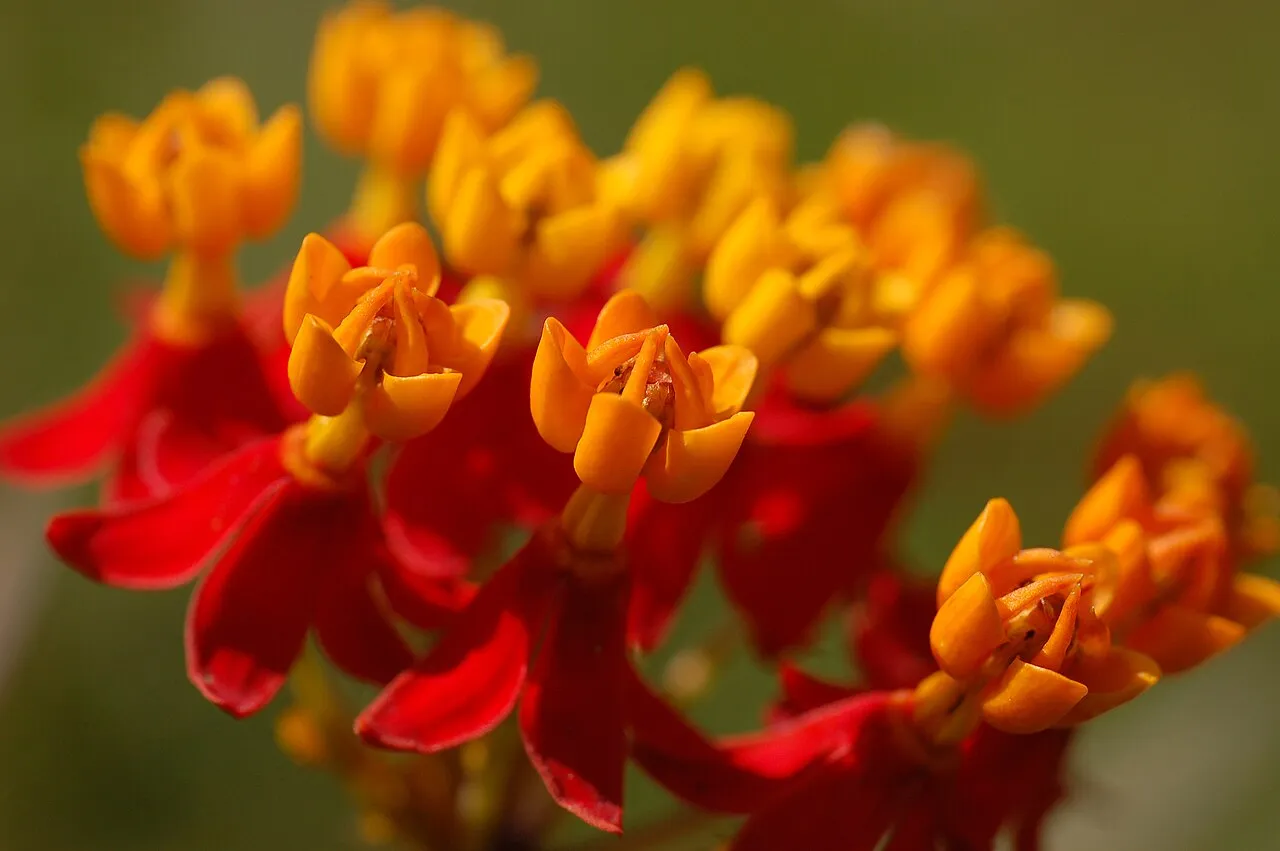
Blood flower — tropical milkweed — is sold everywhere as a monarch plant, flowers non-stop, and is the milkweed that monarch conservation organisations specifically ask you not to grow.
That is an uncomfortable position for a plant this pretty, so it is worth setting out what the actual concern is.
What the sources say
NC State Extension is direct: this plant is “not recommended for attracting Monarch Butterflies because they can bloom out of sync with Monarch migration patterns and hold them too long in one area.”
The Xerces Society titles its guidance simply “Tropical Milkweed — a No-Grow.”
Two separate problems sit behind that, and both hinge on one fact: in warm climates, tropical milkweed does not die back in winter. Native milkweeds do, and that annual reset turns out to matter enormously.
Problem one: the OE parasite
Ophryocystis elektroscirrha — OE — is a protozoan parasite of monarchs. Infected adults shed spores onto the plants they visit; caterpillars hatching there eat the spores along with the leaf.
On a native milkweed that dies to the ground each autumn, the slate is wiped clean every year. On a tropical milkweed that keeps its foliage through a mild winter, spores accumulate on the same standing leaves season after season.
The consequences for infected monarchs, per NC State: shortened lifespan, lower body mass, and impaired flight ability. Xerces adds that high OE levels are linked to lower migration success in the eastern population, and to reduced mating success.
Problem two: it interrupts migration
Monarchs use environmental cues to know when to stop breeding and start migrating. A milkweed still lush and flowering in November is a signal to keep breeding.
Research indicates that tropical milkweed’s presence, particularly at southern latitudes, may encourage monarchs to lay eggs outside their normal breeding season and disrupt the migratory cycle — hence NC State’s phrase about holding them “too long in one area.”
A third concern Xerces raises is more mundane: because the plant does not die back and regrow, pesticide residues can build up in the foliage rather than being shed annually.
So what should you actually do?
If you are in zone 8 or warmer, where the plant persists through winter, this is a real issue and you have two honest options:
-
Replace it with native milkweed. This is what both NC State and Xerces recommend. Your regional native Asclepias — swamp milkweed, butterfly weed, common milkweed, or whatever is native where you are — supports monarchs without either problem. Check with your extension office or a native plant society for the right species.
-
Cut it back hard, on schedule. If you are keeping it, cut it to the ground after monarchs have finished laying for the summer or early autumn, and before the migratory season. This mimics the natural die-back, removes accumulated spores, and stops the plant signalling monarchs to stay. Cut it low, and remove the material.
If you are in zone 7 or colder, frost kills it every year and does the job for you. Grown as an annual it is far less problematic — the plant is not persisting, not accumulating spores, and not confusing migration. This is a genuinely different situation from the Gulf Coast, and it is worth saying so rather than issuing a blanket prohibition.
Wherever you are, if you already have it, you have not done something terrible. Cut it back on schedule this year and plant natives alongside it.
Growing it
Native range: Mexico to tropical America. Hardy in zones 8a to 11b, and described by NC State as a tender erect perennial often grown as an annual.
Size: 2 to 3 feet tall, 1 to 2 feet wide.
Light: full sun, six or more hours.
Soil: well-drained, fertile, high in organic matter, acid to neutral.
Bloom: spring through fall in temperate climates — the long season is exactly what made it popular, and exactly what causes the problem.
It is easy from seed and self-seeds readily in warm climates, which is worth watching if you are trying to phase it out.
Toxicity
Low severity, but real. Ingestion can cause stomach upset, nausea, vomiting, abdominal pain, diarrhoea, weakness, lethargy and confusion. The milky sap causes contact dermatitis and eye irritation — wear gloves when cutting it back, and keep the sap away from your eyes.
That toxicity is the whole point of the genus, of course. It is what monarch caterpillars sequester to make themselves unpalatable.
The short version
A beautiful, easy plant with a genuine conservation problem in warm climates: it does not die back, so OE spores accumulate and monarchs are cued to keep breeding instead of migrating. In zone 8 and warmer, plant native milkweed instead, or cut this to the ground in early autumn without fail. In zone 7 and colder, frost handles it and it is a reasonable annual.
- blood flower
- tropical milkweed
- monarch butterflies
- native plants
- OE parasite