Foliage Plants
How to Grow and Care for Asparagus Fern
Asparagus fern is not a fern, it has thorns, its berries are poisonous, and in Florida it is a Category I invasive. Grow it in a pot — not in the ground.
The Garden Magic Hub
- Zone
- 9–11
- Light
- Partial sun
- Water
- Moderate
- Level
- Beginner
On this page
Asparagus fern is an excellent, forgiving houseplant with four things about it that the plant tag will not tell you.
It is not a fern
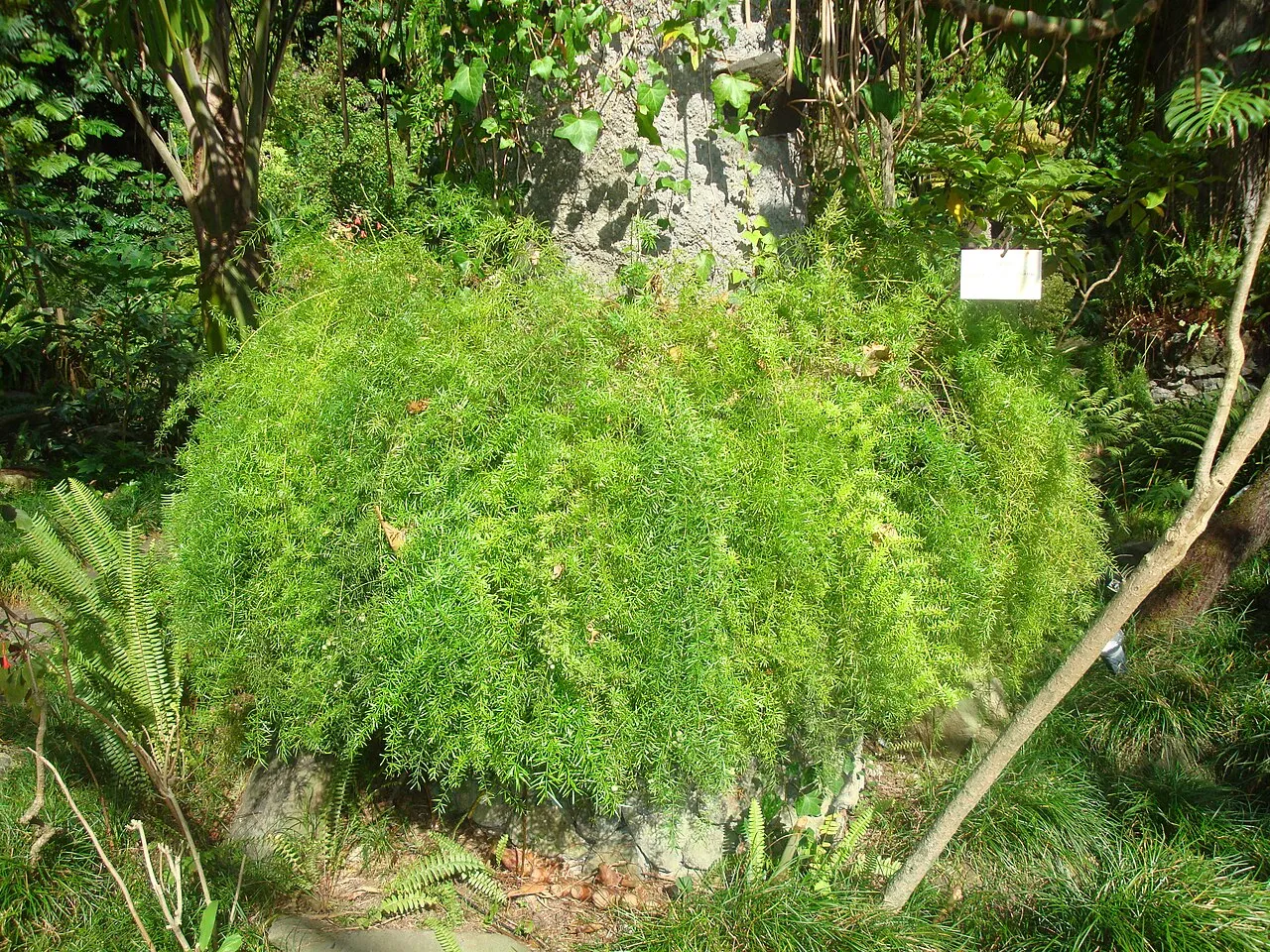
Asparagus aethiopicus — also sold as Asparagus densiflorus ‘Sprengeri’ — is in the Asparagaceae, the asparagus family. It is a flowering plant, closely related to the asparagus you eat.
The soft “needles” are not leaves either; they are cladodes, flattened stem structures doing the work of leaves. Real ferns reproduce by spores and have flat divided fronds; this one flowers, sets berries, and grows from a mass of water-storing tubers.
That matters practically, because fern care and asparagus fern care are different. Real ferns like Boston fern demand constant moisture and high humidity. Asparagus fern stores water in its tubers and forgives neglect that would kill a fern outright.
It has thorns
Small, sharp, and along the woody stems. They are easy to miss until you reach into a mature plant to tidy it, and they catch skin readily.
Wear gloves when repotting, dividing or cutting one back. This is the most common unpleasant surprise the plant delivers.
The berries are poisonous
The plant produces small berries that start green and turn red in winter, usually around January.
All parts contain a toxic component, and the berries are poisonous to humans and pets — ingestion causes gastrointestinal upset. The sap can also irritate skin.
Low severity rather than life-threatening, but a plant that produces bright red berries at child height in January is worth knowing about.
In warm states it is genuinely invasive
This is the serious one. In Florida, asparagus fern is listed as a Category I invasive — invasive throughout the state, and recommended for removal.
The mechanism is those berries. Birds eat them, carry them into natural areas, and the plant establishes dense mats of tuberous roots that crowd out native vegetation. UF/IFAS groups it with the other “bad berries” — invasive plants with bird-dispersed red fruit that have become serious pests in Florida.
The practical rule by climate:
- Zones 9 to 11: do not plant it in the ground. Keep it in containers, and remove berries before they ripen. In Florida, prefer a different plant entirely.
- Zone 8 and colder: frost kills it back, so it cannot establish. Grow it freely as a houseplant or a summer container plant.
Almost everyone reading this is in the second group, and for them the plant is harmless. But it is worth knowing which group you are in before putting one in a bed.
Growing it
With all that said, it is genuinely easy.
Light: bright indirect light indoors; partial shade outdoors. It tolerates lower light than most, though growth thins. Direct summer sun yellows the foliage.
Water: regularly through the growing season, less in winter. The tubers buffer it — an asparagus fern forgotten for a fortnight recovers where most houseplants would not.
Soil: any decent, free-draining potting mix.
Habit: arching and eventually cascading, which makes it a good hanging-basket plant. Mature plants become dense and woody at the base.
Yellowing and shedding is the routine complaint. Some needle drop is normal, especially after a move or a dry spell; wholesale yellowing usually means too little light or too much water. Cut old stems out at the base rather than trimming them back, which just leaves stubs.
Propagation
Division. The root mass is a tight knot of tubers, and separating it takes a serrated knife and some force — this is not a gentle teasing-apart job. Wear gloves, cut cleanly, and pot the divisions up.
The short version
Not a fern, has thorns, red berries are poisonous, and it is a Category I invasive in Florida. In zone 9 and warmer, keep it in a pot and deadhead the berries. Everywhere colder, it is an easy, drought-forgiving houseplant for bright indirect light — just wear gloves when you handle it.
- asparagus fern
- invasive plants
- toxic berries
- container plants
- hanging baskets