Tropical Foliage
How to Grow and Care for Swiss Cheese Plant
Two different plants are sold as Swiss cheese plant. Here is which is which, why the holes only appear on mature leaves, and why yours needs a stake.
The Garden Magic Hub
- Zone
- 10–12
- Light
- Partial sun
- Water
- Moderate
- Level
- Beginner
On this page
“Swiss cheese plant” is attached to two different plants in the trade, and they want slightly different things — so start by working out which you have.
Which one do you own?
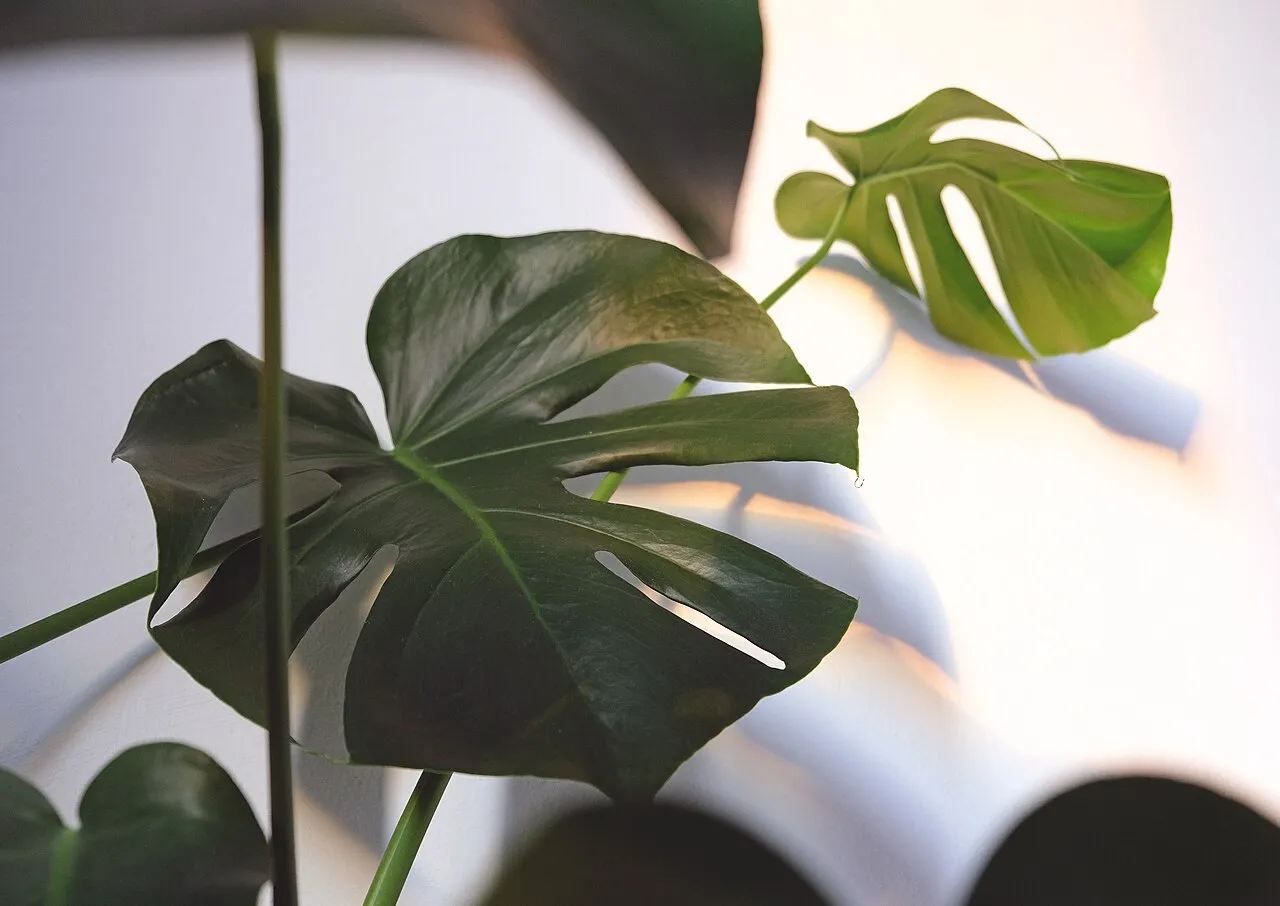
Monstera deliciosa is the big one, and the plant this article is about. Leaves reach a foot or more across, and mature ones carry deep splits running from the margin toward the midrib as well as separate holes in the blade.
Monstera adansonii is the smaller, vining “Swiss cheese vine” or “monkey mask” — thinner leaves, entirely enclosed oval holes, no splits to the edge, and a trailing habit suited to a hanging pot.
If your plant has huge leathery leaves with slashes cut to the edge, it is deliciosa. If it has small leaves peppered with neat holes and long trailing stems, it is adansonii. Both are easy; the care below is for deliciosa.
The holes only come with maturity
This is the most common question about the plant, and the answer is developmental rather than a care problem.
NC State Extension notes that the gigantic leaves develop “several holes throughout the blade, some extending to margin and splitting” — and that only mature leaves do this.
A young plant produces small, solid, heart-shaped leaves with no holes at all. That is normal. Fenestration arrives as the plant gains size and, in practice, as it gets adequate light and something to climb. A monstera that has been sitting in a dim corner in a small pot for three years is likely to keep producing solid leaves.
There is a separate article here on why monstera leaves are not splitting if yours is stuck.
Give it something to climb
In the wild, NC State notes, monstera becomes epiphytic when it contacts a tree — it is a climber, not a shrub, and it uses aerial roots to attach.
The practical consequence is structural: “Sturdy support is necessary to prevent the stems from breaking.” A mature monstera’s leaves are heavy, and an unsupported plant leans, sprawls and eventually snaps a stem.
Give it a moss pole, a coir pole or a stout stake early, and tie the stem in as it grows. Do not cut the aerial roots off for tidiness — tuck them into the pole or down into the pot. They are how the plant holds itself up and, on a moss pole, how it takes up extra water.
Size
Outdoors in the tropics NC State gives up to 70 feet. Indoors it “stays between 6 to 8 feet in most home environments.”
Six to eight feet is still a large plant that will want floor space and a wide pot. Plan for it rather than being surprised.
Light
Moderate brightness but not direct sunlight. Direct sun through glass scorches the leaves; deep shade gives you small solid leaves and long bare stem between them.
One useful detail from NC State: variegated cultivars need more light than the plain green forms. White or cream sections carry no chlorophyll, so a variegated monstera has less photosynthetic area and needs a brighter spot to keep up.
Water and soil
Loam with high organic matter, at pH 6.0 to 8.0 — it is not fussy about pH.
NC State’s watering method is a good one to follow literally: water thoroughly, then allow the top quarter to one-third of the pot to dry before watering again. Thorough-then-dry beats little-and-often, which keeps the surface wet and the root ball dry.
Humidity should be high. A humidifier or a pebble tray helps in dry indoor air.
If leaves are yellowing, there is a separate piece here on why monstera leaves turn yellow — overwatering is the usual answer.
Propagation
Layering or stem cuttings. Take a cutting with at least one node and ideally an aerial root; nodes are where roots form, and a leaf with no node will never root.
Monstera cuttings root readily in water or in a moist open mix.
Toxicity — the real caution on this plant
NC State classifies it as a low-severity poison, but the mechanism matters: the plant contains needle-like calcium oxalate crystals, and the listed effects are “intense burning of mouth, tongue, and throat; nausea, vomiting, difficulty swallowing”, plus skin irritation from the sap.
It is a problem for cats, dogs and horses. “Low severity” here means unlikely to be fatal — not that a bite is pleasant. The burning is immediate and genuinely painful, which is usually enough to stop an animal continuing.
Wash your hands after taking cuttings.
Problems
Remarkably few. NC State names fern scale and otherwise records “no significant problems,” which matches the plant’s reputation as one of the tougher large houseplants.
The short version
Check whether you have deliciosa or adansonii. Give it moderate indirect light, a sturdy pole to climb, and water thoroughly before letting the top third dry. Do not expect holes on young leaves — they arrive with maturity. Keep it away from pets that chew.
- swiss cheese plant
- monstera
- fenestration
- aerial roots
- toxic to pets