Herbs
How to Grow and Care for Bay Laurel
Bay laurel is a 40-foot Mediterranean tree that most US gardeners grow as a clipped pot plant. Here is how to keep one alive through winter and harvest from it.
The Garden Magic Hub
- Zone
- 8–10
- Light
- Full sun
- Water
- Moderate
- Level
- Intermediate
On this page
Bay is the herb people buy as a small pot plant and are surprised to learn is a tree. Grown with that in mind, it is one of the most durable things in a kitchen garden — a single plant supplies a household for decades.
Size, and the container reality
NC State Extension gives 8 to 12 feet tall and 8 to 30 feet wide in cultivation, noting that in its native Mediterranean habitat Laurus nobilis reaches 60 feet.
In a container it stays much smaller, which is the whole basis of how most people in the US grow it. A pot restricts the roots, clipping restricts the top, and the plant tolerates both without complaint.
Growth is medium — fast enough to be productive, slow enough that a clipped shape stays neat between prunings.
Hardiness, and the winter move
Hardy in zones 8b to 10b. Colder than that, NC State is direct: “it needs to be brought indoors in the winter… to prevent frost damage.”
That is the annual rhythm for most US growers:
- Outdoors from spring to autumn, in full sun, where it grows and you harvest from it.
- Indoors or under cover through winter, in the coolest bright spot you have.
Bay overwinters more easily than most Mediterranean herbs because it does not demand high light indoors and tolerates the interruption. Keep it cool rather than warm, water sparingly, and expect little growth until it goes back outside.
In zone 8 and warmer it can stay in the ground year-round, though a hard freeze may damage foliage on a young plant.
Light and soil
Full sun or partial shade — six or more hours is best, but it tolerates less than most herbs, which makes it useful for a partly shaded patio.
Soil is undemanding: clay, loam, sand or high organic matter, provided it is well drained. NC State notes it handles occasionally dry or occasionally wet conditions, so it forgives an irregular watering can better than rosemary or thyme do.
In a pot, use a free-draining mix and a container with a drainage hole. Root rot in a saucer of standing water is the usual cause of death.
Pruning and shaping
Bay takes clipping exceptionally well. NC State notes it “can be pruned into a topiary” and has been used as a hedge — the standing bay lollipop by a restaurant door is the classic example.
Prune in late spring or summer, when the plant is growing and will cover the cuts. Cut individual leaves or short shoots with secateurs rather than shearing, if you care about appearance: shearing cuts through leaves and leaves brown edges on a plant whose foliage is the point.
Harvesting is pruning here. Taking leaves regularly keeps a container plant in shape without a separate job.
Harvesting and using
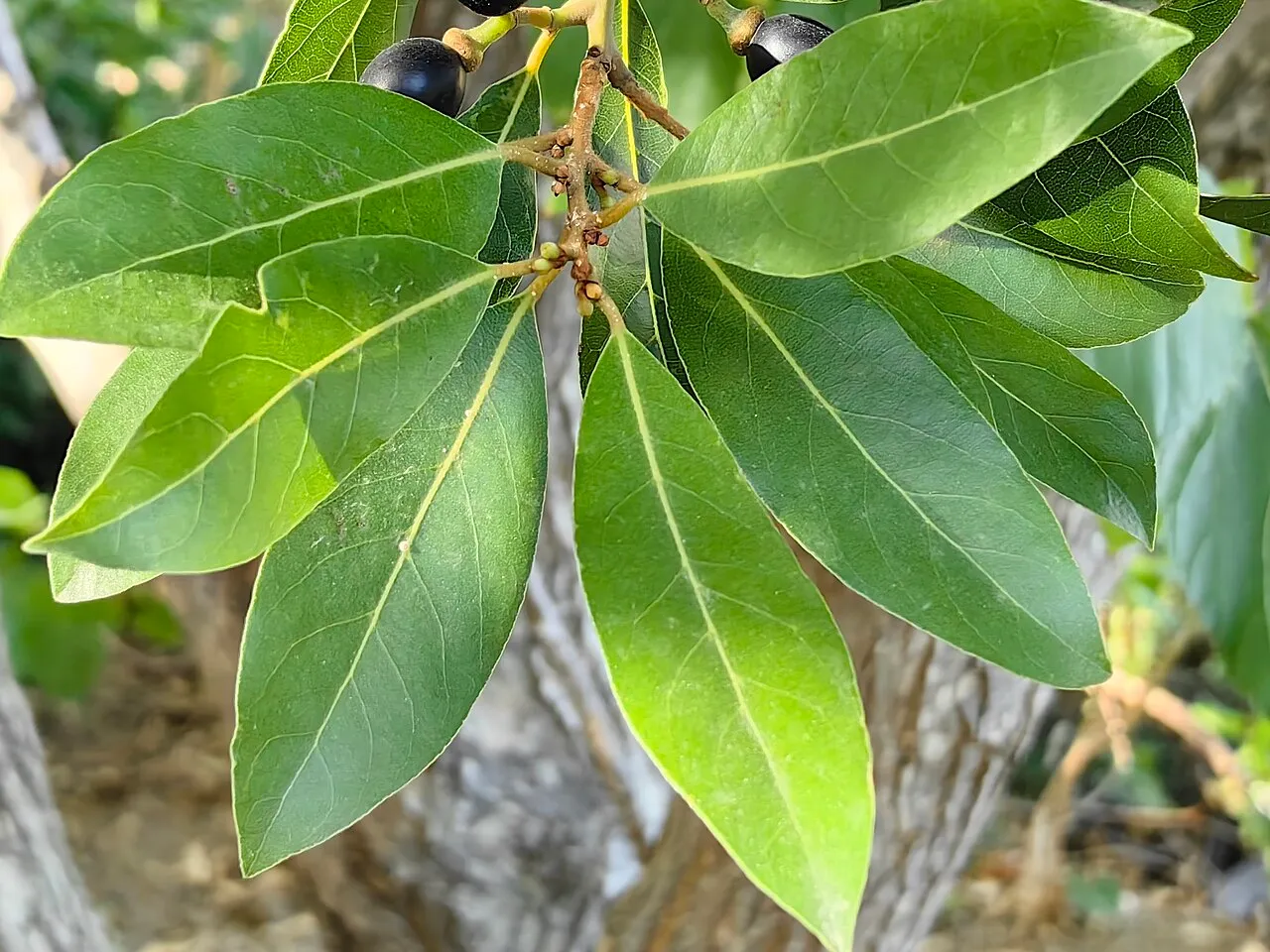
Leaves are 1 to 3 inches long, simple and alternate, and NC State notes they are used fresh or dried in soups and pastas.
Two practical points. Fresh bay is noticeably more bitter than dried — the flavour mellows and rounds out over a few days of drying, which is why most recipes assume dried. And leaves picked from an older, harder-grown plant carry more flavour than the soft growth on a young one.
Pick mature leaves from the middle of a shoot rather than the soft tips.
The black fruits shown above appear on mature female trees. They are not used in cooking, and NC State notes dried fruit can create litter near a patio.
Propagation
Bay is slow and stubborn from cuttings — semi-ripe cuttings in late summer work but take months and often fail. Layering is more reliable for a home gardener. Most people simply buy a plant, which given the plant’s longevity is reasonable.
Problems
Scale insects and psyllids are the occasional pests. Scale shows as sticky honeydew and sooty mould; bay suckers (psyllids) cause thickened, curled and yellowing leaf margins.
Diseases are phytophthora and root rot — both drainage problems — and laurel wilt.
That last one is worth flagging. Laurel wilt is a fungal disease spread by an introduced ambrosia beetle that attacks members of the laurel family, and it is the same disease threatening avocado in the southeast. There is no home treatment; the practical response is buying from reputable local nurseries and not moving laurel-family wood between regions.
The short version
A Mediterranean tree grown as a pot plant. Full sun, free-draining mix, a pot with a hole in it. Move it under cover before frost outside zone 8b, keep it cool and barely watered through winter, and clip it to shape in summer. Harvest mature leaves and dry them before use.
- bay laurel
- herbs
- container growing
- topiary
- overwintering